
News and Articles

Explore our informative articles, insights, and updates focused on North Carolina Estate Administration, Estate Planning, Partition Actions, and Surplus Fund cases. Our goal is to make these complex topics accessible, offering you guidance and understanding at each step of the legal process. Whether you’re looking to navigate probate administration, protect your assets through careful planning, understand partition actions, or resolve issues with surplus funds, our articles are designed to empower you with practical advice, legal insights, and actionable steps. Stay informed and feel confident as you make decisions about your estate and legal matters.

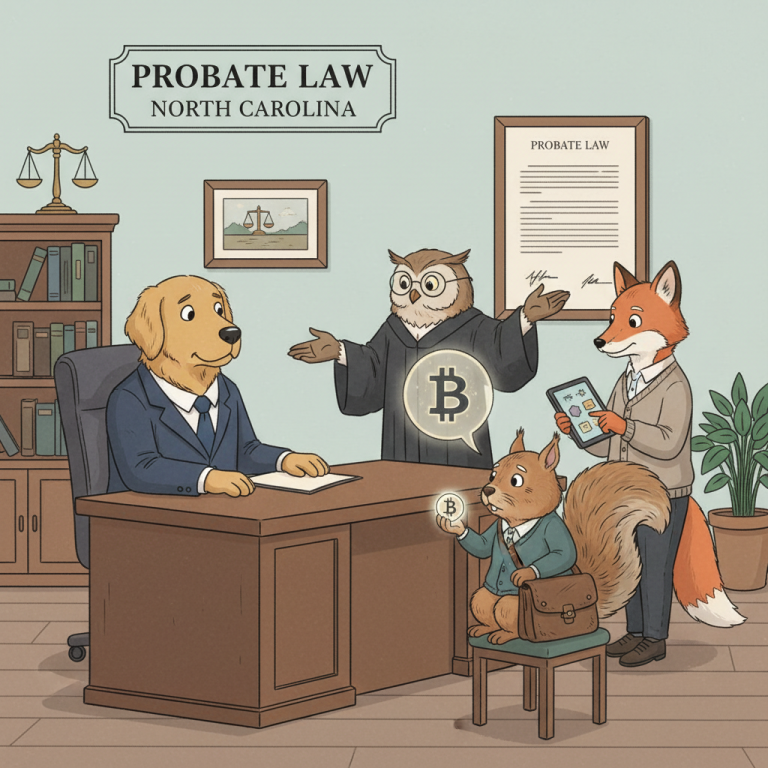
What documents are required to prove ownership of cryptocurrency when administering an estate?: North Carolina

What documents are required to prove ownership of cryptocurrency when administering an estate? – North Carolina Short Answer In North Carolina, you generally need court authority (Letters Testamentary or Letters of Administration, or a small-estate Affidavit of Collection), a certified death certificate, and account or wallet evidence tying the cryptocurrency to the decedent. For exchange-held…

Read more

Can my spouse be appointed limited administrator to transfer property after a small-estate transfer?: North Carolina

Can my spouse be appointed limited administrator to transfer property after a small-estate transfer? – North Carolina Short Answer Yes, in North Carolina the Clerk of Superior Court can appoint a limited personal representative to publish notice to creditors when the estate is otherwise handled by small-estate affidavit. Your spouse may serve if legally qualified…

Read more

What evidence do I need to prove the deed was executed when my relative was competent?: North Carolina

What evidence do I need to prove the deed was executed when my relative was competent? – North Carolina Short Answer In North Carolina, you prove a grantor’s competency by presenting first-hand, near‑the‑time evidence that, at signing, the grantor understood the nature and effect of conveying the property. Helpful proof includes the notarized deed and…

Read more

Is it normal for an executor to request heirs’ social security numbers before distributing estate assets?: North Carolina probate

Is it normal for an executor to request heirs’ social security numbers before distributing estate assets? – North Carolina Short Answer In North Carolina, a qualified executor may request a beneficiary’s taxpayer identification number (usually a Social Security number) when it is needed for tax reporting, such as preparing IRS Schedule K‑1 for income distributions.…

Read more

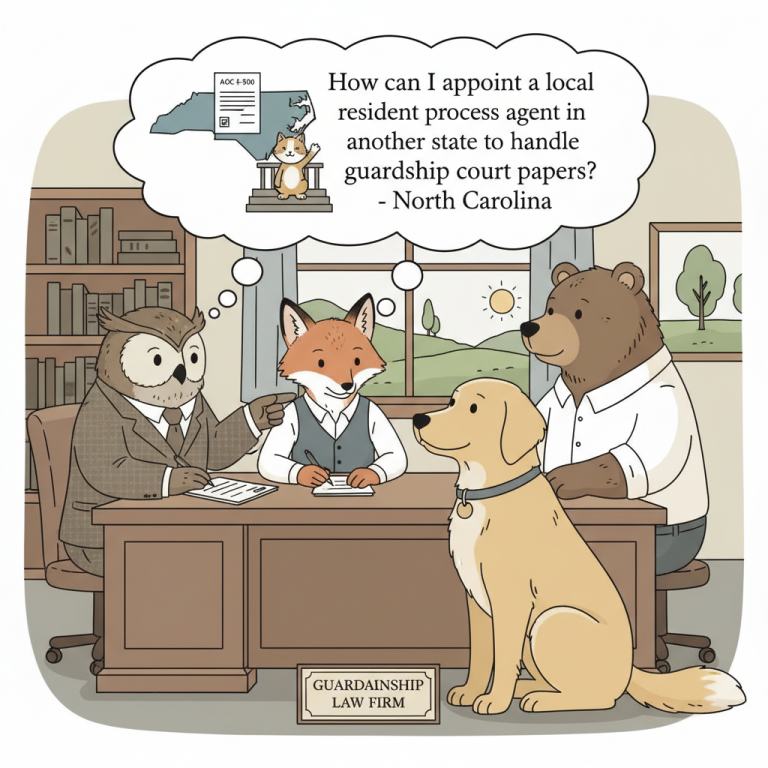
How do I ensure court documents are properly received and forwarded from another county?: Answered under North Carolina guardianship law

How do I ensure court documents are properly received and forwarded from another county? – North Carolina Short Answer In North Carolina guardianships, if the Clerk of Superior Court requires a resident process agent, you should designate a reliable local adult to accept service for the case and promptly forward all court papers to you.…

Read more

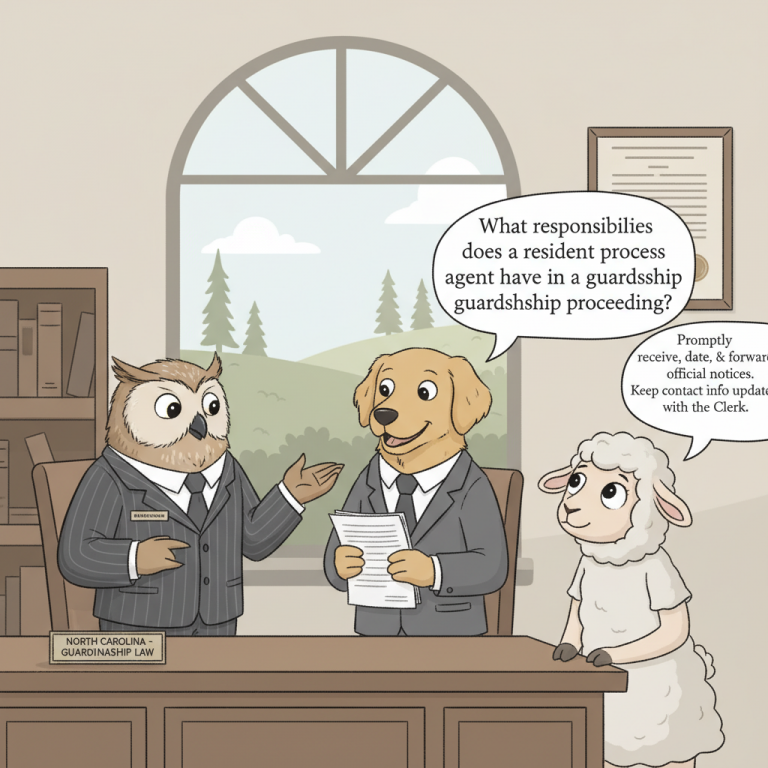
What responsibilities does a resident process agent have in a guardianship proceeding?: Clear duties for out-of-state guardians in North Carolina

What responsibilities does a resident process agent have in a guardianship proceeding? – North Carolina Short Answer In North Carolina, a resident process agent is a North Carolina resident appointed by a nonresident guardian to accept legal papers and official notices for the guardianship. The agent’s job is to promptly receive, date, and forward everything…

Read more

What steps do I take to transfer life insurance or retirement benefits if I don’t know the beneficiary?: Clear steps for North Carolina estates, including cross-state issues

What steps do I take to transfer life insurance or retirement benefits if I don’t know the beneficiary? – North Carolina Short Answer In North Carolina, life insurance and most retirement benefits transfer by the beneficiary form on file with the insurer or plan—not through the will or probate. If you do not know who…

Read more

What is the process for notifying creditors and distributing assets in an interstate probate case?: Clear steps under North Carolina law

What is the process for notifying creditors and distributing assets in an interstate probate case? – North Carolina Short Answer In North Carolina, if someone dies domiciled in another state but leaves assets here, you typically open an ancillary estate with the Clerk of Superior Court in the county where the North Carolina assets are…

Read more