
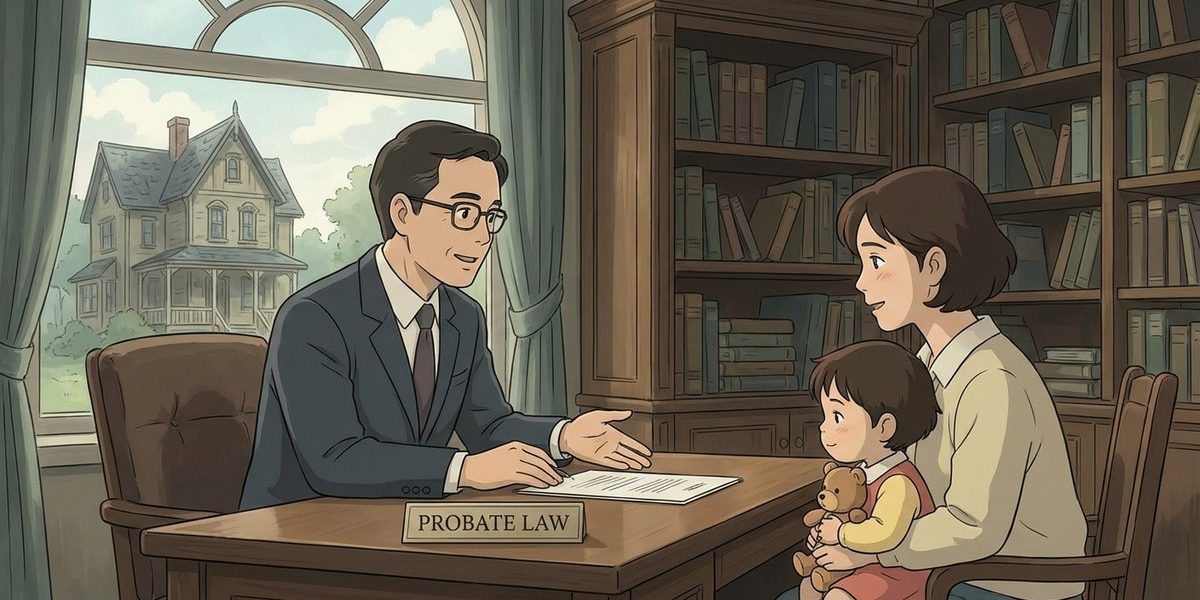
How is a house titled in the deceased parent’s name handled when a minor child may be an heir or beneficiary? – North Carolina
Short Answer
In North Carolina, a house titled only in a deceased parent’s name is usually handled through the estate (probate) unless it already has a built-in transfer method (like a survivorship deed or a trust). If a minor child may inherit an interest, the Clerk of Superior Court typically requires added protections, and certain real-estate actions (especially a sale) can require court oversight and a judge’s approval. Relatives do not automatically “take control” of the house; control usually depends on who is appointed as the estate’s personal representative and what the title documents say.
Understanding the Problem
When a North Carolina parent dies owning a house titled in that parent’s name, the key question is how the home passes when a minor child may be an heir or beneficiary. The issue usually turns on whether the home must go through an estate administration, who has legal authority to act for the estate, and what protections apply when a minor owns (or may own) an interest in the property. Timing and authority matter because the Clerk of Superior Court controls many probate and guardianship decisions, and a minor cannot sign deeds or other binding real-estate documents.
Apply the Law
Under North Carolina law, real estate owned solely in a deceased person’s name generally becomes part of the probate estate unless it passes outside probate (for example, by a survivorship deed or through a trust). If there is no will, North Carolina’s intestate succession rules determine who inherits, including the surviving spouse and children. When a minor child inherits an interest, the law adds safeguards: a minor cannot directly manage or convey real property, and court-supervised procedures may be required to sell or otherwise transfer the minor’s interest.
Key Requirements
- Confirm how title passes: Determine whether the deed or estate plan causes the house to pass outside probate (such as survivorship ownership) or whether it remains an estate asset that must be handled through the Clerk of Superior Court.
- Identify the legal decision-maker: If the house is an estate asset, the personal representative (executor/administrator) is the person with authority to manage estate administration. If the minor owns property directly, a guardian of the estate (or another court-approved mechanism) may be needed to manage the minor’s interest.
- Use court-approved procedures when a minor has an interest: Sales or other dispositions involving a minor’s real property interest often require a special proceeding and additional court approval to protect the minor’s share.
What the Statutes Say
- N.C. Gen. Stat. § 29-14 (Intestate share of surviving spouse) – Sets the surviving spouse’s share of real and personal property when there is no will, which affects what portion may be left for a child.
- N.C. Gen. Stat. § 29-15 (Intestate shares of heirs other than spouse) – Explains how the remaining estate passes to children and other heirs when there is no will.
- N.C. Gen. Stat. § 35A-1301 (Sale/mortgage/exchange/lease of a minor’s real estate) – Authorizes a guardian to seek court permission to sell or otherwise deal with a minor’s real property, with added protections for minors.
- N.C. Gen. Stat. § 35A-1227 (Funds owed to minors) – Lists options for handling certain property owed to a minor (including use of UTMA and delivery to the clerk in some situations).
- N.C. Gen. Stat. § 33A-9 (North Carolina Uniform Transfers to Minors Act) – Allows certain property (including an interest in real property) to be held by a custodian for a minor under UTMA, which can reduce the need for a formal guardianship in some situations.
Analysis
Apply the Rule to the Facts: The minor child is listed as beneficiary on financial assets, which often means those assets pass outside probate to the named beneficiary, but a minor typically cannot receive and control the funds directly without a legally recognized arrangement (such as a UTMA custodianship, funds held by the Clerk, or a guardianship of the estate). The house is different: if it is titled only in the deceased parent’s name and does not have a survivorship feature or trust ownership, it is usually handled through the estate, and any minor heir’s interest triggers extra court protections. Concerns about relatives “taking control” usually come down to who is appointed by the Clerk of Superior Court to administer the estate and whether anyone seeks to be appointed guardian over the minor’s property.
Process & Timing
- Who files: Typically an interested person (often the surviving spouse/parent) starts the estate process. Where: The Clerk of Superior Court in the county where the decedent lived (or where the real estate is located for certain proceedings). What: An application to open the estate and be appointed as personal representative (executor if named in a will; otherwise administrator). When: As soon as practical after death, especially if bills, mortgage payments, insurance, or a pending sale require action.
- Determine whether the house must be sold or can be held: If the estate needs liquidity to pay valid debts/expenses, or if heirs want to sell, the personal representative may need a court-authorized sale process—especially if a minor has an interest. If the plan is to keep the home, the focus often shifts to confirming title passage and protecting the minor’s share until adulthood.
- Set up the minor’s receipt/management structure: For beneficiary-designated financial assets, the payor may require a UTMA custodian designation or a court-appointed guardian of the estate before releasing funds. For real property interests, if a transaction is needed (sale, mortgage, long lease), a guardian may have to petition the Clerk for authority and obtain required approvals before any deed can be delivered.
Exceptions & Pitfalls
- The deed controls more than family expectations: If the house was owned with a survivorship feature, it may pass directly to the surviving owner and never become an estate asset. If it was solely titled in the deceased parent’s name, it usually does not automatically become controlled by relatives.
- Minor beneficiaries often cannot receive funds directly: Even when a child is the named beneficiary, a financial institution may refuse to release funds without a legally recognized custodian/guardian arrangement. North Carolina law provides alternatives that may avoid a full guardianship in some situations, but the right option depends on the asset type and amount.
- Selling property involving a minor is not “just paperwork”: A sale affecting a minor’s interest can require a special proceeding and additional approvals. Trying to shortcut the process can delay closing or create title problems later.
- Control disputes can arise at appointment time: If multiple family members seek to be appointed as personal representative or seek control over the minor’s property, the Clerk of Superior Court may need to resolve competing requests. Early filing and clear documentation often reduce conflict.
- Mixing a minor’s money with an adult’s money creates risk: When funds are held for a minor (whether through a custodian or guardian), they must be tracked and used for the minor’s benefit under the applicable rules and court oversight.
Conclusion
In North Carolina, a house titled only in a deceased parent’s name is usually handled through the estate unless it passes outside probate by the way the deed or estate plan is set up. If a minor child may inherit an interest, the Clerk of Superior Court typically requires added protections, and any sale or transfer involving the minor’s interest may require a court-supervised process and approvals. The most practical next step is to open the estate with the Clerk of Superior Court so a personal representative is appointed and can lawfully secure and manage the property.
Talk to a Probate Attorney
If a minor child may inherit a house or receive beneficiary assets after a parent’s death, the next steps often depend on title, probate authority, and court-required protections for minors. Our firm has experienced attorneys who can help explain options, reduce conflict risk, and map out realistic timelines. Call us today at (919) 341-7055.
Disclaimer: This article provides general information about North Carolina law based on the single question stated above. It is not legal advice for your specific situation and does not create an attorney-client relationship. Laws, procedures, and local practice can change and may vary by county. If you have a deadline, act promptly and speak with a licensed North Carolina attorney.

