
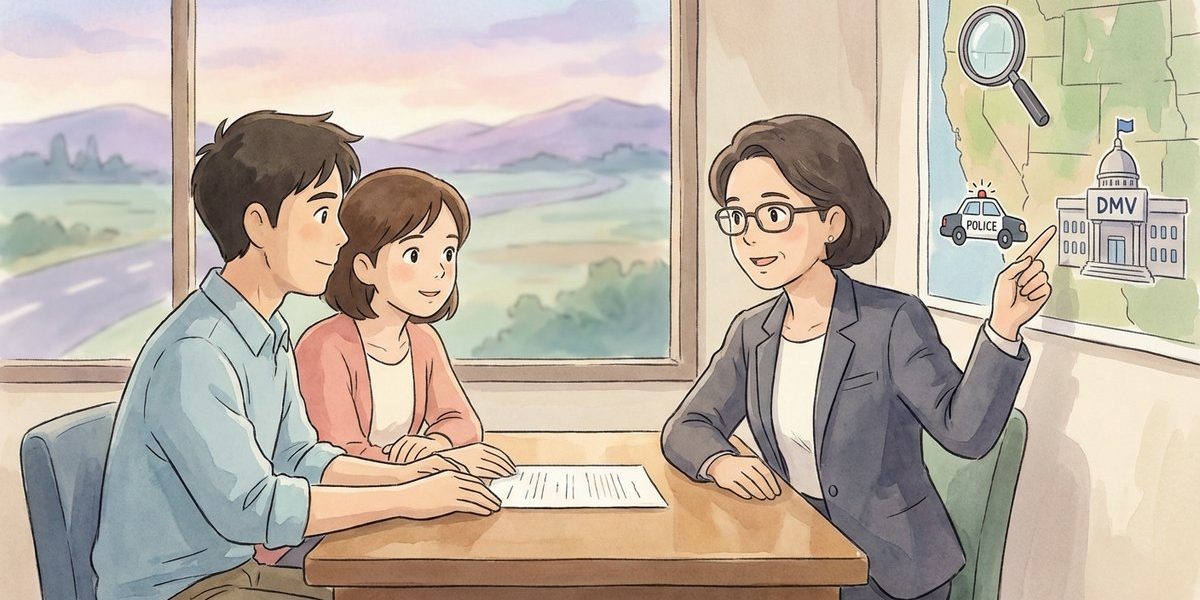
What should I do if I can’t find the police report right now but officers responded to the scene? – North Carolina
Short Answer
In North Carolina, a law enforcement officer who investigates a “reportable” crash generally must complete a written crash report and it is treated as a public record. If the report cannot be located right now, the practical next step is to request a certified copy through the North Carolina Division of Motor Vehicles (DMV) and, in the meantime, gather the basic identifiers (date, location, agency, and involved parties) that help the DMV or the local agency find it. If there may have been a serious injury or a later death related to the crash, ask whether a supplemental report was filed.
Understanding the Problem
In North Carolina, when officers respond to a vehicle crash, the key question is often: can a crash report be located and obtained quickly enough to support the next steps in a wrongful death or serious-injury investigation? This issue usually comes up when the report number is unknown, the responding agency is unclear, or there were multiple incidents in different places. The focus here is what to do next to locate the correct report when officers responded but the report is not in hand.
Apply the Law
North Carolina law requires an investigation and a written report for a “reportable” crash, and it sets out where those reports go and how the public can obtain copies. In general, the investigating officer prepares the report promptly and it is forwarded through the local agency and then to the DMV. These law-enforcement crash reports are generally open to public inspection, and the DMV must provide a certified copy to a member of the public who requests it and pays the required fee. If an injured person later dies from the crash within a set period, the investigating officer must file a supplemental report reflecting the death.
Key Requirements
- A “reportable” crash occurred: Not every minor incident triggers the same reporting pathway, but when a crash is reportable, the law expects an investigation and a written report.
- A law enforcement investigation happened: The duty to create the written crash report is tied to an officer investigating the crash (at the scene or through follow-up).
- The report is routed to the DMV: Reports are forwarded to the DMV through the State Highway Patrol or the local law enforcement agency, which affects where to request copies.
What the Statutes Say
- N.C. Gen. Stat. § 20-166.1 (Crash reports; investigation; public access; supplemental death report) – Requires investigation and a written report for reportable crashes, describes forwarding to the DMV, treats law-enforcement crash reports as public records, and requires a supplemental report if a person later dies from the crash within 12 months.
Analysis
Apply the Rule to the Facts: The facts describe a passenger-side impact collision where officers responded, but the crash report cannot be found right now. Under North Carolina’s reporting framework, if the collision was “reportable” and an officer investigated, a written report should exist and should be obtainable as a public record, typically through the DMV once it is processed. Because there is also mention of a separate later crash in another area with no police report, the identifiers (date, location, and responding agency) matter to avoid requesting the wrong incident or assuming a report exists when it may not.
Process & Timing
- Who requests: Any member of the public (or an attorney/insurer working on the claim). Where: North Carolina DMV (for a certified copy) and/or the local law enforcement agency that responded. What: Request a certified copy of the crash report; provide the crash date, approximate time, location, names of drivers, and the responding agency (city police, county sheriff, or State Highway Patrol). When: As soon as possible, because it can take time for a report to be finalized and routed to the DMV.
- If the agency is unknown: Identify whether the crash happened inside a city/town (often city police) or outside city limits (often State Highway Patrol or the county sheriff). Then confirm the correct agency’s records unit handled the call.
- If there were serious injuries or a later death: Ask whether a supplemental report was filed and request that supplemental report along with the original crash report.
Exceptions & Pitfalls
- Not every incident generates a crash report: If the later, separate crash did not result in a reportable event or officers did not investigate, there may be no formal crash report to obtain.
- Mixing up two different incidents: When there are multiple crashes in different places, requests often fail because the wrong date/location or wrong agency is used.
- Assuming the report is “final” immediately: A report may exist but not yet be processed and forwarded; requesting from the wrong place too early can look like the report “doesn’t exist.”
Conclusion
In North Carolina, if officers investigated a reportable crash, a written crash report should exist and is generally treated as a public record, with certified copies available through the DMV upon request and payment of the required fee. When the report cannot be found right now, the practical next step is to request the certified crash report through the DMV (and confirm the correct responding agency) using the crash date, location, and involved parties’ names. If a death occurred within 12 months due to the crash, request any supplemental report as well.
Talk to a Wrongful Death Attorney
If a crash report is missing or unclear and officers responded to the scene, our firm has experienced attorneys who can help sort out which agency handled the investigation, request the right records, and track the timelines that matter. Call us today at [919-341-7055].
Disclaimer: This article provides general information about North Carolina law based on the single question stated above. It is not legal advice for your specific situation and does not create an attorney-client relationship. Laws, procedures, and local practice can change and may vary by county. If you have a deadline, act promptly and speak with a licensed North Carolina attorney.

