
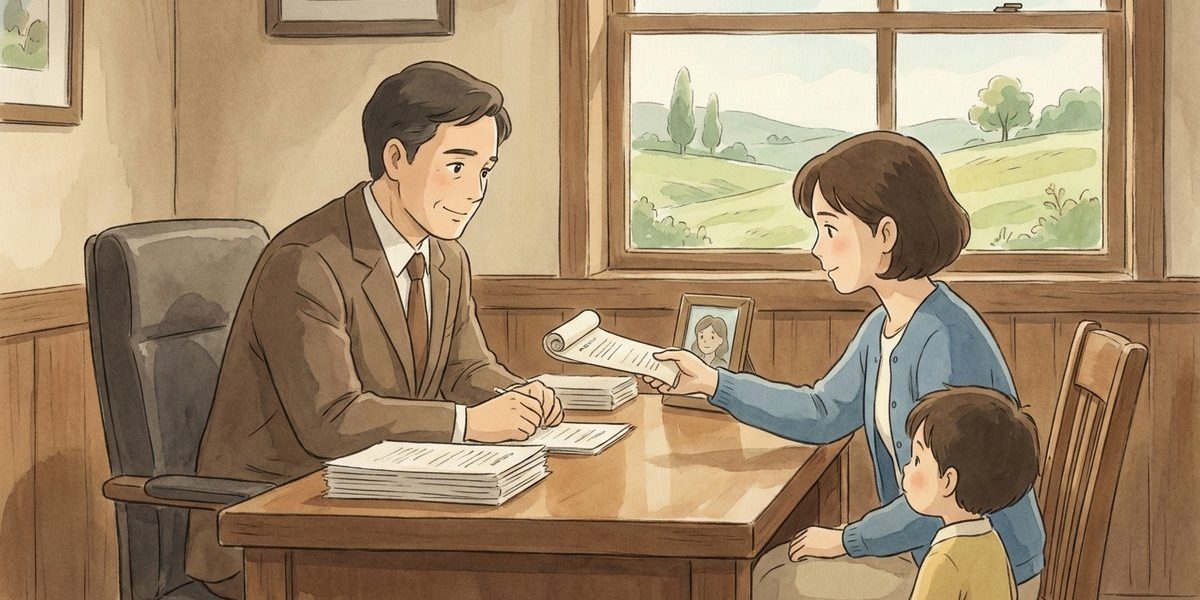
What documents do I need to prove the marriage and parent-child relationships for benefits or a legal claim after a fatal accident? – North Carolina
Short Answer
In North Carolina, the most common documents used to prove a marital relationship after a fatal accident are a certified marriage certificate and records showing the marriage was still in place at death. To prove a parent-child relationship, the most common documents are a certified birth certificate, adoption paperwork, or a court order establishing guardianship or custody when applicable. If a death certificate contains an error (such as listing the decedent as not married), agencies and insurers often still accept certified relationship documents, and the death certificate can also be corrected through the proper vital records process.
Understanding the Problem
In North Carolina, after a spouse dies in a vehicle crash, what documents must be provided to prove the marriage and the parent-child relationships when applying for benefits or when a legal claim depends on family status? The issue often comes up when an agency, insurer, or law enforcement office will not release information or process paperwork without proof of relationship, or when a record (like a death certificate) appears to conflict with the family’s actual status.
Apply the Law
North Carolina programs and claims that pay benefits after a death commonly require proof of (1) the marital relationship and (2) the parent-child relationship. In practice, the strongest proof is usually a certified vital record (marriage certificate or birth certificate) or a court order (adoption, guardianship, custody). If a benefit depends on dependency status, North Carolina law can treat a spouse and children as dependents in certain contexts, but the claimant still typically must prove the relationship with reliable documents. For estate-related filings, the Clerk of Superior Court (Estates) is the main forum for many family-status and administration issues.
Key Requirements
- Proof of marriage: A certified marriage certificate is the standard document. If there is a question about whether the marriage existed at the time of death, additional records may be needed to show there was no divorce or annulment.
- Proof of parent-child relationship: A certified birth certificate is the standard document. If the relationship is through adoption or a non-parent legal relationship, agencies often require adoption papers or a court order establishing guardianship or custody.
- Consistency across records: When key records conflict (for example, a death certificate listing “not married”), agencies and insurers often ask for certified documents and may require a correction through vital records before final approval.
What the Statutes Say
- N.C. Gen. Stat. § 115B-5 (Proof of eligibility) – Uses marriage certificates and birth certificates/adoption papers (or other appropriate documentary evidence) as proof of marital and parent-child relationships in a benefits setting.
- N.C. Gen. Stat. § 97-39 (Dependency presumed for spouse/child) – In workers’ compensation death benefits, a widow/widower and children are treated as dependents, which makes proof of the relationship central to the claim.
- N.C. Gen. Stat. § 30-17 (Child’s allowance; filing and timing) – For certain estate allowances for children, the claim is filed by verified petition with the Clerk of Superior Court and has a key six-month deadline after letters are issued if an estate is opened.
Analysis
Apply the Rule to the Facts: The situation involves a fatal vehicle accident where the surviving spouse is having trouble obtaining information and the death certificate allegedly lists the decedent as not married. A certified marriage certificate is the primary document used to prove the marital relationship despite the death certificate error. For the children, certified birth certificates (and adoption paperwork if any child is adopted) are the primary documents used to prove the parent-child relationship. If an agency or insurer refuses to accept the relationship proof due to the death certificate entry, correcting the death certificate and/or providing additional identity and relationship records often becomes the practical next step.
Process & Timing
- Who gathers and submits documents: The surviving spouse, a parent/guardian for a child, or (if an estate is opened) the personal representative. Where: The requesting agency/insurer, and when estate filings are needed, the Clerk of Superior Court (Estates) in the proper North Carolina county. What: Certified marriage certificate; certified birth certificates for the children; adoption decree or adoption paperwork if applicable; guardianship/custody order if applicable; photo ID; and any documents showing name changes (for example, a court order or other official record). When: As early as possible, because benefits and claims processing often stalls until relationship proof is accepted.
- If records conflict: Request correction of the death certificate through North Carolina vital records procedures and submit certified relationship documents at the same time. Agencies and insurers often place claims “on hold” until the conflict is resolved.
- If an estate-related filing is required: File the appropriate petition or application with the Clerk of Superior Court (Estates). For certain child-related estate allowances, if a personal representative has been appointed, the petition must be filed within six months after letters testamentary or letters of administration are issued, and a copy must be provided to the personal representative.
Exceptions & Pitfalls
- Uncertified copies: Many offices will not accept photocopies. A certified marriage certificate and certified birth certificates usually carry the most weight.
- Name mismatches: A marriage certificate and birth certificates may not “match” if a spouse changed names. Supporting name-change documentation can prevent delays.
- Non-biological relationships: Stepchildren, informal caregiving, or “in loco parentis” situations can require additional proof beyond a birth certificate, often involving court records or other documentation depending on the benefit or claim.
- Conflicting death certificate information: An incorrect marital status entry can trigger extra scrutiny. Correcting the record and keeping a clear document packet (IDs, certified certificates, and any court orders) can reduce repeated requests.
- Estate timing traps: When a personal representative is appointed, certain petitions have specific notice and timing rules. Missing a deadline can limit options or delay payment.
Conclusion
In North Carolina, the usual way to prove marriage after a fatal accident is a certified marriage certificate, and the usual way to prove a parent-child relationship is a certified birth certificate (or adoption papers or a court order for guardianship/custody when applicable). If a death certificate incorrectly lists the decedent as not married, agencies and insurers often still rely on certified relationship documents, but a correction may be needed to remove the conflict. If an estate is opened and letters are issued, file any required child-related allowance petition with the Clerk of Superior Court within six months.
Talk to a Wrongful Death Attorney
If a fatal crash has created problems proving marriage or parent-child relationships for benefits, records, or a legal claim, our firm has experienced attorneys who can help organize the right documents and explain the timelines that may apply. Call us today at (919) 341-7055.
Disclaimer: This article provides general information about North Carolina law based on the single question stated above. It is not legal advice for your specific situation and does not create an attorney-client relationship. Laws, procedures, and local practice can change and may vary by county. If you have a deadline, act promptly and speak with a licensed North Carolina attorney.

