
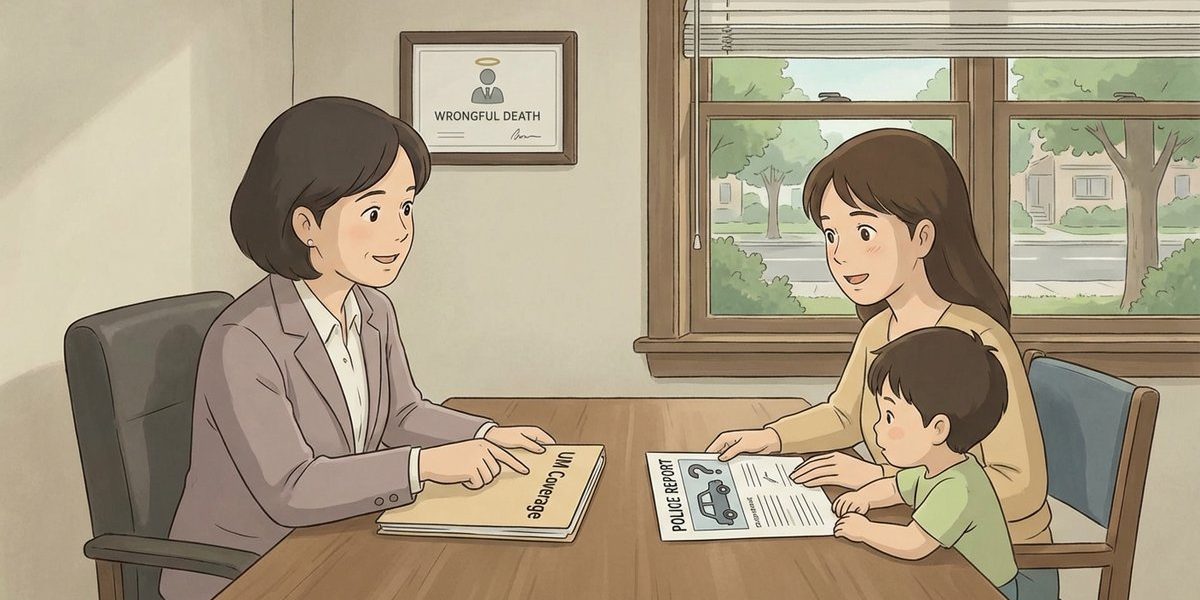
How can I pursue a claim when the other driver hit and ran and I don’t know who they are? – North Carolina
Short Answer
In North Carolina, a hit-and-run can still lead to a financial recovery even when the at-fault driver is unknown, most often through uninsured motorist (UM) coverage on an auto policy that covers the people in the vehicle. The key is to document the crash quickly (including a police report) and give timely notice to the UM insurer, because North Carolina law sets specific reporting and notice steps for “unknown driver” UM claims. If the case must be filed, North Carolina law also builds in a 60-day notice window before suing the UM carrier.
Understanding the Problem
In North Carolina, when a driver leaves the scene and cannot be identified, the main question becomes: can an injured passenger (or a family member acting for an injured child) still pursue a claim even though there is no known person or insurance company to file against? The decision point is whether there is an auto insurance policy that provides uninsured motorist coverage for the people who were in the vehicle at the time of the hit-and-run. Timing matters because North Carolina’s “unknown driver” rules require prompt reporting to law enforcement and prompt notice to the insurer.
Apply the Law
North Carolina requires most auto liability policies to include uninsured motorist coverage, which can apply to hit-and-run situations where the at-fault driver’s identity cannot be ascertained. In an “unknown driver” UM claim, the insurer effectively steps into the case to defend the claim, and the injured person must follow statutory reporting and notice requirements. Separately, if the crash later results in a death, North Carolina’s wrongful death statute of limitations is generally two years from the date of death, and the claim must be brought by the estate’s personal representative.
Key Requirements
- UM coverage applies to an unknown driver situation: There must be an applicable auto policy providing uninsured motorist coverage for the injured person (often the vehicle’s policy and sometimes a household policy).
- Prompt reporting and notice: For an “unknown driver” UM claim, North Carolina law requires the crash to be reported to law enforcement within 24 hours (or as soon as practicable) and requires notice to the UM insurer within a reasonable time with basic crash details.
- 60-day notice before suit: If a lawsuit is needed, North Carolina law generally requires at least 60 days to pass after giving the insurer notice before instituting suit against the UM insurer in an unknown-driver case.
What the Statutes Say
- N.C. Gen. Stat. § 20-279.21 (Uninsured motorist coverage; unknown driver notice and timing) – Sets UM coverage requirements and includes special rules for claims where the at-fault driver cannot be identified, including reporting, notice, and a 60-day waiting period before suit.
- N.C. Gen. Stat. § 20-166.1 (Crash reporting requirements) – Requires prompt notice to law enforcement for reportable crashes and requires an officer investigation and written report.
- N.C. Gen. Stat. § 1-53(4) (Wrongful death limitations period) – Provides a two-year statute of limitations for wrongful death claims under North Carolina law, generally running from the date of death.
Analysis
Apply the Rule to the Facts: The reported crash involves a hit-and-run with a police report, which is an important first step for an “unknown driver” UM claim. Because the caller was not in the vehicle, the claim focus is typically on the people who were in the car (the child and grandchild) and which auto policy insured the vehicle or the household at the time. The later workplace accident and workers’ compensation claim can complicate the medical and wage-loss picture, so careful separation of what injuries and treatment relate to the crash versus the later work incident becomes important when presenting a UM claim.
Process & Timing
- Who files: The injured person (or a parent/guardian for a minor) makes the UM claim; if a death later occurs, the estate’s personal representative brings the wrongful death claim. Where: The UM claim is made with the applicable auto insurer; if suit is required, it is filed in North Carolina state court (typically the Superior Court in the county where the crash occurred or where a defendant can be sued). What: Provide the crash report number/copy, medical records tied to the crash, and any witness or scene evidence; if suit is filed, it proceeds by civil complaint and service consistent with North Carolina procedure. When: Report the crash to law enforcement within 24 hours (or as soon as practicable) for an unknown-driver UM claim, and give the insurer notice within a reasonable time; if suit is needed, wait at least 60 days after notice before instituting suit as required by statute.
- Investigation and coverage confirmation: The insurer typically requests additional information and may send forms; North Carolina law addresses what happens if the insurer does not timely provide its forms after notice. The claim also requires identifying all potentially applicable policies (vehicle policy, resident-relative policies, and any UM “stacking” issues where multiple policies may apply).
- Resolution: The claim may resolve through settlement with the UM insurer; if not, the case can proceed through litigation where the insurer can defend the claim (often in the name of the unknown driver) and the injured person must prove fault, causation, and damages.
Exceptions & Pitfalls
- Missing the UM “unknown driver” reporting steps: Even with a police report, insurers often scrutinize whether the statutory timing and notice requirements were met.
- Not identifying all applicable policies: In hit-and-run cases, coverage may come from the vehicle’s policy and sometimes other household policies; missing a policy can limit recovery options.
- Medical causation confusion due to a later workplace accident: When there is a separate workers’ compensation claim after the crash, insurers commonly argue that some treatment or symptoms are unrelated to the hit-and-run. Clear timelines and medical documentation help separate the two events.
Conclusion
In North Carolina, a hit-and-run does not automatically prevent a claim when the at-fault driver is unknown. The usual path is an uninsured motorist (UM) claim under an applicable auto policy, but North Carolina law requires prompt law-enforcement reporting and timely notice to the UM insurer, and it generally requires a 60-day notice period before filing suit against the UM carrier in an unknown-driver case. The next step is to identify every potentially applicable auto policy and give written notice to the UM insurer as soon as possible.
Talk to a Wrongful Death Attorney
If a family is dealing with a hit-and-run crash where the at-fault driver cannot be identified, our firm has experienced attorneys who can help sort out uninsured motorist coverage, required notices, and timelines. Call us today at [919-341-7055].
Disclaimer: This article provides general information about North Carolina law based on the single question stated above. It is not legal advice for your specific situation and does not create an attorney-client relationship. Laws, procedures, and local practice can change and may vary by county. If you have a deadline, act promptly and speak with a licensed North Carolina attorney.

