
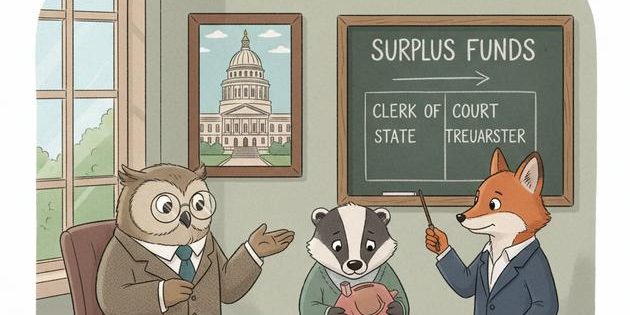
Is there a deadline to claim foreclosure surplus funds, and what happens if it has already passed? – North Carolina
Short Answer
Under North Carolina law, there is no short, fixed “use it or lose it” deadline in the foreclosure file itself to claim surplus funds held by the clerk of superior court. However, if surplus funds sit unclaimed long enough, they can be turned over to the State Treasurer as unclaimed property, and any fight over the foreclosure judgment itself is subject to strict time limits. Once funds move into the State’s unclaimed property system, they are generally still claimable, but the process, proof requirements, and forum change.
Understanding the Problem
The core question is whether a former North Carolina property owner can still claim surplus funds from a prior foreclosure when years have passed and an unsolicited third party has just raised the issue. The focus is on nonjudicial power-of-sale foreclosures handled through the clerk of superior court, where the sale price exceeded the debt and costs, leaving a balance called “surplus proceeds.” The concern is whether a time limit has already run so that the former owner’s claim is cut off, and what it means if the surplus has already been transferred out of the foreclosure file—either to another claimant or into the State’s unclaimed property system.
Apply the Law
North Carolina law separates three issues: (1) how surplus funds arise and get into the clerk’s hands, (2) how competing claims to those funds are resolved, and (3) what happens if no one claims the funds for an extended period and they are treated as unclaimed property. Time limits are strict for challenging the foreclosure title itself, but North Carolina’s unclaimed property rules are more flexible about late claims to abandoned money.
Key Requirements
- Creation of surplus funds: A foreclosure sale must generate more money than is needed to pay sale costs, taxes or assessments due at sale, and the secured debt; anything left is surplus and must be held for those entitled to it.
- Assertion of claims in a special proceeding: Any person claiming the surplus may file a special proceeding with the clerk of superior court to determine who owns it; the clerk or, if transferred, the superior court judge decides competing claims.
- Transfer to unclaimed property and later claims: If surplus funds or related amounts sit unclaimed long enough, they may be turned over to the State Treasurer as escheated or unclaimed property, at which point claims run through the Treasurer under North Carolina’s unclaimed property procedures rather than the foreclosure file.
What the Statutes Say
- N.C. Gen. Stat. § 45-21.31 (Disposition of foreclosure sale proceeds) – sets how sale proceeds are applied and requires any surplus to be paid to those entitled to it or into the clerk’s office if entitlement is unclear.
- N.C. Gen. Stat. § 45-21.32 (Special proceeding to determine ownership of surplus) – allows anyone claiming surplus paid into the clerk’s office to file a special proceeding, with disputed issues moved to the superior court civil docket.
- N.C. Gen. Stat. § 1-339.71 (Special proceeding re surplus in judicial sales) – provides a parallel process for surplus paid into the clerk’s office in certain judicial sales.
- N.C. Gen. Stat. § 105-377 (Time for contesting tax foreclosure title) – bars challenges to a tax foreclosure title more than one year after the deed is recorded, affecting attempts to undo the foreclosure itself but not a simple claim to leftover money.
- N.C. Gen. Stat. § 116B-3 (Unclaimed personalty; escheat to Escheat Fund) – requires certain unclaimed personal funds in court or estate settings to go to the State Treasurer, who holds them subject to later just claims.
- N.C. Gen. Stat. § 116B-67 (Claim for property paid or delivered to the Treasurer) – governs how an owner or heir files a claim with the State Treasurer for property that has been reported as unclaimed.
- N.C. Gen. Stat. § 116B-68 (Action to establish claim) – allows an action in Wake County Superior Court if the Treasurer denies or fails to act on a claim.
- N.C. Gen. Stat. § 116B-71 (Periods of limitation under unclaimed property law) – limits how long the Treasurer can enforce reporting duties, but makes clear that general limitation periods do not stop property from being treated as abandoned or prevent later owner claims.
Analysis
Apply the Rule to the Facts: In the scenario described, a prior foreclosure produced more money than needed to pay the debt and costs, leaving surplus proceeds. Those surplus funds were either (1) still in the clerk of superior court’s trust account under the foreclosure file, or (2) later turned over to the State Treasurer as unclaimed property. If the clerk still holds the surplus, a claimant typically proceeds by special proceeding under the foreclosure file, rather than facing a rigid statute of limitations. If the funds have already moved to the Treasurer, the claim generally shifts to the unclaimed property process, which remains available even long after the foreclosure, though documentation and proof of entitlement become more important over time.
Process & Timing
- Who files: A person claiming to be entitled to the surplus (often the former owner or an heir). Where: Clerk of Superior Court in the county where the foreclosure sale occurred, using a petition in a special proceeding referencing the foreclosure file number (for example, under N.C. Gen. Stat. § 45-21.32). When: As soon as unclaimed surplus is confirmed; practice guides indicate that clerks generally accept such petitions even years after the sale, unless the funds have already been disbursed or transferred.
- If the clerk has already sent the money to the State Treasurer as unclaimed or escheated funds, the claimant instead files a claim with the Treasurer’s Unclaimed Property Division under N.C. Gen. Stat. § 116B-67, using the Treasurer’s claim form and supporting documents. The Treasurer typically must allow or deny the claim within about 90 days after a complete claim is filed.
- If the Treasurer denies the claim or does not act within that timeframe, the claimant may file an action in Wake County Superior Court under N.C. Gen. Stat. § 116B-68 to establish the claim. The expected end result, if successful, is payment of the surplus or its net proceeds, either directly from the clerk (if still held locally) or from the Escheat Fund through the Treasurer.
Exceptions & Pitfalls
- If the clerk has already properly disbursed the surplus to another entitled party after notice and opportunity to claim, later claimants generally cannot reopen that distribution through a simple surplus proceeding.
- Confusing a challenge to the foreclosure (which has strict deadlines, especially in tax foreclosures) with a claim for surplus funds can lead to missed opportunities; the law treats undoing the sale very differently from collecting leftover money.
- Delays can cause surplus to be transferred to the State Treasurer as unclaimed property, which adds steps, documentation, and sometimes court involvement, even though the right to claim the money often survives.
- Unsolicited letters from third-party “locators” may involve contingency fees or assignments; signing over rights without understanding the underlying claim, the actual amount, or the free state-run claim options can significantly affect the net recovery.
- Failure to give proper notice to all known potential claimants in the surplus proceeding can result in challenges or later disputes, especially if heirs, junior lienholders, or co-owners were overlooked.
Conclusion
For North Carolina foreclosure surplus funds, there is not a simple short deadline that automatically wipes out the right to claim the surplus, but the posture of the money changes over time. Initially, surplus is handled through the clerk of superior court in a special proceeding; if it remains unclaimed long enough, it can move into the State’s unclaimed property system, where a later claim is still generally possible but follows different procedures. The most important next step is to confirm whether the clerk or the State Treasurer now holds the funds and then promptly file the appropriate claim in that forum.
Talk to a Surplus Funds Attorney
If foreclosure surplus or unclaimed foreclosure funds may exist in North Carolina, our firm has experienced attorneys who can help explain where the money is, who is entitled to it, and what process applies. Call us today at (919) 341-7055.
Disclaimer: This article provides general information about North Carolina law based on the single question stated above. It is not legal advice for a specific situation and does not create an attorney-client relationship. Laws, procedures, and local practice can change and may vary by county. If there is a deadline, act promptly and speak with a licensed North Carolina attorney.

