
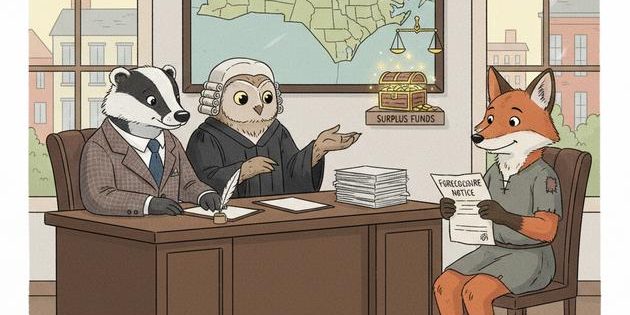
Can a law firm handle this directly with the court or agency so I can avoid scams? – North Carolina
Short Answer
In North Carolina, a law firm can deal directly with the clerk of superior court or the State Treasurer’s office to pursue surplus or unclaimed funds from a foreclosure, so the client does not have to work through third-party “recovery” companies. The attorney can investigate whether funds are held with the county clerk or by the State Treasurer and file the required claims or special proceedings in the client’s name. This helps avoid scams because the lawyer must communicate with the official court or agency, follow North Carolina procedure, and account for any funds received. However, the client should still sign an engagement agreement and provide documentation so the firm has authority to act.
Understanding the Problem
The question is whether a North Carolina surplus funds attorney can work directly with the North Carolina court system or a state agency so a property owner does not have to respond to unsolicited third-party offers about foreclosure surplus or other unclaimed funds. The concern typically arises after a foreclosure sale when surplus funds may be on deposit with the clerk of superior court or later reported as unclaimed property to the State Treasurer. The core issue is whether an attorney can step into the process, interact only with the official court or agency, and lawfully claim any money owed to the former owner while reducing the risk of scams.
Apply the Law
North Carolina law sets out how foreclosure sale proceeds are handled, when surplus must be paid to the clerk of superior court, and how anyone claiming those funds must proceed. It also creates a statewide unclaimed property system administered by the State Treasurer when money is not claimed within a set period. In both settings, an attorney admitted in North Carolina may represent a claimant, communicate directly with the relevant office, and file the necessary petitions or claim forms on the client’s behalf, subject to standard ethical and fee rules.
Key Requirements
- Existence of surplus or unclaimed funds: There must be actual surplus from a foreclosure or other sale held by the clerk of superior court, or reported as unclaimed property to the State Treasurer.
- Proper forum and procedure: The claim must be made in the correct place (normally the clerk of superior court in the county of sale, or the State Treasurer for escheated/unclaimed funds) using the procedures those offices require.
- Authority and documentation: The attorney must have authority to act (an engagement agreement and, when required, a notarized claim form or power of attorney) and must submit evidence showing the client’s right to the funds.
What the Statutes Say
- N.C. Gen. Stat. § 45-21.31 (Foreclosure sale proceeds and surplus) – Sets the order of payment from a foreclosure sale and requires any remaining surplus to be paid to the person entitled or into the clerk of superior court when there is uncertainty or adverse claims.
- N.C. Gen. Stat. § 45-21.32 (Special proceeding for foreclosure surplus) – Allows any person claiming foreclosure surplus paid into the clerk’s office to file a special proceeding before the clerk to determine who owns the money, with the clerk or court allowed to award reasonable attorney’s fees from the fund to the prevailing party’s attorney.
- N.C. Gen. Stat. § 1-339.70 (Execution sale proceeds) – Requires sheriffs to pay sale proceeds to the clerk, directs the clerk to satisfy the judgment, and requires any surplus to be paid to the person legally entitled or held for determination by special proceeding.
- N.C. Gen. Stat. § 1-339.71 (Special proceeding for surplus under execution) – Authorizes a special proceeding before the clerk to decide who is entitled to surplus funds held by the clerk after an execution sale.
- N.C. Gen. Stat. § 116B-62 (Treasurer’s unclaimed property lists) – Involves how the State Treasurer prepares and distributes lists of escheated and abandoned property to clerks of court and the public, reinforcing that the Treasurer is the hub for statewide unclaimed property claims.
Analysis
Apply the Rule to the Facts: Here, the facts involve an unsolicited letter about foreclosure surplus funds and independent confirmation that funds exist in a particular North Carolina jurisdiction. Under the statutes above, those surplus funds are either on deposit with the clerk of superior court from a foreclosure or execution sale, or have eventually been transferred to the State Treasurer as unclaimed property. In either case, a North Carolina surplus funds attorney can contact the clerk or Treasurer directly, confirm the status of the money, and file the appropriate special proceeding or claim form in the client’s name, eliminating any need to engage with the unsolicited third party.
Process & Timing
- Who files: The property owner (through their attorney). Where: Usually the Office of the Clerk of Superior Court in the county where the foreclosure sale occurred, or the North Carolina State Treasurer’s Unclaimed Property Division if the funds have been transferred there. What: For foreclosure surplus, a verified petition in a special proceeding to determine entitlement to surplus funds; for unclaimed property, the Treasurer’s official claim form and required supporting documents. When: As soon as the owner learns surplus or unclaimed funds exist; deadlines vary, but delay can complicate proof and invite competing claims.
- The attorney confirms where the money is held (clerk of court ledger versus Treasurer’s database), gathers documents showing the prior ownership and foreclosure details, and files the petition or claim package. Processing time depends on the county and the Treasurer’s workload, but it often takes several weeks or more for review, any hearings, and orders authorizing release of funds.
- Once the clerk or Treasurer approves the claim or the court enters an order determining ownership, the funds are disbursed by check to the client or to the attorney’s trust account for proper distribution under the fee agreement. The attorney then must account for all funds received and pay the net amount to the client.
Exceptions & Pitfalls
- Other lienholders or former co-owners may have equal or superior claims to surplus funds, so a court could divide or redirect the money; an attorney has to identify and notify such parties in the special proceeding.
- Some third-party “recovery” services demand large percentages, ask owners to sign broad assignments, or provide misleading information; working through a licensed attorney who files directly with the clerk or Treasurer helps avoid these arrangements, but owners should still review and understand the law firm’s fee agreement before signing.
- Incomplete documentation, wrong county, or filing with the wrong office can delay or derail a claim; careful verification of the foreclosure file, case number, and current location of the funds is essential before submitting paperwork.
Conclusion
Under North Carolina law, a law firm can work directly with the clerk of superior court or the State Treasurer to pursue foreclosure surplus or related unclaimed funds in a client’s name, without involving outside “recovery” companies. The key steps are confirming that surplus or unclaimed funds exist, using the correct special proceeding or claim process in the proper office, and providing documentation that proves entitlement. A practical next step is to retain a North Carolina attorney to review the foreclosure records, locate the funds, and file the claim with the appropriate court or agency.
Talk to a Surplus Funds Attorney
If someone is dealing with unsolicited letters about foreclosure surplus or unclaimed funds in North Carolina and wants a law firm to work only with the court or State Treasurer, our firm has experienced attorneys who can help explain options and handle the process directly with the proper office. Call us today at (919) 341-7055.
Disclaimer: This article provides general information about North Carolina law based on the single question stated above. It is not legal advice for your specific situation and does not create an attorney-client relationship. Laws, procedures, and local practice can change and may vary by county. If you have a deadline, act promptly and speak with a licensed North Carolina attorney.

