
What information and documents do I need to move a property deed into a trust if the trust already exists? – North Carolina
Short Answer
In North Carolina, moving real estate into an already-existing trust usually means preparing and recording a new deed from the current owner to the trust’s trustee (often a quitclaim deed or warranty deed, depending on the goal). To do that cleanly, the key items are the current deed information (legal description and parcel details), the correct trust/trustee name and capacity for the grantee line, and the signatures/notarization needed for recording with the county Register of Deeds. Counties also commonly require transfer-reporting information and may require a tax certification before recording.
Understanding the Problem
In North Carolina real estate practice, the question is what information and paperwork must be gathered to transfer a family-owned property from a parent’s individual ownership into an already-existing trust by deed. The decision point is whether the deed can be drafted and recorded with the correct trust-related ownership details (trustee identity and capacity) and the county recording requirements, so the Register of Deeds accepts it and the land records clearly show the trust’s trustee as the new owner of record.
Apply the Law
North Carolina generally treats a “move the deed into a trust” transaction as a conveyance of real property that must be put into a recordable deed and filed in the county where the land sits. The deed must identify the grantor (current owner) and the grantee (typically the trustee, in a trustee capacity), include a sufficient legal description, be properly executed and notarized, and satisfy county recording prerequisites. Separate from recording, a conveyance can also trigger reporting items that must appear in the deed and may trigger excise tax unless an exemption applies.
Key Requirements
- Correct parties and “trustee capacity”: The deed must name the current owner(s) as grantor(s) and name the trustee as grantee, typically written to show the trustee is taking title for the trust (for example, “John Doe, Trustee of the Doe Family Trust dated ___”). Getting the trustee name and capacity wrong can create title and refinancing problems later.
- Recordable legal description and parcel identifiers: The deed must include the legal description used in prior deeds (often a metes-and-bounds description or lot/block reference) and commonly includes the parcel ID and the prior deed book/page reference so the Register of Deeds and future title searches can track the chain of title.
- Execution, notarization, and county recording prerequisites: The grantor(s) must sign, signatures must be properly acknowledged before a notary, and the package must meet local Register of Deeds requirements (including any required tax certification process in that county).
What the Statutes Say
- N.C. Gen. Stat. § 105-317.2 (Report on transfers of real property) – Requires certain transfer-reporting information to be included in deeds conveying property, including names and mailing addresses of grantors and grantees and whether the property includes a grantor’s primary residence.
- N.C. Gen. Stat. § 105-228.30 (Real property excise tax) – Imposes an excise tax on instruments conveying an interest in real property, generally based on the consideration or value conveyed, and requires payment before recording unless an exemption applies.
- N.C. Gen. Stat. § 161-31 (Tax certification; certain counties) – Allows certain counties to require a tax collector certification (or an attorney-supervised closing statement alternative) before the Register of Deeds accepts a deed for recording.
Analysis
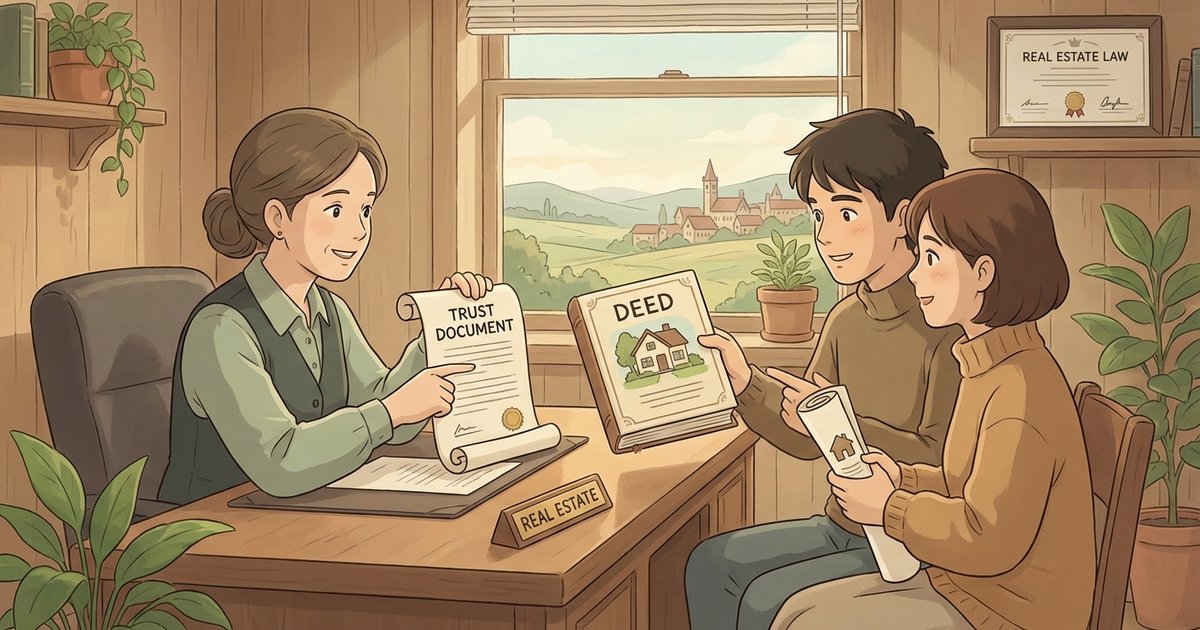
Apply the Rule to the Facts: The facts describe a family-owned property where a parent wants to transfer title into an already-existing trust using a quitclaim deed. That means the deed needs (1) the parent’s current vesting information as grantor, (2) the correct trustee name and trustee capacity as grantee for the existing trust, and (3) the same legal description used in the current recorded deed so the chain of title stays clear. The deed also needs the transfer-reporting information that North Carolina requires to appear in deeds and must be recorded with the correct county Register of Deeds, along with any local tax certification requirement and any excise tax determination.
Process & Timing
- Who files: The grantor (often the current owner/parent) or the person handling the recording. Where: The Register of Deeds in the North Carolina county where the property is located. What: A new deed (often a quitclaim deed for a no-warranty transfer, or a warranty deed if warranties are intended), signed and notarized, with the required transfer-reporting information included in the deed. When: Typically as soon as the deed is properly executed and any county prerequisites (like tax certification, if applicable) are satisfied.
- Before signing: Gather the current recorded deed (to copy the legal description and prior recording reference), confirm the exact trustee name(s) and how the trust names the trustee, and confirm how title should read (especially if there are co-owners or a spouse with marital rights that may need to sign depending on the situation).
- Recording: Submit the signed, notarized deed for recording, pay the Register of Deeds recording fees, and address any excise tax payment or exemption documentation required by local practice. After recording, obtain the recorded copy (with book/page or instrument number) for the trust records.
Exceptions & Pitfalls
- Using the wrong “grantee” name: In most trust transfers, title is taken in the trustee’s name (in a trustee capacity), not in the trust’s name alone. Misnaming the trustee or omitting trustee capacity can create avoidable title defects.
- Legal description errors: A street address is not enough. A mismatched or incomplete legal description can cause recording rejection or future title problems.
- Excise tax and exemption confusion: North Carolina has a real property excise tax rule tied to consideration/value. Whether a particular trust transfer is taxable or exempt can depend on the details and how the deed is completed. A deed should not be recorded with guessed tax treatment.
- County-specific recording prerequisites: Some counties require tax certification before recording under state law authority. Local Register of Deeds formatting and submission rules can also vary.
- Loan and insurance issues: If the property has a mortgage, transferring title to a trust can create lender/servicer issues and can affect title insurance coverage unless handled carefully. This is often addressed before recording.
For readers looking for related North Carolina deed-recording guidance, see steps required to make sure a deed transfer is properly recorded, and for quitclaim deed mechanics, see how a quitclaim deed is used for a title change (the recording concepts are similar even when the reason for the transfer differs).
Conclusion
In North Carolina, transferring a property into an already-existing trust typically requires a new, recordable deed from the current owner to the trust’s trustee (named in a trustee capacity), using the correct legal description from the current deed and including the transfer-reporting information required in deeds. The deed must be signed, notarized, and recorded with the county Register of Deeds, and the county may require a tax certification before recording. The next step is to obtain the current recorded deed and the trust’s trustee information and have the deed prepared for recording.
Talk to a Real Estate Attorney
If you’re dealing with transferring a parent’s property into an existing trust, our firm has experienced attorneys who can help you confirm the right deed language, avoid recording rejections, and understand excise tax and county requirements. Call us today at [919-341-7055].
Disclaimer: This article provides general information about North Carolina law based on the single question stated above. It is not legal advice for your specific situation and does not create an attorney-client relationship. Laws, procedures, and local practice can change and may vary by county. If you have a deadline, act promptly and speak with a licensed North Carolina attorney.

