
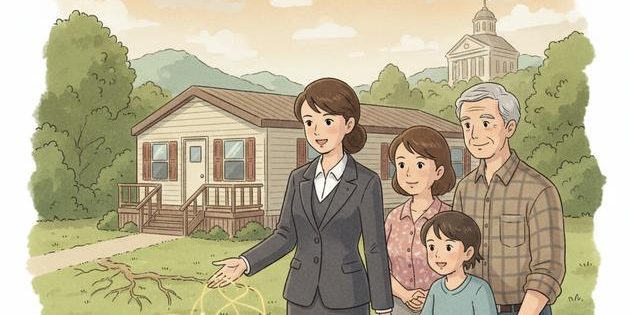
What happens to a mobile home and its loan when the land title is disputed and not all heirs agreed? – North Carolina
Short Answer
In North Carolina, a mobile home can be treated as personal property with its own DMV title, or it can become part of the real estate if the titled home’s DMV title is surrendered and recorded as permanently attached. If the land title is disputed or heirs do not all agree, that disagreement can block (or delay) decisions about whether the home is treated as part of the land and can also complicate any sale or refinance. The loan usually remains enforceable, and the lender’s rights depend on how the home is titled and where the lender’s lien is recorded.
Understanding the Problem
Under North Carolina real estate law, the key question is whether a manufactured/mobile home sits on disputed family land as its own titled asset, or whether it has been legally converted into an improvement to the land. When heirs disagree about who owns the land, who controls it, or whether an heir’s interest was left out of public records, a separate but related issue arises: can anyone lawfully sign paperwork to sell, move, or permanently attach the home, and can the home loan be paid off or enforced without clear ownership authority.
Apply the Law
North Carolina treats many manufactured homes as titled property through the Division of Motor Vehicles (DMV). A titled manufactured home can later be treated as real estate if the owner follows a statutory process to surrender and cancel the DMV title and then record the required paperwork with the county register of deeds. When a lender has a recorded security interest, the DMV generally cannot cancel the title unless the secured party consents. If heirs dispute the land title, that dispute often prevents clean paperwork that lenders, buyers, and title companies need, and it increases the risk that a transaction will be challenged.
Key Requirements
- Determine how the home is classified: Confirm whether the home still has a DMV certificate of title (personal property) or whether the title was surrendered/cancelled and recorded (real property improvement).
- Identify who has authority to act: For an heir-owned tract, authority may depend on the estate administration status and the chain of title; not every family member can sign binding documents for the group.
- Confirm the lender’s lien position and where it is recorded: A lender may have a lien noted on the DMV title (personal property route) or may need real-property style lien priority after a lawful conversion/recordation.
What the Statutes Say
- N.C. Gen. Stat. § 20-109.2 (Surrender/cancellation of manufactured home title) – Sets the process to surrender and cancel a manufactured home title and limits cancellation if a recorded security interest is not released or consented to.
- N.C. Gen. Stat. § 47-20.6 (Permanent attachment affidavit; effect on liens) – Requires recording the affidavit after DMV cancellation and explains that, after recordation, the home becomes an improvement and liens are handled like real property liens.
- N.C. Gen. Stat. § 47-20.7 (Declaration of intent to affix in certain situations) – Allows a recorded declaration of intent to treat an eligible manufactured home as part of the real property and addresses later liens and conveyances.
- N.C. Gen. Stat. § 41-10 (Quiet title) – Authorizes a lawsuit to determine adverse claims to real property when ownership is disputed.
Analysis
Apply the Rule to the Facts: The facts describe an undivided family tract where interests should have passed through a parent to two children, but public records no longer show those interests. That kind of break in the chain of title can prevent a clean decision about whether the mobile home is treated as personal property (DMV-titled) or part of the real estate (title surrendered and recorded). If the home is tied to a loan, the lender’s rights will typically track the classification: a lien noted on the DMV title if the home remains titled, or real-property-style lien priority only after a lawful surrender/cancellation and county recordation.
Process & Timing
- Who files: The person(s) with legal authority over the home and/or land (often a titled owner, estate representative, or record owner). Where: North Carolina DMV for title status and lien notation; and the Register of Deeds in the county where the land sits for recorded real-estate instruments. What: Title records request; and, if converting to real property, an affidavit in the statutory form and related recordation documents. When: Before any sale, refinance, payoff closing, or attempt to permanently attach/detach the home.
- Address the heirship/title dispute: If co-owners cannot agree, a court case may be needed to establish ownership interests (for example, a quiet title action) so that later transactions have a defensible chain of title.
- Resolve the loan’s status: If the lender’s lien remains on the DMV title, the title generally cannot be cancelled without the secured party’s written consent. If the home already became an improvement, lien priority typically must be addressed through real-property records before any conveyance or refinance.
Exceptions & Pitfalls
- Home treated as “real property” without a clean paper trail: Families sometimes assume a mobile home “automatically” becomes part of the land once it is set up. Under North Carolina’s statutes, the conversion typically depends on completing the surrender/cancellation and recording steps.
- Security interest blocks DMV cancellation: If a lender’s security interest is recorded on the certificate of title and not released, the DMV generally cannot cancel the title without written consent from all secured parties.
- Wrong person signs: A co-owner who signs for the “family” without authority can create a deal that fails later, and can also trigger claims for slander of title or wrongful conveyance.
- County-recording mismatch: If the home becomes an improvement to real property, liens and later transfers generally must be handled through the register of deeds for the county where the land is located; recording in the wrong county or using incomplete legal descriptions can create priority and enforceability problems.
Conclusion
In North Carolina, what happens to a mobile home and its loan during a land-title dispute depends first on whether the home is still DMV-titled personal property or has been legally converted into an improvement to the land by surrendering/canceling the title and recording the required affidavit. Heir disagreements often prevent the signatures and clear ownership proof needed to sell, refinance, or convert the home. The next step is to confirm the home’s title and lien status with the DMV and the county records before any transaction deadline.
Talk to a Real Estate Attorney
If a family land title is disputed and a manufactured/mobile home loan is involved, experienced attorneys can help sort out the home’s title status, lien issues, and the court options needed to clear the record. Call us today at (919) 341-7055.
Disclaimer: This article provides general information about North Carolina law based on the single question stated above. It is not legal advice for your specific situation and does not create an attorney-client relationship. Laws, procedures, and local practice can change and may vary by county. If you have a deadline, act promptly and speak with a licensed North Carolina attorney.

