
What happens if there is an error or dispute with the title change paperwork? – North Carolina
Short Answer
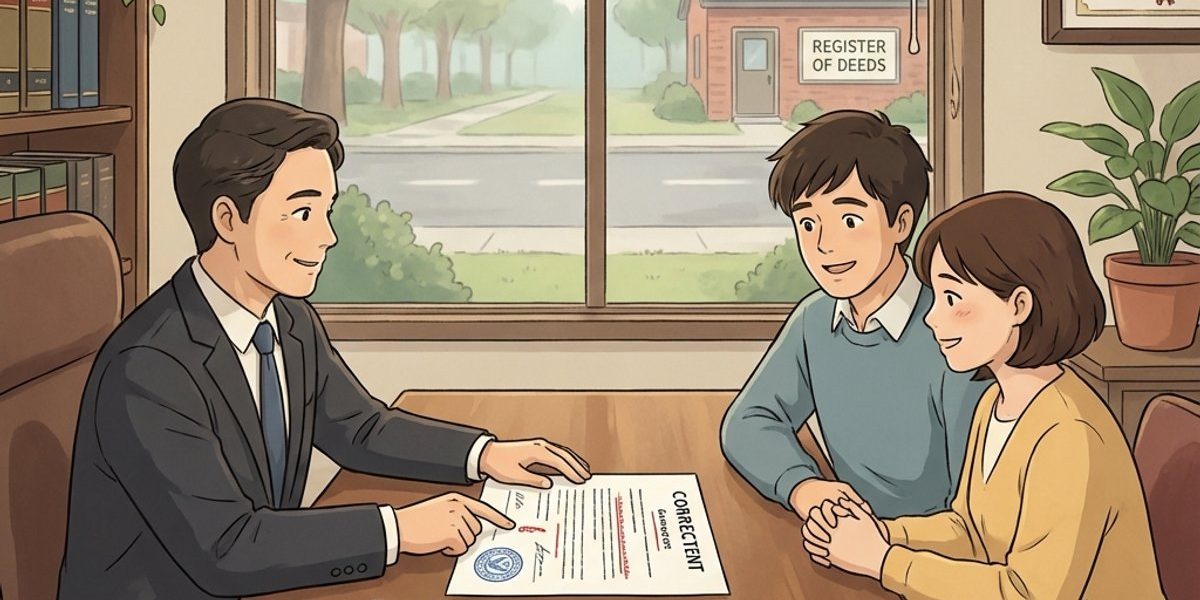
In North Carolina, an error in title change paperwork is often fixed by recording a corrective document with the county Register of Deeds. If the issue is minor (like a nonmaterial typo), a corrective affidavit may be enough; if the issue affects someone’s rights or there is a real dispute, the fix may require a new corrected deed or a court process to clear title. Timing matters because recording affects notice and priority, and some correction methods have built-in notice and objection periods.
Understanding the Problem
In North Carolina real estate matters, a title change usually means a deed or other instrument was prepared, signed, notarized, and recorded with the county Register of Deeds to show a new owner or a change in how ownership is held. The question is what happens when that recorded paperwork contains a mistake or when someone disputes whether the title change was done correctly. The practical decision point is whether the problem is a fixable recording/paperwork error or a true ownership dispute that requires a formal resolution.
Apply the Law
North Carolina law provides several ways to address problems in recorded title documents, depending on the type of error and whether anyone objects. Minor, nonmaterial errors can sometimes be addressed by recording a corrective notice affidavit. More significant issues—especially those that could affect someone’s rights—often require a corrected instrument signed by the proper parties or a court order. When there is an actual dispute over who owns an interest in the property, a quiet title lawsuit in Superior Court may be the appropriate path.
Key Requirements
- Identify the type of problem: A minor typo is treated differently than an error that changes legal rights (for example, the wrong owner, wrong property description, or wrong type of ownership).
- Use the correct correction method: North Carolina allows certain affidavits for limited corrections, but other problems require a new corrected deed or a court order.
- Record the fix in the right place: Corrections generally must be recorded with the Register of Deeds in the county where the property is located so the public record reflects the correction.
What the Statutes Say
- N.C. Gen. Stat. § 47-36.1 (Notice of errors in recorded instruments of title) – Allows recording a corrective notice affidavit for nonmaterial typographical or other minor errors; it is not for errors that affect the rights of a party.
- N.C. Gen. Stat. § 47-36 (Errors in registration corrected on petition to clerk) – Provides a petition process to the Clerk of Superior Court to correct errors in the registration record and requires notice (including 30 days’ notice to certain parties) before the petition is heard.
- N.C. Gen. Stat. § 47-36.2 (Cure of obvious description errors in recorded instruments) – Allows an authorized attorney to record a curative affidavit to fix certain “obvious description errors,” but requires formal service of a notice of intent and provides an objection window; if someone objects, the affidavit cannot be recorded under this process.
- N.C. Gen. Stat. § 41-10 (Titles quieted) – Authorizes an action to determine adverse claims to real property (commonly called a quiet title action).
Analysis
Apply the Rule to the Facts: Here, the issue is a reported “problem or question” about a recent title change email and difficulty reaching the responsible attorney. Under North Carolina practice, the first step is to identify whether the concern is (1) a minor recording/paperwork error that can be corrected in the public record, or (2) a dispute about ownership or the validity of the title change. If it is a minor error, a corrective recording may resolve it; if it is a dispute, the matter may require a negotiated resolution, a corrected deed signed by the proper parties, or a court process to clear title.
Process & Timing
- Who files: Typically the party seeking the correction (often through a North Carolina attorney), and sometimes the drafting attorney or an authorized attorney depending on the correction method. Where: The county Register of Deeds where the property is located; for certain petitions, the Clerk of Superior Court in that county. What: A corrective notice affidavit for minor errors, a curative affidavit process for certain obvious legal description errors, a corrected and re-executed instrument (such as a corrected deed), or a petition/action in court when needed. When: As soon as the issue is discovered, especially before a refinance, sale, or other transaction that depends on clean title.
- If the issue is a minor typo: A corrective notice affidavit may be recorded to give notice of the correction, but it is limited to nonmaterial errors and does not rewrite the deal.
- If the issue is an “obvious description error”: The curative affidavit statute requires service of a notice of intent and an opportunity to object; if an objection is received, that route stops and another solution (often a corrected instrument or court action) may be needed.
- If the issue is a registration/recording error by the office: A petition to the Clerk of Superior Court may be used to seek an order directing the Register of Deeds to correct the record to match the original, with required notice to identified parties.
- If there is a true ownership dispute: A quiet title action in Superior Court may be necessary to determine adverse claims and obtain a judgment that can be recorded to clear the title.
Exceptions & Pitfalls
- Not every “error” can be fixed by affidavit: North Carolina distinguishes between minor, nonmaterial mistakes and errors that could change someone’s rights; rights-changing issues often require a corrected deed or court involvement.
- Description problems can be technical: A street address or tax ID mismatch may signal a deeper legal description issue; fixing the wrong thing can create a new title problem.
- Objections can stop an affidavit-based cure: For certain statutory curative affidavits, a written objection prevents recording under that process, which can shift the matter toward a corrected instrument or litigation.
- Recording location matters: Corrections generally must be recorded in every county where the property is located; recording in the wrong county does not clean up the chain of title where it counts.
- Do not rely on email summaries alone: The recorded document controls; the deed book/page or instrument number should be reviewed to confirm what was actually recorded.
Conclusion
In North Carolina, an error or dispute with title change paperwork is handled based on whether the problem is minor or affects ownership rights. Minor, nonmaterial mistakes may be addressed by recording a corrective notice affidavit, while certain obvious legal description errors may be cured through a statutory curative affidavit process that includes notice and an objection period. If the issue is a true ownership dispute, a quiet title action in Superior Court may be required. The next step is to obtain the recorded instrument information and file the appropriate corrective document with the county Register of Deeds promptly.
Talk to a Real Estate Attorney
If there is a problem or dispute tied to a recent title change, our firm has experienced attorneys who can help explain what the recorded documents show, what correction options may fit the situation, and what timelines apply. Call us today at (919) 341-7055.
Disclaimer: This article provides general information about North Carolina law based on the single question stated above. It is not legal advice for your specific situation and does not create an attorney-client relationship. Laws, procedures, and local practice can change and may vary by county. If you have a deadline, act promptly and speak with a licensed North Carolina attorney.

