
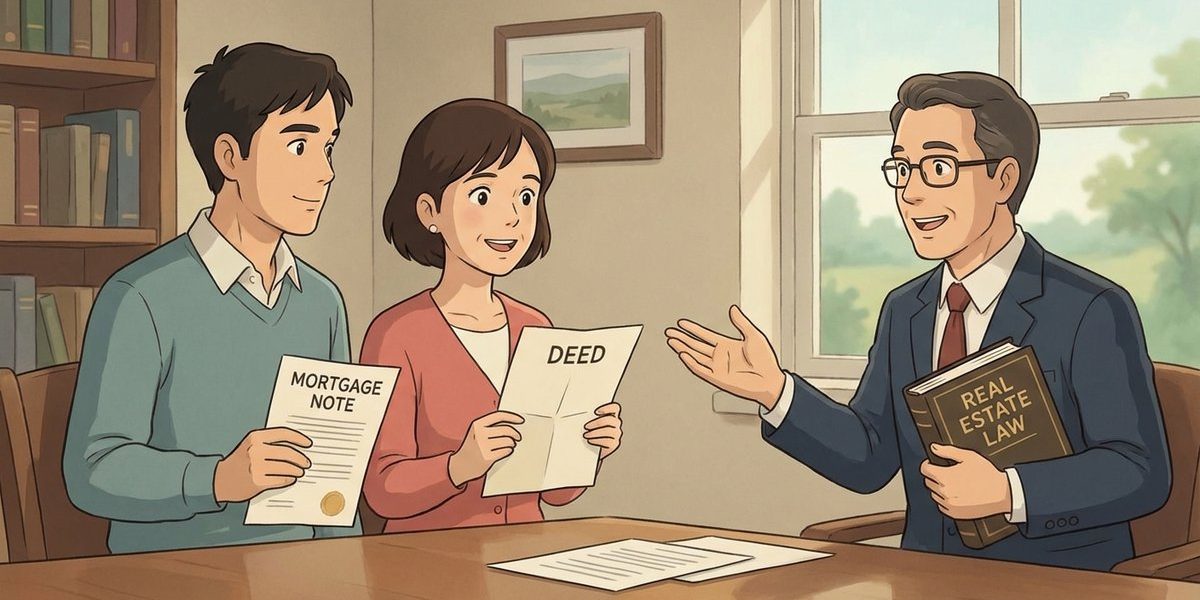
If I sign a deed giving my share of the inherited property to my sibling, does that automatically remove me from any mortgage responsibility? – North Carolina
Short Answer
No. In North Carolina, signing a deed can transfer ownership of inherited real estate, but it usually does not remove a person from responsibility on the mortgage note if that person signed the loan. Mortgage responsibility typically ends only if the lender releases the borrower (often through a refinance, assumption approved by the lender, or other written release). A deed changes title; it does not automatically change the loan contract.
Understanding the Problem
In North Carolina real estate matters, the key question is: can an heir sign a deed transferring an inherited ownership interest to a sibling and, by doing that alone, stop being responsible for the home loan? This comes up when multiple family members inherit a house (and sometimes a second parcel) and everyone wants one sibling to become the sole owner without a buyout. The decision point is whether the deed transfer also changes who the lender can pursue for payment if the mortgage is not paid.
Apply the Law
North Carolina law treats ownership of land (title) and responsibility for a loan (personal liability on the promissory note) as two different things. A deed transfers the ownership interest that was inherited. The mortgage note is a separate contract with the lender, and the lender generally keeps the right to enforce that contract against anyone who signed it unless the lender agrees in writing to release that person. A transfer can be done “subject to” the existing deed of trust (meaning the lien stays on the property) or with an “assumption” (meaning the new owner agrees to pay the debt), but neither automatically removes the original borrower unless the lender releases them.
Key Requirements
- Separate documents (deed vs. note): A deed changes who owns the property; the promissory note controls who personally owes the lender.
- Lender consent for a true release: To be removed from mortgage responsibility, the lender typically must approve a refinance, assumption/novation, or other written release of liability.
- Clear transfer terms and proper recording: The deed should clearly state what interest is being conveyed and must be properly executed and recorded in the county Register of Deeds so the public record matches the family’s intent.
What the Statutes Say
- N.C. Gen. Stat. § 45-45.1 (Release of mortgagor by dealings between mortgagee and assuming grantee) – Addresses when an original borrower can be released from further liability after a transfer where the grantee assumes the debt and the lender later takes certain actions; it underscores that release is tied to lender dealings, not the deed alone.
- N.C. Gen. Stat. § 45-36.23 (Obligation release: content and effect) – Explains that recording an “obligation release” affects whether an obligation is secured by the security instrument, and that recording such a release does not automatically extinguish personal liability unless the release says so.
Analysis
Apply the Rule to the Facts: Here, multiple family members inherited a parent’s house and an adjacent vacant parcel and want to deed their interests to one sibling. If any of the heirs are also borrowers on an existing mortgage note (for example, they signed a refinance after the parent died, or they co-signed a loan), signing a deed to the sibling usually will not remove them from the lender’s borrower list. Even if the sibling becomes the sole owner on the recorded deed, the lender can still look to any note signer for payment unless the lender issues a written release or the loan is refinanced into the sibling’s name.
Process & Timing
- Who files: The transferring heirs (grantors) sign a deed to the sibling (grantee). Where: The deed is recorded with the Register of Deeds in the North Carolina county where each parcel is located. What: A properly drafted deed (often a quitclaim deed or general warranty deed depending on the situation) with proper notarization/acknowledgment and required transfer information. When: Typically as soon as the family is ready to transfer title and after confirming how any existing deed of trust and lender requirements will be handled.
- Mortgage responsibility check: Identify whether any heir is on the promissory note (not just on title). If so, contact the lender to ask what options exist (refinance, lender-approved assumption, or written release). Timing depends on lender underwriting and can vary.
- Clean-up step: If the goal is to remove other heirs from mortgage responsibility, the usual end point is a lender document confirming release of liability and/or a refinance closing that pays off the old loan and replaces it with a new loan in the sibling’s name.
Exceptions & Pitfalls
- No note signature in the first place: If an heir never signed the promissory note (and is only on title), that heir generally is not personally responsible for the mortgage debt, even before signing a deed—though their ownership interest is still subject to the deed of trust lien.
- “Assumption” confusion: A deed can say the sibling “assumes” the loan, but many mortgages require lender approval for an assumption to be effective. Without lender approval, the original borrower may remain liable.
- Due-on-sale and lender consent issues: Some loans have clauses that allow the lender to demand payoff after a transfer. Even when a transfer is permitted, it does not equal a release of liability. Getting the lender’s position in writing matters.
- Two parcels, two title chains: A house and an adjacent vacant parcel may require separate legal descriptions and sometimes separate deeds; mistakes in legal descriptions or recording can create title problems later.
- Unrecorded or informal “give my share” paperwork: Notarized statements or informal agreements usually do not replace a properly executed and recorded deed for transferring North Carolina real estate. For more on the deed-transfer mechanics when the family agrees, see transfer an inherited house and adjacent land to one sibling and whether recorded deeds are needed.
Conclusion
In North Carolina, signing a deed to give an inherited ownership share to a sibling usually does not automatically remove mortgage responsibility for anyone who signed the promissory note. The deed changes title, but the loan contract controls personal liability unless the lender provides a written release or the loan is refinanced into the sibling’s name. The practical next step is to confirm who is on the note and then pursue a lender-approved refinance or written release if removing liability is the goal.
Talk to a Real Estate Attorney
If a family is dealing with an inherited house transfer and trying to make one sibling the sole owner without leaving others tied to a mortgage, our firm has experienced attorneys who can help explain options, paperwork, and timelines. Call us today at 919-341-7055.
Disclaimer: This article provides general information about North Carolina law based on the single question stated above. It is not legal advice for your specific situation and does not create an attorney-client relationship. Laws, procedures, and local practice can change and may vary by county. If you have a deadline, act promptly and speak with a licensed North Carolina attorney.

