
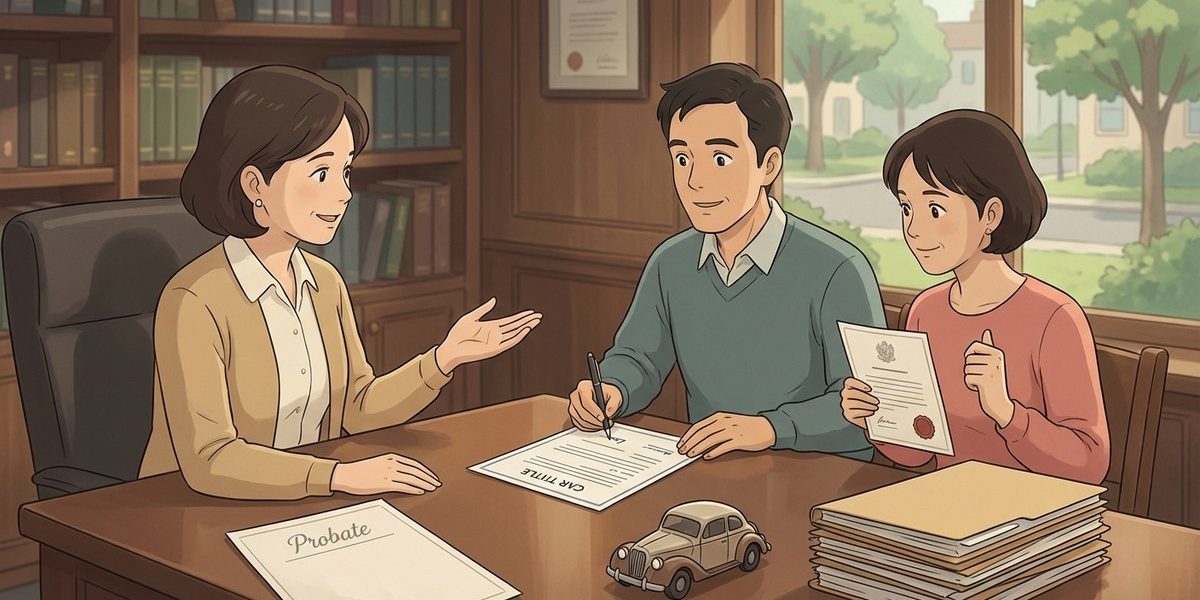
What steps transfer a deceased person’s vehicle to a relative when another heir must consent? – North Carolina
Short Answer
In North Carolina, a deceased person’s vehicle is usually transferred either (1) through the open estate by the personal representative signing the title over to the recipient, or (2) in limited “no administration” situations by a DMV affidavit signed by all heirs. When another heir must consent, that consent is typically handled by having the consenting heir sign the estate distribution paperwork (in an administered estate) or sign the DMV affidavit (in a no‑administration transfer). The DMV will also require supporting documents such as a certified death certificate and proof of the personal representative’s authority when an estate is open.
Understanding the Problem
In a North Carolina probate estate, can a personal representative transfer a decedent’s vehicle to a sibling when another heir agrees in writing, and what paperwork and steps are needed to complete the DMV title transfer while the estate is in the accounting stage?
Apply the Law
North Carolina treats a vehicle as personal property that must be re-titled through the North Carolina Division of Motor Vehicles (DMV) when ownership changes because of death. The DMV generally requires proof of authority for the transfer. If a personal representative (executor/administrator) has qualified, the transfer usually happens as part of estate administration by having the personal representative assign the title. If no personal representative is (or will be) appointed in certain limited situations, the DMV may allow a transfer by affidavit signed by all heirs, with clerk involvement, under the “operation of law” transfer rules.
Key Requirements
- Proper authority to transfer: Either the qualified personal representative assigns the title during administration, or (in limited cases) all heirs sign a DMV affidavit that meets statutory requirements.
- DMV title paperwork completed correctly: The title assignment and title application must be completed, and odometer disclosure must be handled in the format DMV requires for the vehicle’s title year.
- Supporting documents and compliance items: The DMV typically requires a certified death certificate and, when an estate is open, certified Letters showing the personal representative’s authority; the recipient must also satisfy DMV requirements tied to insurance and vehicle tax listing/payment.
What the Statutes Say
- N.C. Gen. Stat. § 20-77 (Transfer by operation of law) – Allows DMV to issue a new title when ownership passes by inheritance/devise and describes when an affidavit signed by all heirs may be used if no administration is pending or expected.
- N.C. Gen. Stat. § 31-39 (Probate necessary to pass title; timing limits) – Explains that probate affects the effectiveness of a will to pass title and includes timing rules tied to the final account and a two-year outside limit in certain situations.
Analysis
Apply the Rule to the Facts: Because the probate estate is already open and is in the accounting stage, the cleanest path is usually an administered transfer: the personal representative assigns the vehicle title to the sibling as part of distribution. The other heir’s “consent” is typically documented through the estate distribution paperwork (for example, a signed receipt/release or written consent to the proposed distribution) so the personal representative can show that the distribution matches the heirs’ agreement and can be supported in the final accounting. The DMV portion then focuses on correct title assignment, a title application, and the required certified documents.
Process & Timing
- Who files: The personal representative and the vehicle recipient (the sibling). Where: North Carolina DMV (through a local license plate agency or DMV processing, depending on DMV instructions). What: The original certificate of title signed by the personal representative as the transferring party; a title application (often completed on the back of the title, or by DMV title application form if the title does not include an application section); and any required odometer disclosure form if the title format requires it. When: After the personal representative confirms the vehicle can be distributed (including confirming known claims will be paid) and before the estate closes so the final accounting matches what was actually distributed.
- Attach supporting documents: Provide a certified copy of the death certificate and a certified copy of the personal representative’s Letters. If the original title is missing, the transfer may require a DMV duplicate title process before (or as part of) the transfer.
- Complete DMV compliance items: The recipient completes DMV requirements tied to liability insurance and vehicle property tax listing/payment, and pays DMV title/registration fees. DMV may require a new plate in many estate transfers, so the recipient should be prepared for plate and registration steps rather than assuming the existing plate can stay on the vehicle.
Exceptions & Pitfalls
- Using the wrong method (affidavit vs. administered transfer): The DMV “all heirs affidavit” method generally fits situations where no administration is pending or expected. When a personal representative has already qualified, the DMV usually expects the personal representative to assign the title rather than trying to use the no‑administration affidavit route.
- Missing signatures or incomplete consent: If the other heir’s consent is informal or unclear, it can create disputes at the accounting stage. A clear written consent tied to the specific vehicle and recipient helps support the distribution shown in the final account.
- Title and odometer issues: Older title formats can require a separate odometer disclosure form. Also, if the original title cannot be found, a duplicate title process may be required, which can slow down closing.
- Liens and creditor concerns: A vehicle subject to a lien generally cannot be transferred cleanly until the lien is released or otherwise handled. Also, even when the only known creditor claim is small, the personal representative should avoid distributing property needed to pay allowed claims and estate expenses.
- DMV tax/insurance compliance: DMV will not complete a transfer if required insurance certifications or vehicle tax listing/payment requirements are not satisfied by the recipient.
Conclusion
In North Carolina, when an estate is already in probate, the usual way to transfer a decedent’s vehicle to a relative is for the personal representative to sign the title over to the recipient and submit the required DMV title application materials with a certified death certificate and certified Letters. Another heir’s consent is best documented in writing as part of the estate distribution records so the final accounting matches the agreed distribution. The practical next step is to complete the title assignment and submit the DMV transfer package before the clerk approves the final account.
Talk to a Probate Attorney
If an estate needs to transfer a vehicle to a family member and another heir must consent, our firm has experienced attorneys who can help sort out the right paperwork for the clerk and the DMV and keep the estate on track to close. Call us today at (919) 341-7055.
Disclaimer: This article provides general information about North Carolina law based on the single question stated above. It is not legal advice for your specific situation and does not create an attorney-client relationship. Laws, procedures, and local practice can change and may vary by county. If you have a deadline, act promptly and speak with a licensed North Carolina attorney.

