
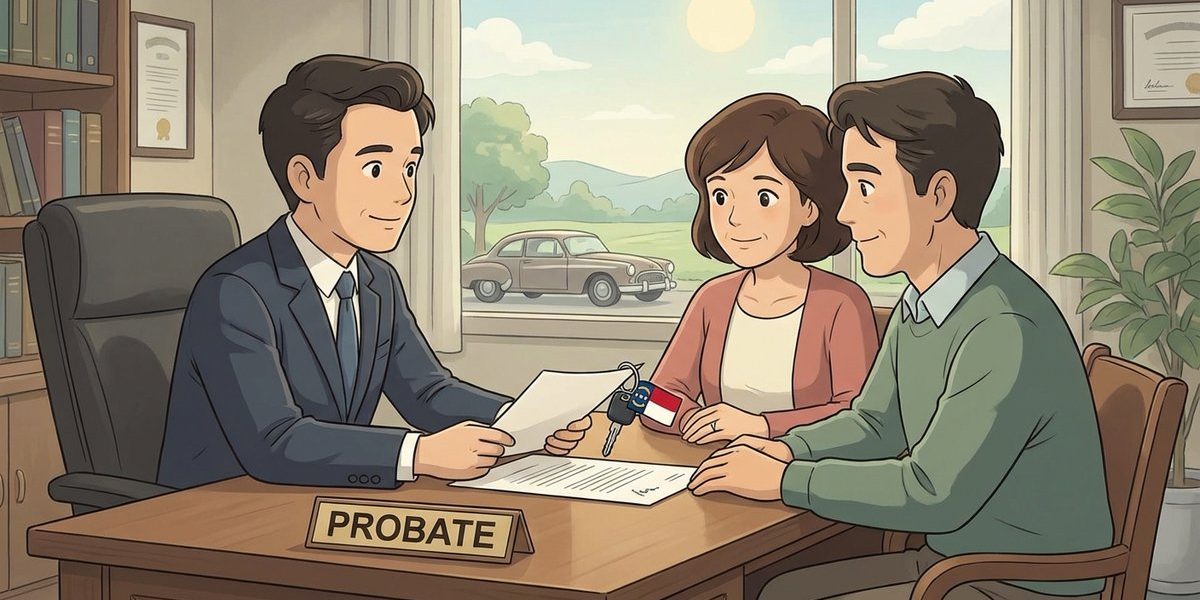
What steps are required to sell a car that belonged to someone while their estate is going through probate? – North Carolina
Short Answer
In North Carolina, a car titled only in a deceased person’s name is usually sold by the court-appointed personal representative (executor or administrator), not by family members using a power of attorney. The personal representative typically signs the title as the seller and provides the buyer with proof of authority (certified Letters) and a certified death certificate, and the buyer applies for a new title through the N.C. Division of Motor Vehicles. If the original title is missing or there is no full estate administration, a DMV affidavit or a duplicate-title process may be required.
Understanding the Problem
In North Carolina probate, the main question is: can a spouse or other family member sell a deceased parent’s car before the estate is fully settled, and if so, what authority and paperwork are required to transfer title properly. This comes up when a vehicle is an estate asset that needs to be sold to raise cash, avoid storage costs, or simplify the estate. It also comes up when there is uncertainty about which will controls, who will serve as personal representative, and which court has jurisdiction to open the estate.
Apply the Law
Under North Carolina law, a vehicle titled in the decedent’s sole name generally becomes part of the probate estate and is handled by the personal representative once the Clerk of Superior Court issues authority (Letters). The N.C. Division of Motor Vehicles (DMV) treats a death-related transfer as a transfer “by operation of law,” and it requires the title (or a DMV-approved substitute), plus documents showing the signer has legal authority to transfer the vehicle. If the estate is handled through a small-estate or no-administration path, DMV may allow transfer based on an affidavit in limited circumstances, but that option depends on the specific circumstances and the Clerk’s involvement.
Key Requirements
- Proper authority to act for the estate: The person signing to sell the car usually must be the court-appointed personal representative (executor under a probated will or administrator if there is no will accepted for probate).
- DMV title-transfer paperwork: The buyer needs a properly assigned certificate of title (or a DMV-approved substitute if the title is lost), and may need additional DMV forms depending on the title version and whether the title includes the buyer’s application section.
- Supporting documents and lien/tax/insurance items: The transfer commonly requires a certified death certificate, certified Letters for the personal representative, and proof that any lien issues are addressed; the buyer typically must satisfy DMV requirements tied to insurance and vehicle taxes.
What the Statutes Say
- N.C. Gen. Stat. § 20-77 (Transfer by operation of law) – Allows DMV to issue a new title when ownership passes due to death and describes documentation/affidavit pathways in certain inheritance or estate situations.
- N.C. Gen. Stat. § 31-39 (Probate necessary to pass title) – Explains why probating a will matters for passing title to property and includes a key two-year limitation that can affect purchasers and lien creditors.
- N.C. Gen. Stat. § 1-339.4 (Who may hold sale) – In judicial sale proceedings, identifies that an executor or administrator may be authorized to conduct a sale.
- N.C. Gen. Stat. § 1-339.32 (Reporting receipts/disbursements from certain public sales) – Addresses how a personal representative accounts for proceeds and expenses from certain public sales in estate reporting.
Analysis
Apply the Rule to the Facts: Because the vehicle is an estate asset and there are competing will versions and uncertainty about the original will, the cleanest path is usually to avoid any “family transfer” until a Clerk of Superior Court appoints a personal representative and issues certified Letters. Once a personal representative is appointed, that person can sign the title to sell the car and provide the buyer the certified Letters and a certified death certificate as proof of authority. If the original title cannot be located, the estate may need to use the DMV’s duplicate-title process (and, before that, confirm whether a lien appears in DMV records and obtain any needed lien release documentation).
Process & Timing
- Who files: The nominated executor under the will that is accepted for probate, or an interested person seeking appointment as administrator if no will is accepted. Where: The Clerk of Superior Court in the North Carolina county with proper estate jurisdiction (often tied to domicile/residency at death; county facts can be disputed when residency is unclear). What: Open the estate and obtain certified Letters (Letters Testamentary or Letters of Administration). When: As soon as practical, especially if the car must be sold to prevent loss of value or to pay estate expenses.
- Prepare DMV transfer package: The personal representative confirms the current title status (including any lien shown in DMV records), locates the original title if possible, and gathers supporting documents typically requested for a death-related sale (commonly certified Letters and a certified death certificate). If the title is missing, the personal representative pursues a DMV-approved substitute such as a duplicate-title request on the correct DMV form version.
- Complete the sale and document the estate accounting: The personal representative signs the certificate of title as seller (and completes any required odometer disclosure paperwork depending on the title’s issue date), delivers the required documents to the buyer, and keeps records of the sale price and expenses so the proceeds can be reported in the estate’s next accounting to the Clerk.
Exceptions & Pitfalls
- Trying to sell using a power of attorney: A power of attorney usually ends at death, so it typically does not authorize a post-death vehicle sale; the buyer and DMV will usually require estate authority instead.
- Lost title or “security title” form issues: If the title is missing, DMV may require a specific watermarked form for a duplicate title and transfer; using a photocopy or the wrong version can cause rejection and delays.
- Liens not cleared in DMV records: Even if a loan was paid off, DMV may still show a lien; the transfer may require a lien release letter or lien release documentation from the lienholder.
- Odometer disclosure mistakes: Depending on the title’s age, the assignment section may not contain sufficient odometer disclosure language, and a separate DMV form may be required.
- Unclear will and unclear residency: When there are multiple will versions and uncertainty about domicile, the first step is often getting the correct North Carolina estate opened (or determining whether another state’s proceeding controls). Selling the car before authority is clear can create disputes about who had the right to sign.
- Small-estate/affidavit transfers: In limited situations, DMV may allow transfer based on an affidavit approved through the Clerk’s process, but that option is fact-specific and can be unavailable if someone contests the will or administration becomes necessary.
Conclusion
In North Carolina, selling a deceased person’s car during probate usually requires a court-appointed personal representative to handle the sale and sign the title, with the buyer receiving proof of authority (certified Letters) and a certified death certificate. If the title is missing or a lien still appears in DMV records, the estate must address those issues before transfer. When a will exists, it should be probated or offered for probate within two years. Next step: open the estate with the Clerk of Superior Court and obtain certified Letters before signing any title transfer.
Talk to a Probate Attorney
If you’re dealing with selling a vehicle while an estate is still being administered—especially where the will, residency, or title paperwork is unclear—our firm has experienced attorneys who can help you understand your options and timelines. Call us today at (919) 341-7055.
Disclaimer: This article provides general information about North Carolina law based on the single question stated above. It is not legal advice for your specific situation and does not create an attorney-client relationship. Laws, procedures, and local practice can change and may vary by county. If you have a deadline, act promptly and speak with a licensed North Carolina attorney.

