
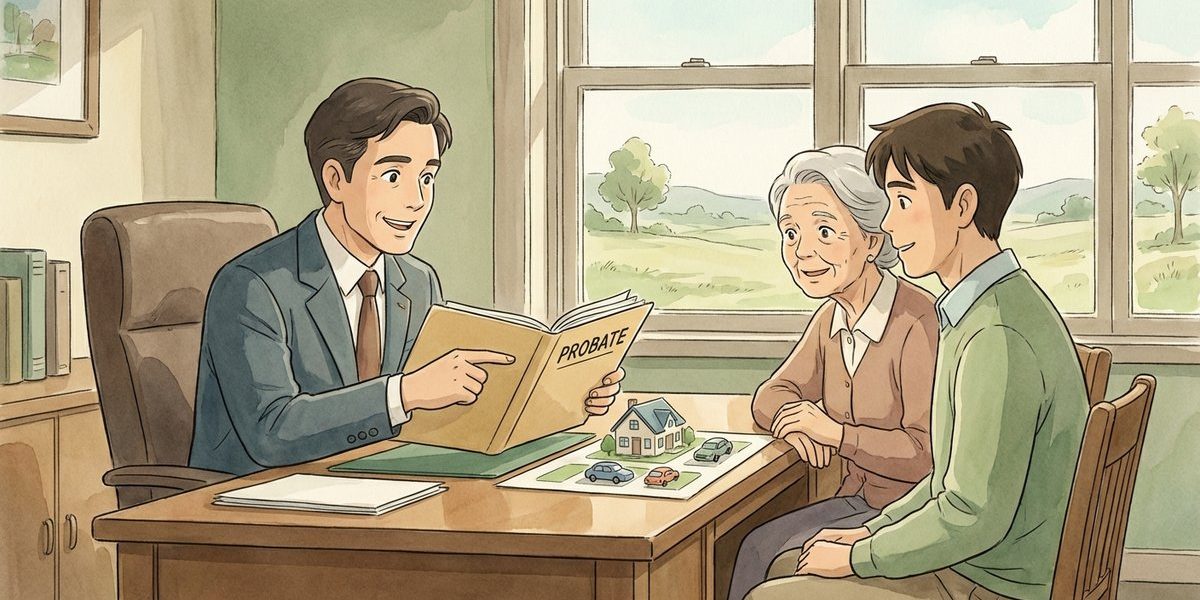
What steps and documents do I need to retitle the house and the vehicles to myself under the will? – North Carolina
Short Answer
In North Carolina, retitling a house and vehicles under a will usually starts with probating the will with the Clerk of Superior Court and getting authority to act as executor. For the house, the key “document” is typically the probated will (and, in some situations, a recorded executor’s deed) to create a clean record of ownership. For vehicles, the DMV generally requires the existing title plus proof of authority (letters issued by the clerk) or, in some small-estate situations, a DMV inheritance affidavit signed and notarized by the heirs.
Understanding the Problem
Under North Carolina probate law, the core question is what an executor must file and obtain to move title from a deceased owner’s name into the devisee’s name when a will leaves everything to one child. The main “trigger” is the death of the owner and the need to prove the will through the Clerk of Superior Court so third parties (the Register of Deeds for the house and the DMV for vehicles) will recognize the transfer. The practical issue is that real estate and motor vehicles use different offices, different forms, and different proof-of-authority requirements even when the same will controls both.
Apply the Law
In North Carolina, a will must be probated to be effective to pass title, and recording steps matter for real estate located in a particular county. Real property often passes to the devisee at death subject to the estate’s administration needs (especially creditor issues), while vehicles are retitled through the North Carolina Division of Motor Vehicles using “operation of law” transfer rules and specific DMV documentation. Even when many assets pass outside probate (like payable-on-death accounts), the executor still needs to follow the estate process for assets titled only in the decedent’s name, such as a house and vehicles.
Key Requirements
- Probate authority: The will must be accepted by the Clerk of Superior Court and the executor must receive the clerk’s authority documents (commonly called “letters”) so banks, the DMV, and others will deal with the executor.
- Clear chain of title for the house: The county land records must show why ownership moved from the decedent to the devisee (often through recording the probated will in the county where the property is located, and sometimes through an executor’s deed depending on the situation).
- DMV transfer documents for vehicles: The DMV requires the prior title (if available) plus documents showing inheritance/devise and who has authority to sign, along with standard DMV items like fees and proof of insurance.
What the Statutes Say
- N.C. Gen. Stat. § 31-39 (Probate necessary to pass title) – A duly probated will is effective to pass title, and special timing/recording rules can affect enforceability against certain third parties.
- N.C. Gen. Stat. § 31-40 (What property passes by will) – A will can devise real and personal property the decedent owned at death.
- N.C. Gen. Stat. § 20-77 (Transfer by operation of law) – The DMV can issue a new title when ownership passes by inheritance or devise, with specified documentation (including letters and, in limited situations, an affidavit process).
Analysis
Apply the Rule to the Facts: Here, the home is titled only in the decedent’s name, so the will must be probated and the land records must be updated so the devise to the child is recognized in the county where the home sits. The vehicles are also titled only in the decedent’s name, so the executor (or, in a qualifying small-estate situation, the heirs by affidavit) must present the DMV with the title and the required proof that the transfer is happening by devise under the will. Because most other assets pass by beneficiary designation (POD accounts, IRA, life insurance), the probate steps can focus mainly on the house, vehicles, and any final bills/refunds that belong to the estate.
Process & Timing
- Who files: The named executor. Where: Clerk of Superior Court (Estates) in the county where the decedent lived at death. What: File the original will (if available) and start the estate so the clerk can issue the executor’s authority documents (letters). When: As soon as practical after death, especially if titles must be transferred, bills must be paid, or refunds must be collected.
- Publish/handle creditor notice and estate administration: The executor typically gives the required notice to creditors and tracks claims, because estate property (and sometimes certain nonprobate transfers) can be pulled back into the debt-payment picture if the estate lacks funds. This is also the stage where the executor confirms what must stay in the estate to cover expenses before distributing or “locking in” transfers.
- Retitle the house and vehicles:
- House (Register of Deeds/land records): In many cases, the practical “retitling” step is recording the certified probate documents in the county where the property is located so the public record shows the devise under the will. If a deed is needed for a particular transaction (for example, a future sale or a title company requirement), the executor may sign an executor’s deed consistent with the estate administration and creditor rules.
- Vehicles (DMV/license plate agency): Take the vehicle title(s), certified probate documents/letters (or the applicable inheritance affidavit route if the clerk and DMV accept it), proof of insurance, and fees to a license plate agency to apply for new title(s) in the devisee’s name.
Exceptions & Pitfalls
- Assuming POD/beneficiary assets end the estate process: Payable-on-death accounts, IRAs, and life insurance usually pass outside probate, but the house and vehicles titled solely in the decedent’s name often still require probate documentation to transfer cleanly.
- Transferring too early without a creditor plan: Even when debts are expected to be small, the executor should confirm what must be paid (final expenses, valid creditor claims, administration costs) before taking steps that make it harder to access funds or unwind a transfer.
- Real estate record mismatch: If the will is probated in one county but the home is in another, the certified probate documents typically must be filed in the county where the property lies to protect the chain of title.
- DMV paperwork problems: Missing titles, liens that were never properly released, or using the wrong DMV affidavit/form can cause repeated trips. Keeping a complete “transfer packet” for each vehicle helps, including certified probate documents and proof of insurance.
For more on vehicle transfers in this situation, see how to sign and transfer a deceased parent’s vehicle title and whether a simplified small-estate option can work for a vehicle retitle.
Conclusion
In North Carolina, retitling a house and vehicles under a will generally requires probating the will with the Clerk of Superior Court and obtaining the executor’s authority documents. The house transfer usually hinges on recording the certified probate documents in the county where the property is located so the land records reflect the devise, and the vehicles transfer through the DMV using the title plus certified probate proof (or a qualifying affidavit process). The most important next step is to file the will and open the estate with the Clerk of Superior Court promptly.
Talk to a Probate Attorney
If there is a need to retitle a parent’s home and vehicles under a North Carolina will while also handling creditor notice and timing, our firm has experienced attorneys who can help explain options and deadlines. Call us today at (919) 341-7055.
Disclaimer: This article provides general information about North Carolina law based on the single question stated above. It is not legal advice for your specific situation and does not create an attorney-client relationship. Laws, procedures, and local practice can change and may vary by county. If you have a deadline, act promptly and speak with a licensed North Carolina attorney.

