
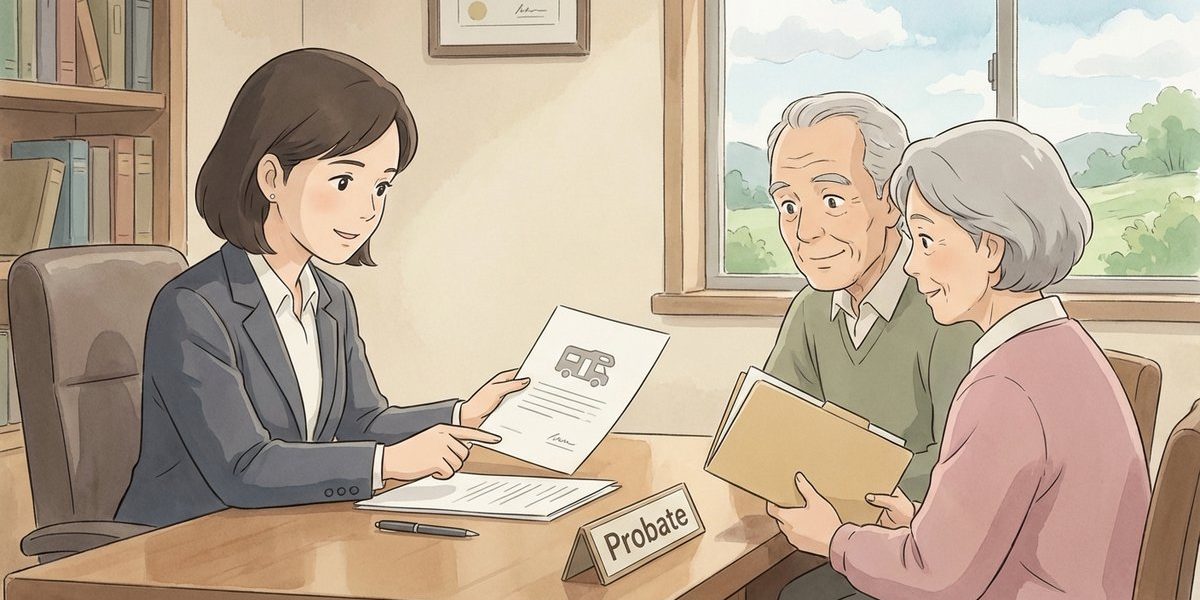
What proof of title does an executor need to complete a final accounting? – North Carolina
Short Answer
In North Carolina, a final accounting must show that every estate asset listed on the inventory or prior account has been properly handled and is no longer held by the estate. For a titled asset like a motor home, the clerk typically expects paperwork that proves the asset was transferred out of the estate (often a copy of the updated title or other DMV transfer proof) and that any related money movement is supported by account statements and vouchers. The clerk audits the final account, so the proof needs to match what the accounting reports.
Understanding the Problem
In a North Carolina estate, can a personal representative (executor) file a final accounting and close the estate when a motor home still needs a title change, and what proof of title must be provided to the Clerk of Superior Court to support that final accounting? The issue usually comes up when the estate is ready to close, but a DMV title document is still pending and the final accounting needs supporting paperwork that shows the asset was transferred and the estate’s records match the transfer.
Apply the Law
North Carolina requires the personal representative to file a final account that the Clerk of Superior Court reviews and audits. The clerk’s audit focuses on whether all estate property has been accounted for and whether receipts, vouchers, and other verified proof support disbursements and distributions. For titled property, “proof of title” in practice means documentation that ties the asset shown on the inventory/accounting to its final disposition (for example, transfer to a beneficiary or sale), so the clerk can confirm the estate no longer holds it and the accounting is complete.
Key Requirements
- Account for every asset: The final account must show what happened to each asset previously reported (including non-cash items like vehicles and motor homes).
- Support each transaction with proof: Disbursements and distributions must be backed up with vouchers or other verified proof (commonly statements, receipts, canceled checks, and signed beneficiary receipts/releases for distributions).
- Match the paperwork to the accounting entry: The title/transfer paperwork and the financial records should align with how the final account describes the motor home (distributed in kind versus sold and proceeds deposited and distributed).
What the Statutes Say
- N.C. Gen. Stat. § 31-39 (Probate necessary to pass title) – Explains that a duly probated will is effective to pass title to real and personal property, and sets timing rules that can matter before final account approval.
- N.C. Gen. Stat. § 105-241 (Tax upon settlement of fiduciary’s account) – Provides that no final account may be allowed unless required taxes have been paid or secured.
- N.C. Gen. Stat. § 1-339.32 (Public sale; final report) – Addresses how receipts and disbursements from certain sales are included in the next annual or final account.
Analysis
Apply the Rule to the Facts: The estate includes a motor home that requires a DMV title change before it can be transferred out of the estate. Because the clerk audits the final account to confirm that all property has been accounted for, the final accounting support typically needs documentation showing the motor home’s disposition (commonly a copy/photo of the updated title once issued, or other DMV transfer proof if the title has not arrived yet). Recent account statements also help support the accounting entries and show that any sale proceeds, fees, or related payments match what the final account reports.
Process & Timing
- Who files: The executor/personal representative. Where: The Clerk of Superior Court (Estates) in the county where the estate is administered in North Carolina. What: A Final Account with supporting documentation (commonly vouchers for disbursements, receipts/releases for distributions, and statements that support the accounting period). When: After debts, expenses, and taxes are paid or provided for, and after final distributions are ready to be completed.
- Provide title/transfer support for the motor home: If the motor home is distributed to a beneficiary, the support usually includes proof the title was reissued or transferred out of the estate. If the motor home is sold, the support usually includes proof of sale/transfer and bank records showing deposit of proceeds and later distribution.
- Clerk audit and approval: The clerk reviews the final account to confirm all inventory items are accounted for and that vouchers/receipts support the transactions. After approval, the estate can be closed and the personal representative can be discharged.
Exceptions & Pitfalls
- Title not issued yet: Filing a final account while a key title document is pending can trigger a clerk request for more documentation or a delay in approval, because the clerk must be able to confirm the asset left the estate.
- “In-kind” distribution versus sale confusion: The proof needed depends on how the accounting reports the motor home. A distribution in kind should be supported by beneficiary receipts/releases and transfer paperwork; a sale should be supported by sale/transfer proof plus bank statements and disbursement vouchers.
- Missing vouchers and receipts: The clerk commonly looks for verified proof supporting disbursements and distributions. Missing statements, missing receipts/releases, or unexplained gaps between the accounting and bank activity can slow approval.
- Tax clearance issues: A final account cannot be allowed unless required taxes have been paid or secured, so missing tax documentation can prevent closing even if the title issue is resolved.
Conclusion
In North Carolina, the proof of title an executor needs for a final accounting is the documentation that shows a titled asset was transferred out of the estate in the same way the final account reports it, along with vouchers and statements that support the related transactions. For a motor home, that usually means a copy of the updated title (or other DMV transfer proof) and recent account statements that match the accounting entries. The next step is to file the Final Account with the Clerk of Superior Court after the transfer proof and supporting statements are ready.
Talk to a Probate Attorney
If an estate is ready to close but a vehicle or motor home title is still pending, our firm has experienced attorneys who can help sort out what the Clerk is likely to require and what can be filed now versus later. Call us today at (919) 341-7055.
Disclaimer: This article provides general information about North Carolina law based on the single question stated above. It is not legal advice for your specific situation and does not create an attorney-client relationship. Laws, procedures, and local practice can change and may vary by county. If you have a deadline, act promptly and speak with a licensed North Carolina attorney.

