
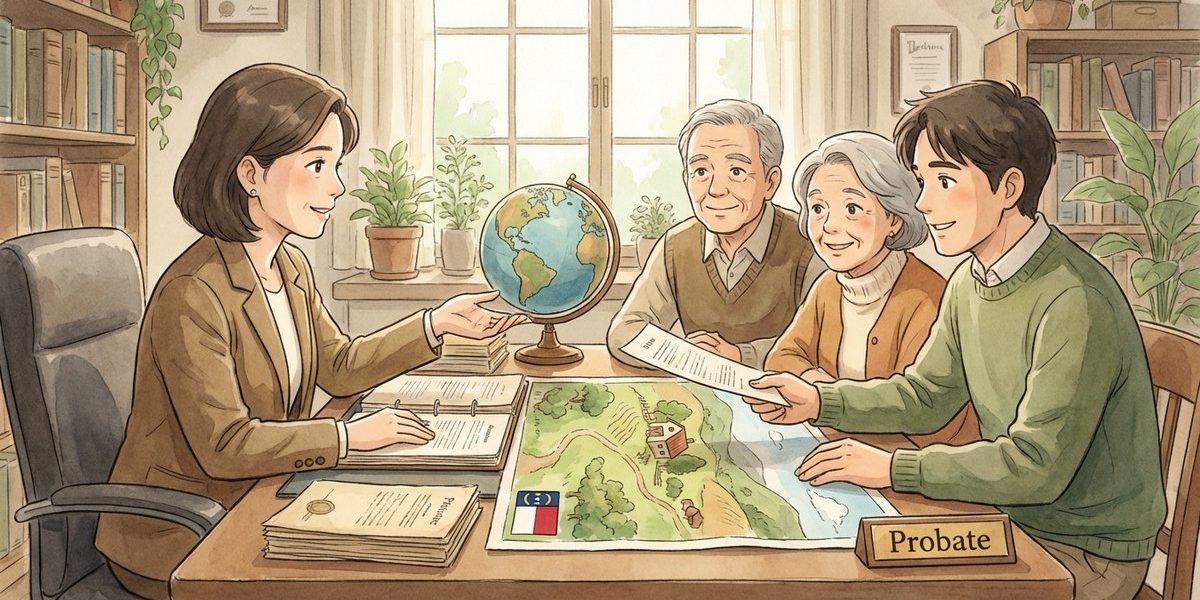
What is the process to transfer a tenant-in-common interest in a family farm outside the country to the correct heirs? – North Carolina
Short Answer
Under North Carolina probate practice, the usual first step is to reopen the decedent’s estate and have the Clerk of Superior Court appoint a new personal representative so someone has legal authority to act for the estate. Then the personal representative (or sometimes an interested heir through an estate proceeding) identifies the correct heirs under North Carolina succession rules and gathers the documents needed by the country where the farm is located. Because the land is outside the United States, the actual change of title typically happens through the foreign country’s probate/land-records process, using North Carolina-issued estate documents that are authenticated for international use.
Understanding the Problem
In North Carolina probate, the practical question is: can a newly discovered tenant-in-common interest in foreign real estate be transferred to the correct heirs when the original executor has died and the estate must be reopened? The key decision point is whether a currently appointed personal representative exists with valid authority (letters) to act for the estate, because foreign courts and land registries usually require proof that someone has legal authority to sign, request records, and complete the transfer. The follow-up issue inside that same process is identifying the “correct heirs,” especially when a sibling who survived the decedent later died without children.
Apply the Law
North Carolina law controls who inherits from a North Carolina decedent (if there is no valid will disposing of that interest), and it also provides the mechanism to reopen an estate and appoint a new personal representative when additional assets are discovered. However, North Carolina courts generally cannot directly change title to real estate located in another country; the transfer usually must be completed under the law of the place where the land sits, using North Carolina estate documents as proof of death, authority, and heirship.
Key Requirements
- Reopen the estate and appoint a new personal representative: If the estate was closed and later assets are discovered (and especially if the original executor is now deceased), the estate is typically reopened so the Clerk of Superior Court can issue new letters to a successor personal representative.
- Confirm the decedent’s ownership and how it is titled: The transfer process depends on whether the decedent owned a true tenant-in-common share, whether there are survivorship features, and what the foreign land records show.
- Determine the correct heirs (and whether a deceased heir’s share passes to a spouse or to that heir’s estate): If a sibling survived the decedent, that sibling’s share generally becomes part of the sibling’s own estate when the sibling later dies. Whether the sibling’s spouse receives anything depends on the sibling’s own estate plan or (if none) North Carolina intestacy rules for the sibling.
What the Statutes Say
- N.C. Gen. Stat. § 29-13 (Intestate succession; survivorship rules) – Establishes that property of a person who dies without a will passes under North Carolina’s intestacy framework, subject to administration.
- N.C. Gen. Stat. § 29-14 (Surviving spouse’s share) – Sets the spouse’s share when a person dies without a will, with different shares depending on whether there are children or parents.
- N.C. Gen. Stat. § 29-15 (Shares of heirs other than spouse) – Sets who inherits the remainder (children, parents, siblings and their descendants, and then more remote relatives) when there is no will.
Analysis
Apply the Rule to the Facts: The facts describe a newly discovered tenant-in-common interest in a family farm located outside the country that was not included in the prior North Carolina probate inventory, and the original executor has died. That points to reopening the estate so a sibling can be appointed as the new personal representative and obtain current letters to act. The “correct heirs” question turns on who survived the decedent and, because a sibling later died without children, whether that sibling’s inherited share became part of the sibling’s estate (often requiring a second estate administration for the sibling) and whether the sibling’s spouse inherits under the sibling’s own will or intestacy rules.
Process & Timing
- Who files: Typically an heir or other interested person asks to reopen the estate and have a successor personal representative appointed. Where: The Clerk of Superior Court (Estates) in the county where the original North Carolina estate was administered. What: A petition to reopen the estate and appoint/reappoint a personal representative, plus supporting documents showing the newly discovered asset and the need for new letters because the prior executor is deceased. When: As soon as the foreign asset is discovered, because foreign deadlines, land registry requirements, and document-authentication steps can take time.
- Identify heirs and document the chain: The personal representative typically confirms whether the decedent left a will that controls this interest; if not, the personal representative identifies heirs under North Carolina intestacy. If a sibling survived the decedent but later died, the personal representative usually must determine whether that sibling’s share now belongs to the sibling’s estate (and therefore must be handled by the sibling’s personal representative), rather than passing directly to other siblings.
- Coordinate the foreign transfer: The personal representative (and, if needed, the later-deceased sibling’s estate representative) works with counsel or the land registry in the country where the farm is located to submit the required North Carolina documents (often including certified letters, death certificates, and heirship determinations) in the format the foreign jurisdiction accepts. The end result is typically a foreign deed/registration update showing the heirs (or their estates) as the new owners of the tenant-in-common share.
Exceptions & Pitfalls
- Foreign land usually requires a foreign procedure: North Carolina probate documents often are necessary, but they usually are not sufficient by themselves to change title in another country. The country where the farm is located may require a local probate filing, a resealing/recognition process, or a local notarial act.
- “Heirs” may include a deceased heir’s estate: If a sibling survived the decedent, that sibling’s share generally vests and later passes through the sibling’s own estate. That can mean two administrations: reopening the original estate and opening (or reopening) the sibling’s estate.
- Missing inventory item can trigger additional filings: A newly discovered asset may require updated inventories/accountings in the reopened estate, and the Clerk may require notice to interested persons depending on what relief is requested.
- Document authentication and name mismatches: Foreign registries often reject documents with inconsistent names, missing certified seals, or improper authentication. Planning for certified copies, apostilles (when applicable), and translations can prevent expensive delays.
Conclusion
To transfer a tenant-in-common interest in a family farm located outside the country to the correct heirs, the typical North Carolina path is to reopen the decedent’s estate and have the Clerk of Superior Court appoint a successor personal representative who can obtain current letters. Next, the estate confirms the ownership records and determines the correct heirs under North Carolina succession rules, including whether a deceased sibling’s share must pass through that sibling’s estate. The practical next step is to file to reopen the estate with the Clerk of Superior Court and request issuance of new letters so the foreign transfer can move forward.
Talk to a Probate Attorney
If a newly discovered foreign property interest needs to be transferred and the original executor is no longer living, probate can require reopening an estate, confirming heirship, and coordinating with a foreign land registry. Our firm has experienced attorneys who can help explain the steps, documents, and timelines. Call us today at (919) 341-7055.
Disclaimer: This article provides general information about North Carolina law based on the single question stated above. It is not legal advice for your specific situation and does not create an attorney-client relationship. Laws, procedures, and local practice can change and may vary by county. If you have a deadline, act promptly and speak with a licensed North Carolina attorney.

