
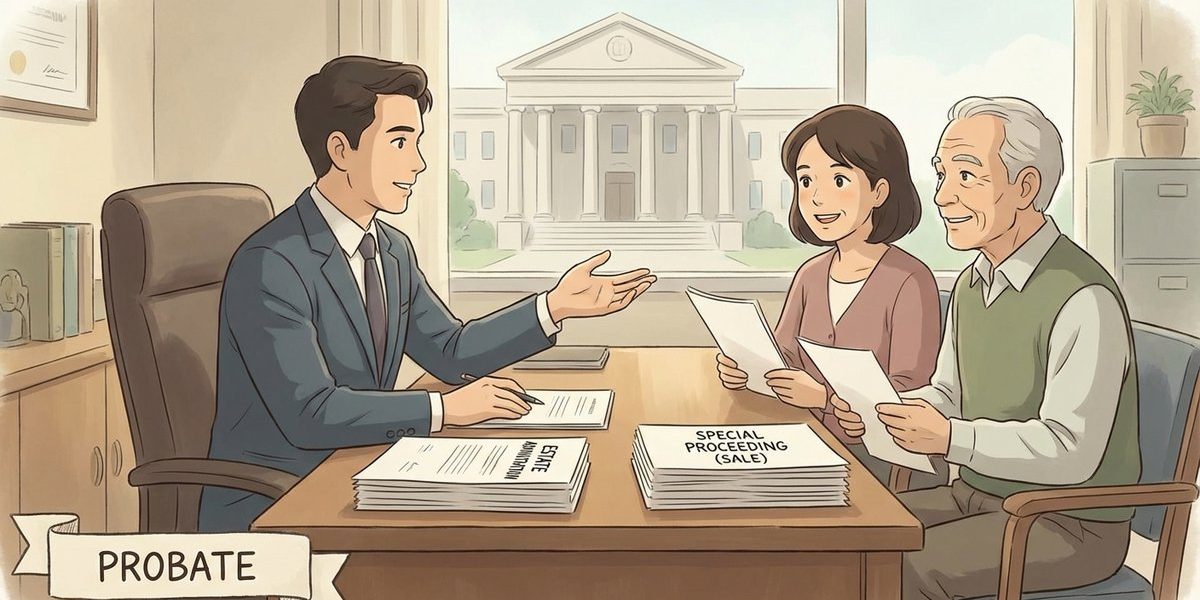
What is the difference between an uncontested estate case and a contested special proceeding related to selling estate property? – North Carolina
Short Answer
In North Carolina, an uncontested estate case is the regular probate administration where the Clerk of Superior Court oversees the personal representative’s routine work—collecting assets, paying valid debts, and filing inventories and accountings. A contested special proceeding is a separate court matter (often still before the Clerk) used to decide a specific dispute or to authorize/confirm a specific action—like a court-supervised sale of real estate—when notice, proof, or objections require a formal hearing and an order. The two cases can run at the same time, and money from a sale handled in the special proceeding is typically brought back into the estate administration to pay estate expenses and debts.
Understanding the Problem
In North Carolina probate, a common question is: when an estate’s real property is sold through a separate court process, what makes that separate process a “contested special proceeding,” and how is that different from the “uncontested estate” administration that receives the sale proceeds to pay estate debts? The decision point is whether the issue can be handled as routine estate administration filings in front of the Clerk of Superior Court, or whether the situation requires a separate, court-supervised proceeding with formal notice, proof, and an order resolving objections or approving a sale-related step.
Apply the Law
North Carolina estate administration is usually handled in an estate file opened with the Clerk of Superior Court. When everything is routine (no objections, no disputed facts, and no need for a separate court order beyond standard estate approvals), the matter is commonly described as “uncontested.” By contrast, a “special proceeding” is a separate court file used to decide a particular issue—often involving real property—under procedures that look more like a lawsuit, including service/notice requirements, evidence, and an order. If someone objects or the Clerk needs a hearing to decide the issue, the matter becomes “contested.”
Key Requirements
- Different purpose: The estate case focuses on administering the whole estate (assets, debts, distributions). The special proceeding focuses on one defined issue (for example, authorizing or confirming a sale of real property, or deciding who is entitled to funds).
- Different procedure: Uncontested estate administration is handled through standard probate filings (inventory, accounts, receipts). A special proceeding typically requires formal notice/service on interested parties and results in a specific order resolving the issue.
- Different proof expectations: Routine estate filings often rely on accounting entries and supporting documentation. A contested special proceeding usually requires clearer proof (receipts, invoices, canceled checks, closing statements) because the Clerk is deciding disputed facts or approving a specific transaction.
What the Statutes Say
- N.C. Gen. Stat. § 1-301.3 (Trust and estate matters decided by the clerk; appeal) – In many estate-related matters, the Clerk decides issues of fact and law, and an aggrieved party generally has 10 days after service of the order to appeal to Superior Court.
- N.C. Gen. Stat. § 46A-76 (Partition sale procedure) – For partition sales, the sale procedure generally tracks North Carolina’s judicial sale procedures, with specific notice requirements.
- N.C. Gen. Stat. § 45-21.31 (Disposition of proceeds of sale; payment of surplus to clerk) – In certain sale contexts, sale proceeds are applied to costs, taxes, and secured obligations first, and surplus may be paid to the Clerk when there is uncertainty or adverse claims.
- N.C. Gen. Stat. § 1-339.32 (Public sale; report/accounting by administrator/executor) – When an executor/administrator sells property under judicial sale procedures, the receipts and disbursements are typically reflected in the next estate account unless the court directs a separate special account.
Analysis
Apply the Rule to the Facts: The facts describe (1) an estate where real property was sold through a separate court process and (2) the next step is moving the net sale proceeds into the estate administration to pay estate debts. That setup commonly means there are two tracks: the estate administration file (often routine/uncontested) and a separate sale-related file (a special proceeding) that produced an order, a closing, and proceeds. The request for reimbursement for property-related expenses, and the Clerk’s request for more documentation, fits the proof expectations in both tracks: the Clerk generally needs clear records showing the expense was tied to the property and was actually paid.
Process & Timing
- Who files: Usually the personal representative (executor/administrator), or a party directed by the Clerk in the special proceeding. Where: The Clerk of Superior Court (estate file for administration; separate special proceeding file for the sale/dispute). What: A filing that asks the Clerk to (a) recognize/receive the sale proceeds into the estate and (b) approve how those funds are credited in the estate accounting, often supported by the settlement statement and related receipts.
- Documentation step: When reimbursement is requested, the Clerk commonly expects itemized proof such as invoices, receipts, canceled checks/bank records, and a short explanation tying each payment to the property (for example, insurance, taxes, necessary repairs, preservation costs). If the Clerk asks for “additional documentation,” it usually means the existing records do not clearly show what was paid, who paid it, and why it was a property expense rather than a personal expense.
- Order/accounting step: After the Clerk is satisfied, the proceeds are treated as estate funds for administration purposes and are then reflected in the estate’s next accounting (annual or final), along with any approved reimbursements and disbursements.
Exceptions & Pitfalls
- “Separate case” confusion: A sale special proceeding can be filed in a county different from the county where the estate is administered, depending on where the real property sits. That can create delays if the closing documents and proceeds are not promptly routed back to the estate file for accounting and debt payment.
- Reimbursement without proof: A common reason Clerks request more documentation is that the records do not clearly connect the payment to the property (for example, a bank transfer with no invoice, or a receipt that does not list the property address). Clear, itemized backup reduces the risk that the reimbursement is denied or delayed.
- Priority and net proceeds issues: Sale proceeds are not always “free money” for general estate bills. Depending on the type of sale and what liens/taxes/costs attach, certain items may be paid first at closing or from the proceeds before funds are available for other estate debts.
Conclusion
In North Carolina, an uncontested estate case is the standard probate administration before the Clerk of Superior Court, focused on collecting assets, paying valid debts, and filing required accountings. A contested special proceeding related to selling estate property is a separate court matter used to approve or resolve issues tied to the sale, especially when notice, proof, or objections require a hearing and a written order. The practical next step is to file the requested documentation with the Clerk so the sale proceeds and any reimbursement can be properly credited in the estate accounting.
Talk to a Probate Attorney
If an estate property sale happened through a separate court process and the next step is getting the proceeds into the estate (and documenting reimbursements the Clerk is questioning), our firm has experienced attorneys who can help explain the process, prepare the supporting paperwork, and keep the matter moving. Call us today at (919) 341-7055.
Disclaimer: This article provides general information about North Carolina law based on the single question stated above. It is not legal advice for your specific situation and does not create an attorney-client relationship. Laws, procedures, and local practice can change and may vary by county. If you have a deadline, act promptly and speak with a licensed North Carolina attorney.

