
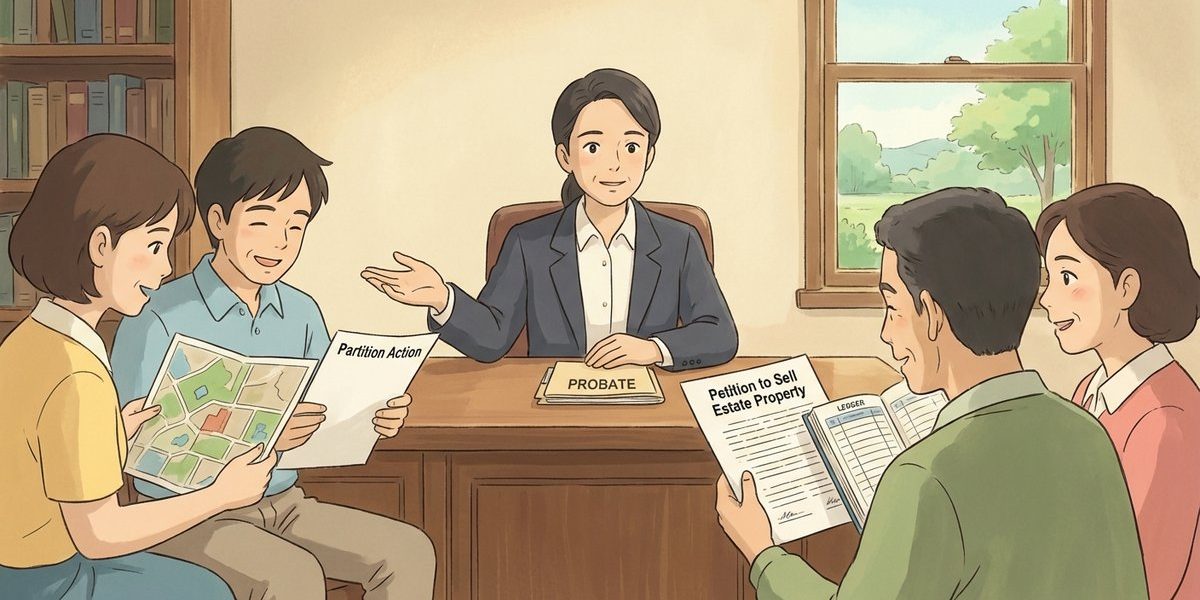
What is the difference between a partition action and a petition to sell estate property? – NC
Short Answer
In North Carolina, a partition action is usually a dispute between co-owners who want the court to divide or sell jointly owned property because they cannot agree what to do with it. A petition to sell estate property is different: it is a probate proceeding brought by the personal representative to sell real estate when selling it is in the estate’s best interest, often because the estate needs money to pay debts, costs, or claims. The key difference is the purpose, the person who files, and the court process that controls the sale.
Understanding the Problem
In North Carolina probate matters, the main decision is whether the dispute is really a co-owner fight over how to divide inherited real estate, or an estate administration issue where the personal representative must ask the court for authority to sell the property. That distinction matters when heirs hold an undivided interest in a deceased parent’s home, the estate remains open, and unpaid claims may require liquidation before any distribution can occur. The answer turns on the role of the person seeking relief, the reason for the sale, and whether the estate still needs the property to satisfy administration duties.
Apply the Law
Under North Carolina law, a partition proceeding deals with cotenants. If two or more people own undivided interests in real property, the court can order an actual division, a sale, or a mixed remedy depending on whether the property can be fairly divided. A probate sale proceeding is different. When estate debts, costs, taxes, or other claims may require use of real property, the personal representative may need to obtain possession, custody, and control of the property and file a special proceeding before the Clerk of Superior Court to sell it. The main forum for both matters is the superior court division, but the probate sale runs through the estate process before the clerk, with heirs and devisees made parties. For estate sales, a concrete timing issue often appears after a sale is reported because judicial sale procedures include a 10-day upset bid period.
Key Requirements
- Who is asking for relief: A partition action is filed by a cotenant who wants division or sale of jointly owned property. A petition to sell estate property is filed by the executor or administrator acting for the estate.
- Why the court is involved: Partition focuses on ending or restructuring co-ownership. A probate sale focuses on estate administration, especially paying valid debts, costs, liens, and claims before distributing any remainder.
- What happens to the proceeds: In partition, proceeds are generally divided among the owners after proper adjustments. In a probate sale, sale proceeds are first applied under estate administration rules, including liens and estate claims in priority order, with only any residue available for heirs or devisees.
What the Statutes Say
- N.C. Gen. Stat. § 46A-26 (Methods of partition) – allows the court to order actual partition, partition by sale, or a combination when cotenants own real property together.
- N.C. Gen. Stat. § 28A-17-1 (Sale of real property to make assets) – authorizes a personal representative to apply to the clerk for an order to sell real property for payment of debts and other claims against the estate.
- N.C. Gen. Stat. § 28A-17-2 (Contents of petition) – requires the petition to describe the property, identify heirs or devisees, and state that sale is in the estate’s best interest.
- N.C. Gen. Stat. § 28A-17-4 (Necessary parties) – requires heirs and devisees to be made parties by service of summons before an order of sale is entered.
- N.C. Gen. Stat. § 1-339.36 (Upset bid in private sale) – provides the upset bid procedure that can extend the sale process after a reported private sale.
Analysis
Apply the Rule to the Facts: The facts point in two directions. On one hand, the heirs disagree about a private sale, reimbursement of carrying costs, and choice of agent, which sounds like a cotenancy dispute that often appears in a partition case. On the other hand, the estate is still open and may need the home sold to pay claims, which points to a probate sale proceeding controlled by the personal representative rather than a simple owner-versus-owner partition fight. In North Carolina, that estate purpose usually matters first because estate debts must be addressed before any net proceeds are distributed.
If the home must be liquidated to create assets for the estate, the proper path is usually a petition by the personal representative to sell the property through the clerk. That process brings all heirs or devisees into the case, allows the clerk to decide whether sale is in the estate’s best interest, and channels the proceeds through estate priority rules instead of immediate owner distribution. If the estate no longer needs the property to pay claims and the dispute is only about ending co-ownership, a partition action may become the better fit.
The reimbursement issue also shows why the two proceedings are different. In a partition setting, co-owner contributions for taxes, insurance, mortgage payments, or necessary expenses may affect how proceeds are divided. In a probate sale, those same facts may still matter, but the first question is whether liens, administration costs, and creditor claims must be paid before the heirs argue over credits between themselves.
North Carolina practice also treats title and party status carefully. Real property generally passes to heirs or devisees at death, but during an open estate the personal representative may still need court authority and control over the property if sale is necessary for administration. That is why a private deal among heirs can fail if the estate still has unresolved creditor issues or if the personal representative does not properly join in the transaction.
For a related discussion of co-owned inherited property disputes, see force a sale or division of the property. For the debt-payment side of the issue, see sell real property to pay debts.
Process & Timing
- Who files: For a probate sale, the personal representative. Where: before the Clerk of Superior Court in the county where the real property is located in North Carolina. What: a verified petition to sell real property, and often a request for possession, custody, and control if needed. When: after the personal representative determines sale is in the estate’s best interest to pay debts or claims, and before final distribution of the estate.
- Heirs and devisees must be served as parties. If the petition is not contested, the clerk may enter an order authorizing sale. The sale then follows judicial sale procedures, and a private sale can still trigger an upset bid period that extends the timeline by 10 days after the report of sale, with additional periods if a higher bid is filed.
- After the upset bid period expires and the sale is confirmed, the personal representative closes the sale, accounts for the proceeds in the estate, pays liens and estate claims in the required order, and only then distributes any remaining balance to the proper heirs or devisees.
Exceptions & Pitfalls
- If the will gives the personal representative a valid power of sale, a separate special proceeding may not be required for every sale issue, so the estate documents must be reviewed first.
- A partition claim can be the wrong tool when the real problem is that the estate needs to make assets to pay debts. Filing the wrong proceeding can add delay and expense.
- Leaving out an heir or devisee from an estate sale proceeding can create serious notice and validity problems. Service and party joinder must be handled carefully.
- Heirs may assume sale proceeds belong to them immediately because title passed at death. In an open estate, that assumption can be wrong if liens, costs, or creditor claims still have priority.
- Private sale negotiations can stall over repairs, occupancy, expense credits, or agent selection. Those disputes do not eliminate the estate’s duty to address creditor deadlines and administration requirements first.
Conclusion
In North Carolina, a partition action and a petition to sell estate property serve different jobs. Partition resolves a co-owner dispute over jointly held real estate, while a probate sale proceeding lets the personal representative sell property when the estate needs funds to pay liens, debts, costs, or other claims. When an estate is still open and creditor issues remain, the safer next step is usually for the personal representative to file the sale petition with the Clerk of Superior Court before any final division of proceeds.
Talk to a Probate Attorney
If a family is dealing with inherited real estate, an open estate, and disagreement over whether the home should be sold through probate or through a co-owner action, our firm has experienced attorneys who can help explain the proper process, priorities, and timelines. Call us today at [919-341-7055].
Disclaimer: This article provides general information about North Carolina law based on the single question stated above. It is not legal advice for your specific situation and does not create an attorney-client relationship. Laws, procedures, and local practice can change and may vary by county. If you have a deadline, act promptly and speak with a licensed North Carolina attorney.

