
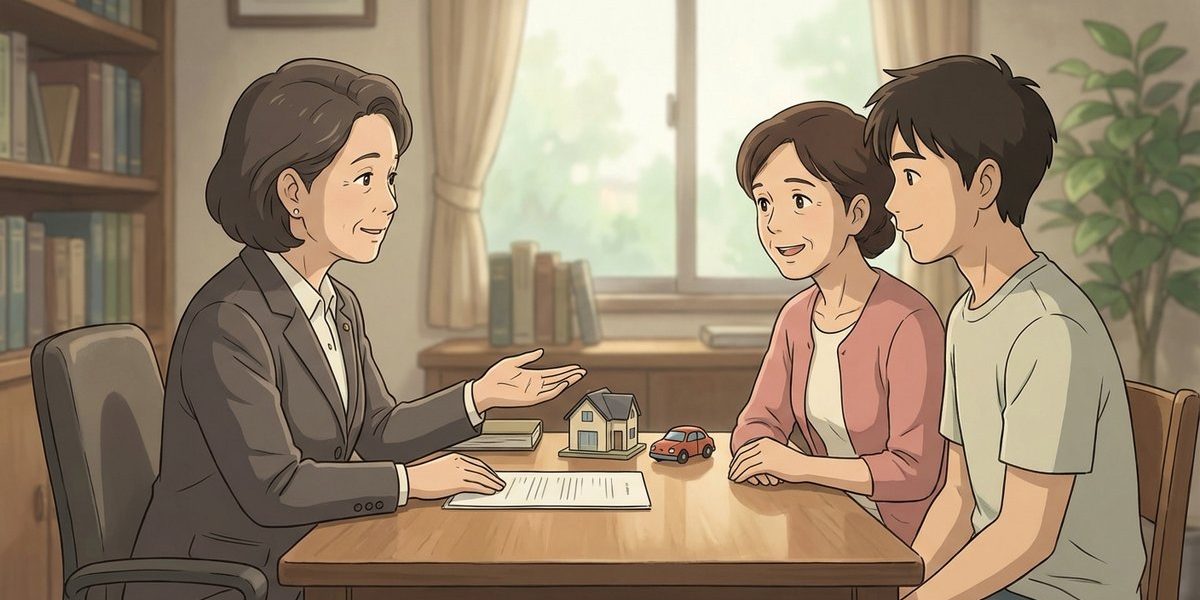
What happens to a parent’s house and vehicles when they die without a will and there is a surviving spouse and one child? – North Carolina
Short Answer
In North Carolina, when a parent dies without a will and leaves a surviving spouse and one child, the spouse and child usually share the estate under the Intestate Succession Act. As a general rule, the spouse receives a one-half interest in the decedent’s real estate (such as a house owned in the decedent’s name alone), and the spouse also receives a priority amount of personal property plus a share of the remainder; the child receives what is left after the spouse’s share. Vehicles are usually treated as personal property, but title transfer typically still requires action through the Clerk of Superior Court estate process or another authorized procedure.
Understanding the Problem
When a North Carolina parent dies without a will, the key question is how the house and vehicles are divided when there is a surviving spouse and one child. The answer depends on whether the assets are treated as real property or personal property, how the assets are titled, and whether a court-appointed estate representative is needed to take control of property and stop others from removing items. This situation often comes up when the surviving spouse is in a medical facility and cannot manage paperwork or make decisions, while other relatives begin taking vehicles or other items from the home.
Apply the Law
North Carolina’s Intestate Succession Act controls who inherits when there is no will. In the common scenario where the decedent is survived by a spouse and only one child (or descendants of only one child), the spouse receives a one-half undivided interest in the decedent’s real property, and the spouse receives a priority amount of personal property plus one-half of the remaining personal property (measured as “net personal property”). The child inherits the remaining share after the spouse’s portion is set aside. These shares apply to probate assets owned by the decedent at death; assets that pass by contract or by survivorship can follow different rules based on title and beneficiary designations.
Key Requirements
- Identify what is “real” vs. “personal” property: A house is generally real property; vehicles are generally personal property. The spouse’s share is calculated differently for each category.
- Confirm how the assets are titled: A house or vehicle titled jointly with survivorship may pass outside intestacy; property titled only in the decedent’s name is typically part of the probate estate.
- Open the right estate proceeding to gain authority: Until a personal representative qualifies (or another authorized process applies), no family member has automatic legal authority to take vehicles, sell property, or “divide things up.”
What the Statutes Say
- N.C. Gen. Stat. § 29-14 (Share of surviving spouse) – Sets the spouse’s intestate share; with a surviving spouse and one child, the spouse generally receives one-half of the real property and $60,000 of net personal property plus one-half of the remaining net personal property.
- N.C. Gen. Stat. § 29-15 (Shares of others than surviving spouse) – Provides that the child takes the portion of the net estate not distributable to the surviving spouse.
- N.C. Gen. Stat. § 30-15 (Spouse’s allowance) – Allows a surviving spouse to claim a year’s allowance (a support allowance) and sets a six-month deadline after letters issue if an estate is opened.
Analysis
Apply the Rule to the Facts: The house is typically treated as real property. If it was owned in the deceased parent’s name alone (not with survivorship), North Carolina intestacy law generally gives the surviving spouse a one-half undivided interest and the child the other one-half undivided interest, subject to estate administration and payment of valid debts. The vehicles are typically personal property; the surviving spouse’s share is calculated under the personal property formula (including the $60,000 priority amount of net personal property), and the child receives what remains after the spouse’s share and estate expenses are handled. Because relatives have already removed items (including a vehicle), qualifying an estate representative quickly is often the practical step to establish legal authority to demand return of estate property and to prevent further losses.
Process & Timing
- Who files: Usually the surviving spouse, but if the spouse cannot act, another qualified person (often an heir) may seek appointment. Where: The Clerk of Superior Court (Estates) in the county where the decedent lived in North Carolina. What: An application to open an intestate estate and qualify an administrator (often called “letters of administration”). When: As soon as practical after death, especially if property is being removed or bills must be handled.
- Secure and inventory estate property: After appointment, the administrator gathers information, secures the home and vehicles, and prepares an inventory for the estate file. If a vehicle was taken, the administrator can request documentation, demand return, and consider court remedies if needed.
- Pay allowed expenses and distribute shares: After addressing valid claims and administration costs, the administrator distributes the remaining real and personal property according to the spouse-and-one-child intestacy shares, and completes the closing steps required by the Clerk.
Exceptions & Pitfalls
- Title can change everything: If the house is owned with survivorship (or the vehicles are jointly titled in a way that passes automatically), those assets may pass outside intestacy and outside the administrator’s distribution formula.
- “Net personal property” is not the same as “everything in the house”: The spouse’s $60,000 priority amount is based on net personal property values after certain deductions; it is not a guarantee that the spouse automatically keeps every vehicle or every item.
- Relatives taking property can create legal and practical problems: Removing a vehicle or other items before an administrator is appointed can lead to disputes, title problems, and potential court involvement. Early appointment helps create a clear point of authority.
- Incapacity of the spouse affects who can act: If the spouse cannot manage the estate, a properly authorized agent under a power of attorney (if it exists and is sufficient) or a court-appointed guardian may be needed for certain decisions. Some spousal rights have strict deadlines that are not paused just because the spouse is incapacitated.
Conclusion
In North Carolina, when a parent dies without a will leaving a surviving spouse and one child, the spouse generally receives a one-half interest in the decedent’s real property and a priority amount of net personal property plus a share of the remaining personal property, with the child inheriting what is left after the spouse’s share. Vehicles are usually personal property, but title transfer and recovery of a removed vehicle often require a qualified estate representative. The next step is to open an intestate estate and obtain letters of administration through the Clerk of Superior Court, and if a year’s allowance is needed, file it within six months after letters issue.
Talk to a Probate Attorney
If there is a death without a will and questions about who gets the house and vehicles (especially where property is already being removed or the surviving spouse cannot manage the estate), our firm has experienced attorneys who can help explain the North Carolina process, protect estate assets, and track deadlines. Call us today at [919-341-7055].
Disclaimer: This article provides general information about North Carolina law based on the single question stated above. It is not legal advice for your specific situation and does not create an attorney-client relationship. Laws, procedures, and local practice can change and may vary by county. If you have a deadline, act promptly and speak with a licensed North Carolina attorney.

