
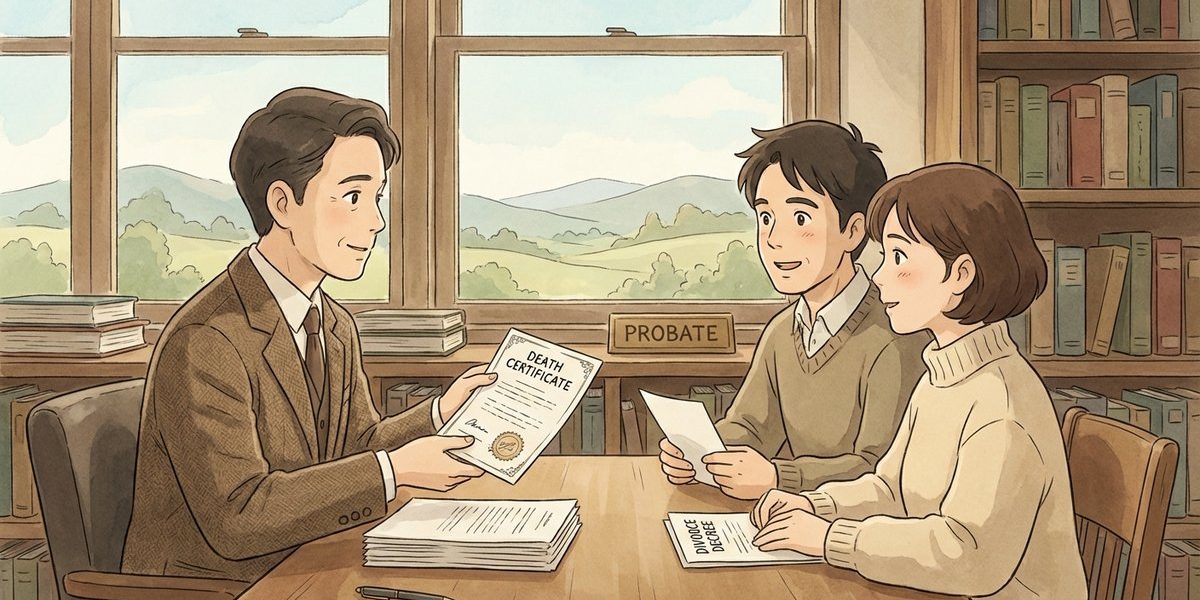
What happens if the death certificate isn’t corrected—can it delay estate or insurance matters? – NC
Short Answer
Yes. In North Carolina, an uncorrected death certificate can slow down insurance claims, benefit applications, and some asset transfers because institutions often compare the certificate to their own records before they act. It may not stop the estate from being opened with the Clerk of Superior Court, but a wrong marital-status entry can still create questions about who must receive notice, who may have rights as a surviving spouse, and whether more proof is needed before property or benefits are released.
Understanding the Problem
In North Carolina probate matters, the single issue is whether an inaccurate death certificate can hold up estate or insurance work when the error concerns the decedent’s marital status. The key point is practical: if the record says the decedent was married at death, but the decedent was actually divorced, agencies and financial institutions may pause until the mismatch is cleared up or supported by other records. The timing matters most when the family is trying to move quickly on probate filings, insurance claims, or benefit paperwork.
Apply the Law
North Carolina requires a death certificate to be filed promptly after death, and once the record is accepted, changes must be made through the amendment process governed by the State Registrar. If the Office of Vital Records requires a court order for a disputed correction, that usually means the amendment will not be made based on informal proof alone. In probate, the main forum for opening an estate is the Clerk of Superior Court in the county where venue is proper, and probate can often begin even if the death certificate has not yet been corrected. Still, certified death certificates are commonly needed for insurance carriers, banks, title work, and benefit claims, so an unresolved error can create real delay outside the initial court filing.
Key Requirements
- Accepted record must be amended properly: After a North Carolina death certificate is filed, it cannot simply be edited informally. The State Registrar controls amendments and may require proof or a court order.
- Probate and third-party transactions are different: The Clerk may allow an estate to be opened based on sworn probate papers, but insurers and other institutions often insist on a certified death certificate that matches their records.
- Wrong marital status can affect rights review: If the certificate incorrectly shows a surviving spouse, that can trigger questions about notice, inheritance rights, beneficiary review, or who has authority to act.
What the Statutes Say
- N.C. Gen. Stat. § 130A-118 (Amendment of birth and death certificates) – Once a death certificate is accepted for registration, changes must go through the formal amendment process set by the State Registrar, with a fee and required proof.
- N.C. Gen. Stat. § 130A-115 (Death registration) – The funeral director or person acting in that role must file the death certificate within five days after death.
- N.C. Gen. Stat. § 130A-116 (Contents of death certificate) – North Carolina death certificates must include the information required on the standard death certificate form.
Analysis
Apply the Rule to the Facts: Here, the death certificate lists the decedent as married even though the decedent was divorced at death. That kind of error may not prevent the estate from being opened, because the Clerk of Superior Court often relies on the probate application and sworn statements to establish death and move the file forward. But the wrong marital status can still slow insurance or benefit claims, because the carrier may question whether a surviving spouse exists or whether additional consent, notice, or documentation is required before payment.
The fact that the vital records office is asking for a court order matters. It suggests the agency will not accept the divorce documentation alone for this amendment, so the family may need a separate court step before a corrected certified certificate can be issued. Until that happens, institutions reviewing the certificate may keep asking for extra proof, and some may wait for the corrected record rather than make their own judgment.
This also matters in probate administration because marital status affects who may have legal rights in the estate. If the certificate wrongly shows a spouse, that can create confusion about heirs, notice, and whether a spouse-related claim must be considered. Even when the underlying divorce paperwork is clear, the mismatch itself can cause delay because the personal representative may need to explain the inconsistency repeatedly and provide supporting records with each request.
Process & Timing
- Who files: the person authorized to seek the amendment or the estate representative, often with counsel if a court order is required. Where: first with North Carolina Vital Records; if Vital Records requires judicial relief, then with the appropriate North Carolina court or clerk handling the needed order. What: the amendment request, supporting records such as the divorce judgment, and any court filing needed to obtain an order directing correction. When: as soon as the error is discovered, because insurers, benefit administrators, and title reviewers may pause while the inconsistency remains unresolved.
- At the same time, the estate can often still be opened with the Clerk of Superior Court using the probate application and other required estate papers. County practice can vary, and some offices may ask for a copy of the death certificate even if a corrected copy is not yet available.
- Once Vital Records receives whatever proof or court order it requires, it can issue an amended record and certified copies. Those corrected certified copies are then used to update insurance, account, and property-transfer files. Families dealing with broader administration issues may also need to coordinate the next steps described in the next steps after receiving the corrected death certificate.
Exceptions & Pitfalls
- Some probate filings can move forward before the certificate is corrected, so the family should not assume the estate must wait if the only problem is the amendment.
- A wrong marital-status entry can create avoidable confusion about whether a surviving spouse exists, especially when an insurer or bank reviews the file without the full divorce record.
- Common mistakes include sending incomplete proof, assuming Vital Records will accept informal explanations, or waiting to seek a court order until an insurance claim has already stalled. Service, notice, and filing requirements for any court request must be followed carefully because a defective filing can add more delay.
Conclusion
Yes. In North Carolina, an uncorrected death certificate can delay insurance, benefits, and some estate-related transactions, especially when the error affects marital status and raises questions about spouse-related rights. The estate may still be opened with the Clerk of Superior Court, but third parties often want a certified record that matches the legal facts. The most important next step is to pursue the required amendment or court order promptly so corrected certified copies can be used without further dispute.
Talk to a Probate Attorney
If a death certificate error is slowing estate work, insurance claims, or benefit paperwork, our firm has experienced attorneys who can help explain the process, the right court or office, and the timelines involved. Call us today at 919-341-7055.
Disclaimer: This article provides general information about North Carolina law based on the single question stated above. It is not legal advice for your specific situation and does not create an attorney-client relationship. Laws, procedures, and local practice can change and may vary by county. If you have a deadline, act promptly and speak with a licensed North Carolina attorney.

