
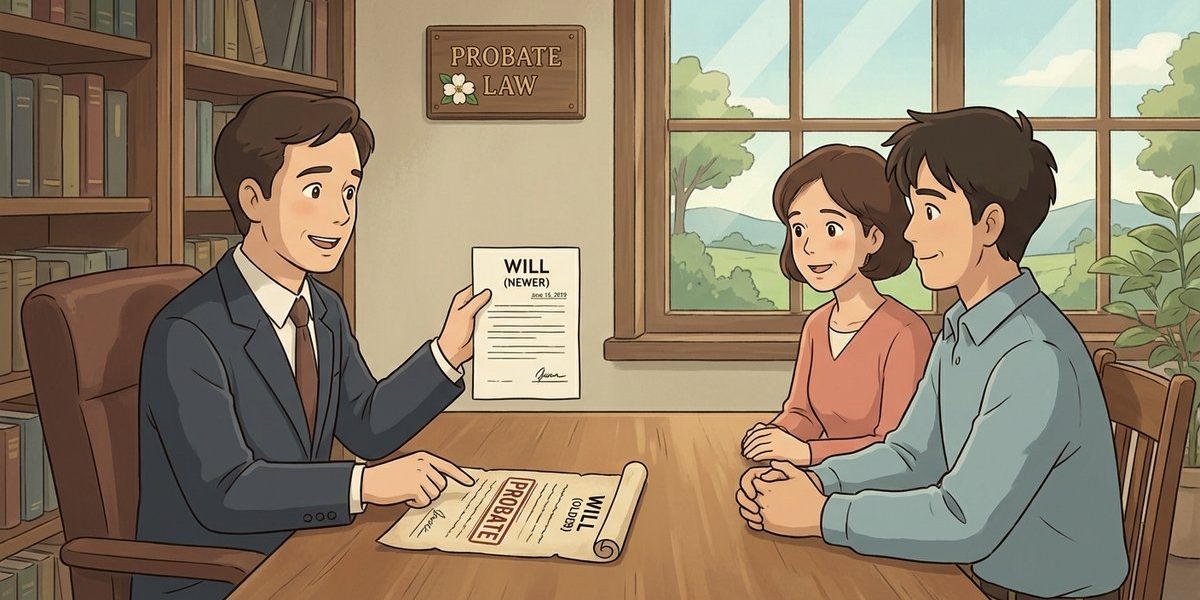
What happens if the court issues executor authority to someone under the wrong will before my newer will is heard? – North Carolina
Short Answer
In North Carolina, an older will can be admitted to probate first and the Clerk of Superior Court can issue letters testamentary to the named executor before anyone presents a newer will. That does not end the story. The usual way to challenge the earlier probate is to file a will caveat, which moves the dispute to Superior Court and triggers a court order that generally stops distributions while the caveat is pending.
Understanding the Problem
In a North Carolina estate, can a relative open probate using an older will and receive executor authority before a newer will is considered? If that happens, what authority does the executor have in the meantime, and what procedure determines which document controls as the decedent’s last will? The decision point is whether the will already admitted to probate must be attacked directly in the estate file before a different will can take over the administration.
Apply the Law
North Carolina commonly starts probate “in common form” before the Clerk of Superior Court, which means the will can be admitted and an executor can be appointed without a full, contested hearing. If someone later claims the wrong will was admitted (for example, because a newer will exists), North Carolina law generally requires a direct challenge called a caveat to the will that was admitted. Once a caveat is filed, the Clerk transfers the matter to Superior Court for a jury-triable proceeding on whether the document admitted is actually the decedent’s will (the core issue is often described as whether the decedent made that will).
Key Requirements
- Standing (an “interested” person): The person filing must have a real financial stake in which will controls (for example, being named as a beneficiary under the newer will).
- Direct challenge to the probated will: When a will has already been admitted, the typical route is to file a caveat to that will rather than trying to “switch” wills informally.
- Timing: A caveat is time-sensitive. In many estates, it must be filed within a set window after probate in common form, with limited extensions for legal disability.
What the Statutes Say
- N.C. Gen. Stat. § 31-32 (Filing of caveat) – Allows an interested person to file a caveat to the probate of a will (generally within three years after probate in common form, with limited disability extensions).
- N.C. Gen. Stat. § 31-33 (Transfer to Superior Court) – Requires the Clerk to transfer the caveat to Superior Court for trial and sets procedures for service and party alignment.
- N.C. Gen. Stat. § 31-36 (Effect of caveat on estate administration) – Requires an order during the caveat that generally stops distributions and commissions and focuses the personal representative on preserving assets and paying only certain items under a notice-and-objection process.
Analysis
Apply the Rule to the Facts: Here, a relative opened the estate using an older will that cuts the client out, and the client has a newer “homemade” will that includes the client. Under North Carolina practice, the older will can be admitted first and letters testamentary can issue to the executor named in that older will. The usual way to get the newer will considered is not to simply file it as a replacement, but to file a caveat to the will already admitted and put the newer will into the caveat case so the court can decide which document controls.
While the caveat is pending, North Carolina law is designed to reduce the risk that the “wrong-will” executor distributes the estate and makes the dispute meaningless. After a caveat is filed, the Clerk issues an order that generally prohibits distributions to beneficiaries and prohibits commissions, while still requiring accountings and allowing limited payments (like taxes, funeral expenses, liens, timely claims, and certain administration professional fees) under a notice-and-objection procedure.
Because the newer will is described as “homemade,” the practical pressure points often include proving proper execution and addressing common defenses (for example, arguments about capacity, undue influence, fraud, or revocation). The caveat process is where those issues get litigated, and it is also where the court can decide whether the newer document is valid and whether the older will should be set aside.
For additional background on related steps, see a newer will that names a beneficiary and pause estate distributions while investigating.
Process & Timing
- Who files: An interested person (often a beneficiary under the newer will). Where: The Clerk of Superior Court in the county where the estate is opened (the decedent’s estate file). What: A caveat filed in the estate file and served on interested parties. When: Generally within three years after the will is probated in common form (with limited extensions for minors or incompetency).
- Immediate effect on administration: After the caveat is filed, the Clerk issues an order restricting distributions and commissions and requiring preservation of assets and continued accountings. The personal representative may still handle certain necessary payments, but typically must give notice and allow time for objections before paying many items.
- How the will dispute gets decided: The Clerk transfers the caveat to Superior Court, parties are aligned, and the case proceeds toward a resolution (often by trial or another court-approved resolution) determining which document is the valid will.
Exceptions & Pitfalls
- Trying to probate the newer will as a workaround: When an earlier will has already been admitted, North Carolina procedure generally requires a direct caveat rather than a collateral attempt to substitute a different will.
- Waiting while the executor acts: Even though distributions are restricted after a caveat is filed, action taken before the caveat (and payments allowed during it) can still affect the estate. Timing matters.
- Notice and service problems: Caveat proceedings have formal service and party-alignment steps. Mistakes can cause delay, added cost, or dismissal risks.
- “Homemade” will proof issues: If the newer will is not self-proved or has unclear witnessing, the case may turn on execution proof and credibility. Preserving originals and locating witnesses can be critical.
Conclusion
In North Carolina, the Clerk of Superior Court can admit an older will first and issue executor authority, even if a newer will exists but has not been presented. The usual remedy is a will caveat filed in the estate file, which transfers the dispute to Superior Court and triggers an order that generally stops distributions while the case is pending. The most important next step is to file a caveat in the decedent’s estate file with the Clerk of Superior Court within the applicable time limit (often three years after probate in common form).
Talk to a Probate Attorney
If a relative opened an estate under an older will and letters testamentary have already been issued, our firm has experienced attorneys who can help explain the caveat process, what actions can be paused, and what timelines apply. Call us today at (919) 341-7055.
Disclaimer: This article provides general information about North Carolina law based on the single question stated above. It is not legal advice for your specific situation and does not create an attorney-client relationship. Laws, procedures, and local practice can change and may vary by county. If you have a deadline, act promptly and speak with a licensed North Carolina attorney.

