
What happens if I contact the wrong timeshare company—how do I identify the correct owner services department to request records? – North Carolina
Short Answer
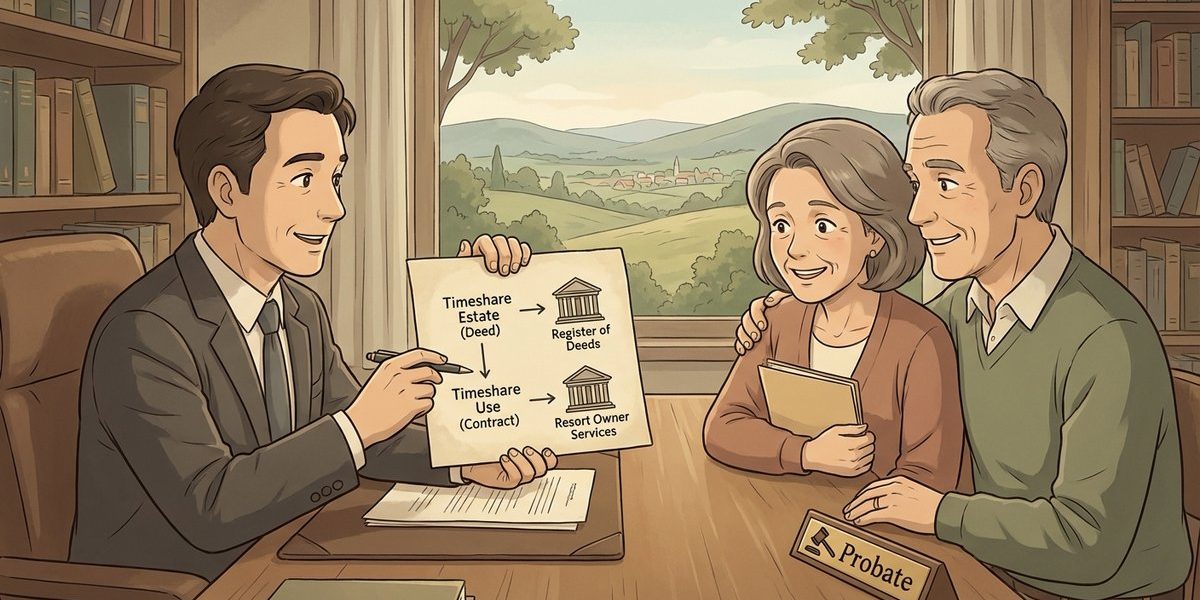
If the wrong company is contacted, the most common result is a delay because the company either has no records or only has partial records (for example, exchange membership rather than ownership). In North Carolina, the fastest way to identify the correct “owner services” contact is to first determine whether the decedent owned a timeshare estate (deeded real property) or a timeshare use (personal property), then match that to the entity that maintains the official ownership records (often the resort’s managing entity or developer). For deeded interests, county Register of Deeds records usually point to the correct program and parties.
Understanding the Problem
In North Carolina probate administration, a personal representative often needs timeshare records to confirm whether the decedent’s interest is deeded real property or a contract-based personal property interest. The decision point is identifying which entity actually maintains the ownership records for the specific timeshare program so the estate can request the correct documents and confirm how the asset should be handled in the estate inventory and administration timeline.
Apply the Law
North Carolina law draws a key distinction between a deeded “timeshare estate” and a non-deeded “timeshare use.” A timeshare estate is treated as an interest in real estate, while a timeshare use is treated as personal property. That classification usually determines where ownership evidence exists (county land records versus program/company records) and which “owner services” department is the right place to request documents. For estate administration, the personal representative typically uses estate authority documents (letters and a death certificate) to request information needed to identify and marshal assets.
Key Requirements
- Confirm the type of timeshare interest: Determine whether the decedent owned a deeded timeshare estate (real property) or a timeshare use (personal property contract/membership).
- Identify the record-keeper: Match the interest type to the entity that keeps the official ownership records (often the resort’s managing entity/HOA, the developer, or a contracted management company—not an exchange company or marketing company).
- Use proper estate authority: Provide documentation showing authority to request records (commonly letters testamentary/administration and a certified death certificate) and enough identifiers (owner number, resort name, unit/week, last known address).
What the Statutes Say
- N.C. Gen. Stat. § 93A-42 (Timeshare estates deemed real estate; timeshare uses) – Classifies a timeshare estate as real estate and a timeshare use as personal property, and addresses recordation for timeshare estates.
- N.C. Gen. Stat. § 31-39 (Probate necessary to pass title; recordation) – Addresses the effect of probate and recordation of wills on title to real property.
Analysis
Apply the Rule to the Facts: The estate’s representative is trying to confirm whether the decedent’s timeshare is deeded (real property) or personal property. Under North Carolina’s timeshare statute, that classification drives where reliable proof exists: deeded interests usually show up in county land records, while “use” interests are typically proven through the program’s contract and the managing entity’s account records. If the wrong company is contacted (for example, a marketing brand or exchange program), it may not have the deed/contract history needed to confirm the ownership type, so the request should be redirected to the entity that maintains the ownership records for that specific resort program.
Process & Timing
- Who files: The personal representative (or the estate’s attorney on the personal representative’s behalf). Where: Start with the county Register of Deeds where the resort is located (for deeded interests) and the resort’s managing entity/owner services (for account history and status). What: Request (a) a copy of any recorded deed/timeshare instrument if it exists, and (b) an “ownership verification” or “estoppel/status letter” from owner services showing the ownership type, account number, and any transfer requirements. When: As early as possible in administration, because classification affects the estate inventory and next steps.
- Confirm whether the first contact is the right entity: If the company says it is not the record-keeper, ask for the exact name of the timeshare program, the managing entity (or HOA/association), and the correct mailing address/email/fax for “Owner Services” or “Transfers/Resales.” Then re-send the request with the estate documents attached.
- Document the result for the estate file: If a deed exists, keep the recorded instrument details (book/page or instrument number) and confirm the county. If no deed exists, keep the owner services verification showing it is a timeshare use/personal property interest and what documents are required to transfer or close the account.
Exceptions & Pitfalls
- Brand name vs. legal owner services entity: The name on brochures or billing statements may be a marketing brand, while the actual record-keeper may be an association/management company with a different legal name.
- Exchange company confusion: Exchange memberships often look like “ownership,” but they usually do not prove deeded title. Owner services for the resort program (or the association) is typically the better source for ownership classification.
- Not providing estate authority documents: Many owner services departments will not release account details without letters and a death certificate. Sending incomplete documentation often results in a “we can’t help” response even when the request is otherwise correct.
- Assuming all timeshares are deeded: North Carolina recognizes both deeded and non-deeded structures. Treating a timeshare use like real property can lead to wasted effort searching land records that will never show the interest.
- County mismatch for deed searches: If the resort is in a different county than where the estate is being administered, the deed (if any) will usually be recorded where the resort is located, not where the decedent lived.
Conclusion
In North Carolina, the key to finding the correct owner services department is first confirming whether the decedent owned a deeded timeshare estate (real property) or a timeshare use (personal property). A timeshare estate is treated like real estate and is typically supported by county Register of Deeds records, while a timeshare use is supported by the program’s contract and the managing entity’s account records. The next step is to request an ownership verification/status letter from the resort program’s record-keeper using letters and a death certificate.
Talk to a Probate Attorney
If a timeshare is part of an estate and the records are unclear or different companies are pointing fingers at each other, our firm has experienced attorneys who can help identify the correct record-keeper, request the right documents, and keep the estate administration on track. Call us today at [919-341-7055].
Disclaimer: This article provides general information about North Carolina law based on the single question stated above. It is not legal advice for your specific situation and does not create an attorney-client relationship. Laws, procedures, and local practice can change and may vary by county. If you have a deadline, act promptly and speak with a licensed North Carolina attorney.

