
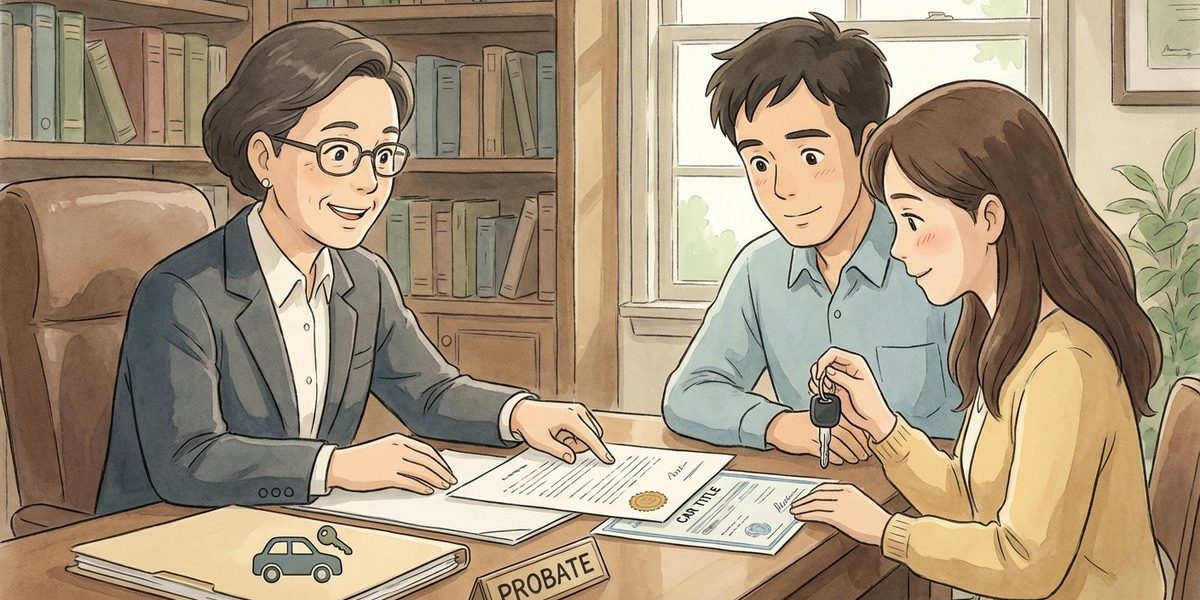
What documents will the DMV or a dealership require to process the title transfer after a year’s allowance is approved? – North Carolina
Short Answer
In North Carolina, when a vehicle is awarded through a spouse’s year’s allowance, the DMV (or a dealership handling the paperwork) typically needs a certified copy of the clerk’s year’s allowance order (often the certified Application and Assignment of Year’s Allowance), the current NC title (or a DMV duplicate-title form if the title is missing), and standard DMV transfer items like ID, proof of insurance, and a title application. If there is a lien, a lien release (or payoff/assumption paperwork) is usually required. Requirements can vary by license plate agency and by whether a personal representative is appointed.
Understanding the Problem
In a North Carolina estate, can a surviving spouse take paperwork from the Clerk of Superior Court to the DMV (or an auto dealer) to move a vehicle title into the surviving spouse’s name after the year’s allowance is approved, so the vehicle can be sold? The key decision point is whether the year’s allowance paperwork clearly shows that the vehicle was assigned to the surviving spouse and whether the DMV will accept that paperwork in place of (or alongside) estate administration documents.
Apply the Law
North Carolina’s year’s allowance process allows the clerk to enter an order awarding specific personal property of the estate to the surviving spouse. When a motor vehicle is part of that award, the certified year’s allowance paperwork is commonly used at the DMV to support a title transfer into the surviving spouse’s name. If the estate did not open a full administration (or if no personal representative is appointed), the certified year’s allowance assignment can be especially important because it shows the clerk-approved transfer of that personal property.
Key Requirements
- Proof the vehicle was awarded in the year’s allowance: A certified court document showing the vehicle (or the property list that includes it) was assigned to the surviving spouse.
- DMV title-transfer packet is complete: The existing title (or a duplicate-title request), a title application, and any required disclosures (like odometer disclosure when applicable).
- No unresolved lien or “missing title” problem: If a lender has a recorded lien or the title cannot be located, the DMV usually requires additional lender/title paperwork before it will issue a new title.
What the Statutes Say
- N.C. Gen. Stat. § 30-20 (Procedure for assignment; order of clerk) – directs the clerk to enter an order setting out the personal property awarded as a year’s allowance and provides for a deficiency judgment if the personal property is insufficient.
- N.C. Gen. Stat. § 30-15 (Spouse’s year’s allowance) – establishes the spouse’s allowance and includes timing rules when a personal representative has been appointed.
Analysis
Apply the Rule to the Facts: Here, the year’s allowance has already been approved, and a deficiency judgment was issued. That usually means the clerk entered an order identifying what personal property was awarded (and separately noted any deficiency). For DMV purposes, the most important item is the certified year’s allowance paperwork showing the vehicle was assigned; the deficiency judgment generally explains that the estate did not have enough personal property to satisfy the full allowance, but it does not replace the assignment document the DMV uses to justify the title transfer.
Process & Timing
- Who files: Typically the surviving spouse (or the person handling the sale with the spouse’s authority). Where: a North Carolina License Plate Agency (DMV plate agency) or a dealership’s title clerk. What: bring a certified copy of the year’s allowance assignment/order from the Clerk of Superior Court plus the DMV transfer documents listed below. When: as soon as the certified copies are available and before attempting to complete the sale paperwork.
- DMV/dealer review: the clerk will confirm the title chain, check for liens, and confirm the transfer basis (year’s allowance assignment). If the original title is missing or a lien is still recorded, the DMV will usually pause the transfer until the missing-title or lien issue is resolved.
- Issuance of new title: once accepted, the DMV processes the transfer and issues a new title in the surviving spouse’s name (or processes a direct transfer if the dealer is handling a sale transaction).
Exceptions & Pitfalls
- Certified copies matter: the DMV and many dealerships typically want certified (not plain) copies of the clerk’s year’s allowance paperwork. It is common to need more than one certified copy if a dealer, lender, and DMV each want one.
- Vehicle must be clearly identified: if the year’s allowance paperwork does not clearly tie to the vehicle (for example, no VIN or a vague description), the DMV may require clarification or additional court documentation.
- Liens are not wiped out: a year’s allowance can protect against many estate claims, but it generally does not eliminate a recorded lien on the vehicle. A lien release, payoff statement, or assumption paperwork may be required before the DMV will issue clear title.
- Missing title: if the original title cannot be found, the DMV often requires a duplicate-title process before (or as part of) the transfer.
- Different route if a personal representative is active: if a personal representative is appointed and is selling the vehicle as an estate asset, the DMV/dealer may require letters (letters testamentary/letters of administration) instead of, or in addition to, year’s allowance paperwork.
Conclusion
In North Carolina, to transfer a vehicle title after a year’s allowance is approved, the DMV or a dealership typically needs a certified copy of the clerk’s year’s allowance assignment/order showing the vehicle was awarded, plus the current title (or duplicate-title paperwork), and standard DMV transfer items like a title application, ID, proof of insurance, and any required disclosures. The most important next step is to pick up certified copies from the Clerk of Superior Court and submit the full title-transfer packet to a License Plate Agency promptly so lien or missing-title issues can be addressed early.
Talk to a Probate Attorney
If you’re dealing with a year’s allowance and need to transfer a vehicle title through the DMV or a dealership to complete a sale, our firm has experienced attorneys who can help you understand your options and timelines. Call us today at (919) 341-7055.
Disclaimer: This article provides general information about North Carolina law based on the single question stated above. It is not legal advice for your specific situation and does not create an attorney-client relationship. Laws, procedures, and local practice can change and may vary by county. If you have a deadline, act promptly and speak with a licensed North Carolina attorney.

