
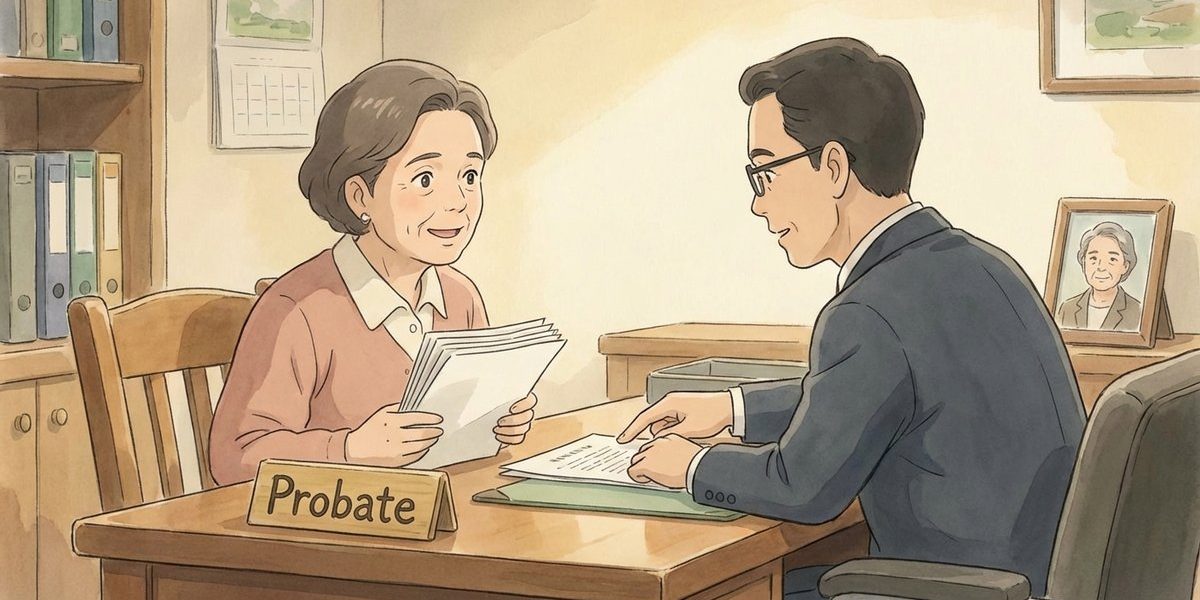
What documents do I need to prove I’m the surviving spouse for a year’s allowance claim if I can’t easily find my marriage certificate? – North Carolina
Short Answer
In North Carolina, a year’s allowance claim is filed with the Clerk of Superior Court by verified petition, and the Clerk must first confirm that the applicant is the decedent’s “surviving spouse.” A certified marriage certificate is the most common proof, but it is not always the only way to show a valid marriage. When the certificate is hard to locate, the usual approach is to obtain a certified copy from the Register of Deeds (or the state where the marriage occurred) and, if needed, provide other reliable records that support the existence of a valid marriage.
Understanding the Problem
In North Carolina probate practice, the key question is: what documents can establish that a person is the decedent’s surviving spouse for purposes of a year’s allowance when the marriage certificate is not readily available? The decision point is whether the Clerk of Superior Court has enough proof of a valid marriage to process the year’s allowance application without delaying the claim. This issue often comes up soon after a death, when paperwork is missing, names may not match exactly across records, or the marriage occurred in a different county or state.
Apply the Law
North Carolina gives a surviving spouse the right to claim a spousal year’s allowance by filing a verified petition with the Clerk of Superior Court in the county where venue is proper. The Clerk’s first step is to confirm eligibility, which includes confirming a valid marriage and that the applicant is the “surviving spouse.” If a personal representative has already been appointed, the petition must be filed within six months after letters are issued, and the petitioner must provide a copy of the petition to the personal representative. The allowance is generally satisfied from the decedent’s personal property (not real estate), and the Clerk’s order identifies what property is awarded.
Key Requirements
- Proof of death and identity: A certified death certificate (and matching identification) is typically used to tie the claim to the correct decedent.
- Proof of a valid marriage: A certified marriage certificate is the standard document, but the core legal issue is whether the marriage was valid, not whether the paper is easy to find.
- A verified filing in the right office: The claim is made by a verified petition filed with the Clerk of Superior Court in the proper county, and timing rules can change if a personal representative is already in place.
What the Statutes Say
- N.C. Gen. Stat. § 30-15 (Spousal year’s allowance; claim by verified petition; timing when a personal representative exists) – Establishes the surviving spouse’s right to a year’s allowance and explains how and when the claim is filed with the Clerk of Superior Court.
- N.C. Gen. Stat. § 30-20 (Clerk’s procedure; order assigning personal property) – Directs the Clerk to first determine entitlement and then enter an order awarding personal property to satisfy the allowance.
- N.C. Gen. Stat. § 30-27 (Additional allowance; one-year deadline in that separate proceeding) – Covers a separate “additional allowance” process with its own filing deadline and contested-proceeding rules.
Analysis
Apply the Rule to the Facts: The scenario involves a surviving spouse who wants to pursue a year’s allowance in North Carolina and needs to show proof of marriage, along with a death certificate and asset information (vehicle title/registration and financial or retirement account statements). The Clerk will focus on whether there was a valid marriage and whether the petition is properly verified and filed in the correct county. If the marriage certificate is missing, the practical goal is to replace it with a certified copy from the proper records office, and to gather backup documents that consistently show the marital relationship and resolve any name or date discrepancies.
Process & Timing
- Who files: The surviving spouse (or a properly authorized agent). Where: The Clerk of Superior Court (Estates) in the county where venue is proper under North Carolina law. What: A verified petition for spousal year’s allowance (many counties use AOC estate forms for the application/assignment). When: If a personal representative has already been appointed, file within six months after letters are issued and provide a copy of the petition to the personal representative as required by statute.
- Gather proof of marriage: First choice is a certified copy of the marriage certificate from the Register of Deeds in the county where the marriage license was issued (or the vital records office for the state where the marriage occurred). If the marriage occurred outside North Carolina, request the certified record from that state’s vital records office. If names differ from current ID (for example, a name change), also gather documents that connect the names (such as a government ID and other records showing the maiden and married names).
- Prepare supporting asset paperwork for the Clerk’s order: Bring the certified death certificate, the best available proof of marriage, and documents that help identify and value personal property that may be used to satisfy the allowance (for example, vehicle title/registration and account statements showing date-of-death values). The Clerk may enter an order awarding specific personal property, and if issues arise, the matter can be directed into a contested estate proceeding.
Exceptions & Pitfalls
- Validity problems (not just missing paperwork): The biggest risk is not the missing certificate—it is a challenge that the marriage was not valid (for example, a prior marriage was never dissolved). If there is any reason the marriage could be questioned, it is important to address that before filing or be prepared for a contested proceeding.
- Confusing “year’s allowance” with “additional allowance”: North Carolina has a separate additional-allowance process with a one-year-from-death deadline (and different contested-proceeding requirements). Mixing the two can cause missed deadlines or incorrect filings.
- Asset scope misunderstandings: The Clerk’s order typically awards personal property to satisfy the allowance. Some assets (like beneficiary-designated accounts) may pass outside the estate, but they can still matter when gathering valuations and explaining what property is available to satisfy the allowance. Mislabeling what is “estate property” versus “non-estate property” can slow the process.
- Notice and documentation gaps when a personal representative exists: When a personal representative has been appointed, failing to provide the required copy of the petition or missing the six-month window can create avoidable disputes and delays.
Conclusion
In North Carolina, proving “surviving spouse” status for a year’s allowance usually starts with a certified marriage certificate, but the legal focus is whether the marriage was valid. When the certificate is hard to find, the next step is typically to request a certified copy from the Register of Deeds (or the state where the marriage occurred) and gather consistent backup records that confirm the marital relationship and resolve name differences. If a personal representative has been appointed, the next step is to file the verified petition with the Clerk of Superior Court within six months after letters are issued.
Talk to a Probate Attorney
If a year’s allowance claim depends on replacing missing marriage records and pulling together the right asset paperwork (vehicle documents, account statements, and date-of-death values), our firm has experienced attorneys who can help explain the process and timelines in North Carolina. Call us today at [CONTACT NUMBER].
Disclaimer: This article provides general information about North Carolina law based on the single question stated above. It is not legal advice for your specific situation and does not create an attorney-client relationship. Laws, procedures, and local practice can change and may vary by county. If you have a deadline, act promptly and speak with a licensed North Carolina attorney.

