
What documents do I need to prove I have authority to request account records and tax forms on behalf of an estate? – North Carolina
Short Answer
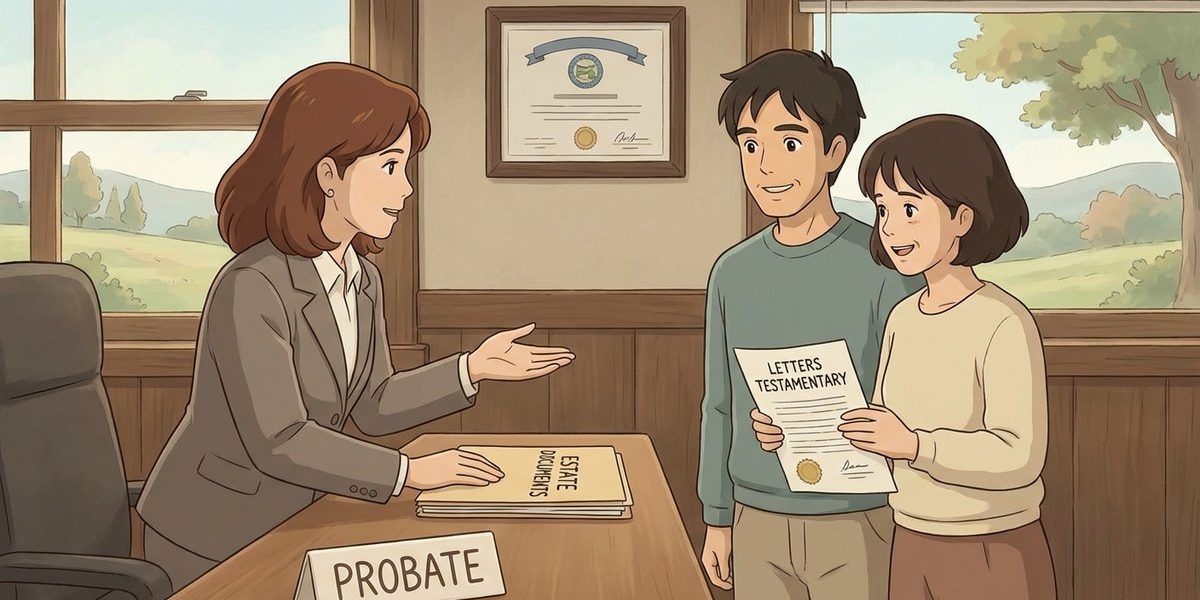
In North Carolina, the most commonly accepted proof of authority to request a decedent’s account records and tax forms is a certified copy of Letters Testamentary or Letters of Administration showing the appointment as the estate’s personal representative. Many institutions also require a certified death certificate and a written request that identifies the account. For certain small-estate procedures, a certified small estate affidavit may be accepted instead of Letters.
Understanding the Problem
In North Carolina probate, a common question is: what documents must a personal representative provide to a bank, brokerage firm, retirement plan administrator, or government agency to show legal authority to obtain the decedent’s account statements, transaction history, and tax forms needed to administer the estate. The decision point is whether the request is being made under the authority of a court-appointed personal representative (or a small-estate procedure) and what proof the record-holder requires before releasing records.
Apply the Law
Under North Carolina law and standard probate practice, third parties typically look for court-issued proof that a person has been appointed to act for the estate. In a full estate administration, that proof is the clerk of superior court’s issuance of Letters Testamentary (when there is a will) or Letters of Administration (when there is no will). In smaller administrations, a small estate affidavit may serve as the authority document. For digital accounts, North Carolina’s digital assets law also lists specific items a custodian can require before disclosing information.
Key Requirements
- Proof of appointment (or qualifying authority): A certified copy of Letters Testamentary/Letters of Administration, or a certified small estate affidavit if the estate is being handled that way.
- Proof of death: A certified copy of the death certificate is commonly required, and it is specifically listed for certain digital-asset disclosures.
- A clear, traceable request: A written request that identifies the decedent and the account (account number/username or other identifier) and explains what records are being requested (statements, transaction history, year-end tax forms, etc.).
What the Statutes Say
- N.C. Gen. Stat. § 36F-8 (Disclosure of other digital assets of deceased user) – Allows a custodian to require a written request, certified death certificate, and certified Letters (or a certified small estate affidavit or court order) before disclosing certain digital assets and a catalogue of communications.
- N.C. Gen. Stat. § 36F-7 (Disclosure of content of electronic communications of deceased user) – Similar requirements for content of electronic communications, and may require proof of the decedent’s consent (unless an online tool controls) or a court finding.
- N.C. Gen. Stat. § 8-36 (Authenticated copy of record of administration) – Addresses when properly certified copies of administration records/letters can be used as evidence.
Analysis
Apply the Rule to the Facts: The scenario involves requesting account records and tax forms on behalf of an estate. The core “authority” document is typically the court-issued Letters showing the personal representative’s appointment, and record-holders often pair that with a certified death certificate and a written request identifying the account. If the estate is being handled through a small-estate procedure, a certified copy of the filed affidavit may be the document that substitutes for Letters.
Process & Timing
- Who files: The personal representative (or the person using a small-estate procedure). Where: For appointment documents, the Estates Division of the Clerk of Superior Court in the county where the estate is opened. What: Request certified copies of Letters Testamentary/Letters of Administration (or the certified small estate affidavit, if applicable). When: As soon as the appointment is made, because many institutions will not release records until they receive certified authority documents.
- Make the records request: Send the institution a written request with (a) certified Letters (or certified small-estate document), (b) certified death certificate, and (c) identifying information for the account. For digital accounts, be prepared to provide additional identifiers and, if requested, an affidavit that the disclosure is reasonably necessary for administration.
- For tax forms and tax reporting: After qualification, the personal representative commonly obtains an EIN for the estate (IRS Form SS-4) and may notify the IRS of the fiduciary relationship (IRS Form 56) so IRS correspondence goes to the personal representative. Banks often require the estate EIN to open an estate account and may request an IRS Form W-9 for interest reporting under the estate’s EIN.
Exceptions & Pitfalls
- Uncertified copies get rejected: Many record-holders will not accept a plain photocopy of Letters. A certified copy from the Clerk of Superior Court is often required.
- Small-estate procedure limits: Some institutions will accept a small estate affidavit, but others still insist on Letters or a court order depending on the asset type and the institution’s policies.
- Digital account “content” is treated differently: A custodian may disclose a catalogue and certain digital assets with the basic package, but the content of communications can require additional proof of the decedent’s consent or a court direction, depending on how the account was set up.
- Account identification problems: Even with Letters, a custodian may require a username, account number, email address, or other identifier, plus evidence linking the account to the decedent.
- Using the wrong tax ID: Banks commonly require an estate EIN for estate accounts and interest reporting. Using the decedent’s Social Security number can create reporting and administration problems.
Conclusion
In North Carolina, the usual way to prove authority to request a decedent’s account records and tax forms for an estate is to provide a certified copy of Letters Testamentary or Letters of Administration, often along with a certified death certificate and a written request that identifies the account. For certain simplified administrations, a certified small estate affidavit may be used instead. The next step is to obtain certified copies from the Clerk of Superior Court and submit them with the records request.
Talk to a Probate Attorney
If an estate needs bank statements, brokerage records, retirement account information, or tax forms and an institution is refusing to release them without the right paperwork, our firm has experienced attorneys who can help clarify what documents to provide and how to avoid delays. Call us today at (919) 341-7055.
Disclaimer: This article provides general information about North Carolina law based on the single question stated above. It is not legal advice for your specific situation and does not create an attorney-client relationship. Laws, procedures, and local practice can change and may vary by county. If you have a deadline, act promptly and speak with a licensed North Carolina attorney.

