
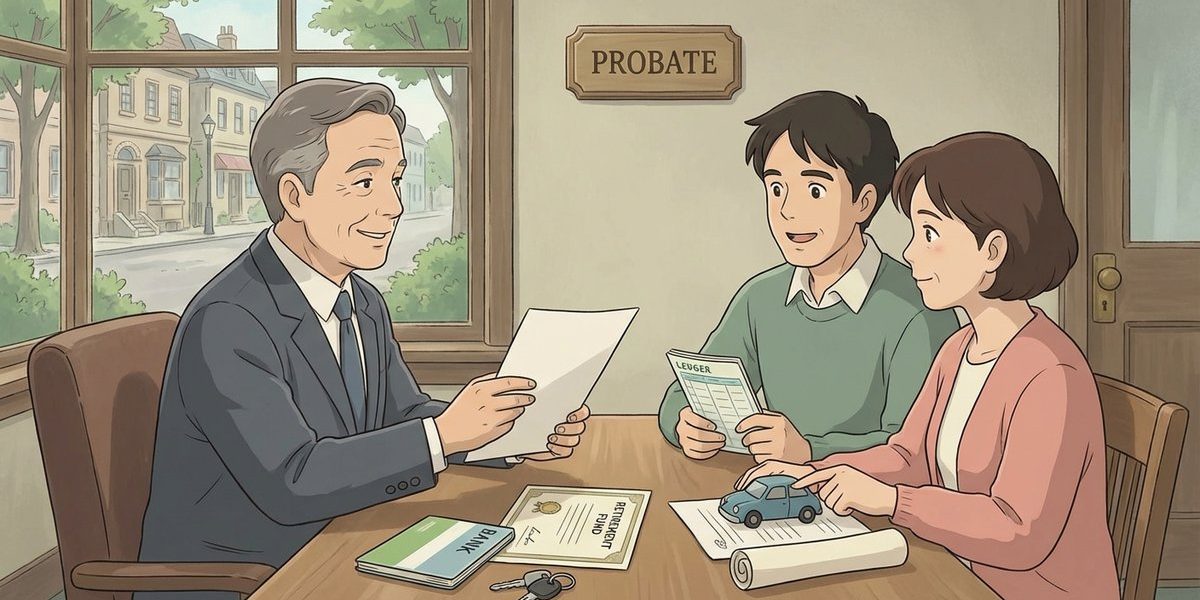
What documents do I need for the probate inventory if the main assets are a bank account, a retirement account, and vehicles? – North Carolina
Short Answer
In North Carolina, the probate inventory is a snapshot of what the decedent owned (or had an interest in) on the date of death and what it was worth. For a bank account, retirement account, and vehicles, the core documents usually include date-of-death statements (or balance letters), account ownership/beneficiary paperwork, and vehicle title/registration records plus a reasonable value source. The Clerk of Superior Court typically expects enough documentation to support ownership and the date-of-death value, even if some assets ultimately pass outside probate.
Understanding the Problem
In North Carolina probate, an administrator must prepare an inventory during the early estate-administration phase after appointment by the Clerk of Superior Court. The decision point is what paperwork is needed to prove (1) whether each asset belongs on the inventory and (2) the value as of the date of death when the main assets are a bank account, a retirement account, and vehicles.
Apply the Law
North Carolina estate administration generally requires the personal representative (executor/administrator) to identify estate assets, describe how they are titled (sole vs. joint), and report a date-of-death value. In practice, the Clerk’s office expects supporting records that show ownership and the date-of-death value, and the personal representative should keep those records organized in case questions come up later during accountings or before distributions. A key timing issue is that the inventory is typically due early in the administration, so requesting statements and title records promptly matters.
Key Requirements
- Proof of ownership/titling: Records showing whether the asset was solely owned, jointly owned (and with whom), or held with survivorship features that may change whether it is a probate asset.
- Date-of-death value support: A statement, letter, or valuation source that supports the fair market value (or account balance) as of the date of death, not today’s value.
- Clear descriptions that match the records: Account numbers (often partially masked), VINs for vehicles, and institution names that line up with the documents kept in the estate file.
What the Statutes Say
- N.C. Gen. Stat. § 30-21.1 (Reporting of allowances by personal representative) – Explains that certain allowance assets distributed directly (and never possessed by the personal representative) are not reported on the inventory, which highlights that whether an asset is in the estate’s possession and whether it is a probate asset can affect inventory reporting.
Analysis
Apply the Rule to the Facts: Here, the administrator is in the inventory phase and needs to list and document assets owned at death. For the bank account, the key is a date-of-death balance and documentation showing how the account was titled. For the retirement account, the key is whether it passes by beneficiary designation (often outside probate) and, either way, having a date-of-death valuation and ownership/beneficiary paperwork to support how it is reported. For vehicles, the key is title/registration evidence and a reasonable date-of-death value support tied to the VIN and vehicle description.
Process & Timing
- Who files: The administrator (personal representative). Where: The Clerk of Superior Court (Estates) in the county where the estate is opened in North Carolina. What: The inventory form required by the Clerk’s office, supported by account and title records kept in the estate file. When: Typically early in administration; many estates work on this immediately after appointment because institutions can take time to produce date-of-death valuations.
- Request date-of-death documentation: Order a date-of-death balance letter or statement for the bank account; request a date-of-death valuation for the retirement account; gather vehicle title/registration and a value source tied to the date of death.
- Organize and retain support: Keep copies of signature cards (if available), beneficiary designation confirmations, statements, and title documents with the estate records so the inventory and later accounting can be supported if the Clerk requests clarification.
Exceptions & Pitfalls
- Retirement accounts often pass outside probate: Many retirement accounts transfer by beneficiary designation. Even when an asset is not a probate asset, the inventory still needs to be prepared carefully so it does not incorrectly treat a non-estate asset as an estate asset (or omit an estate asset that lacks a valid beneficiary designation).
- Joint accounts and survivorship: A bank account titled jointly (especially with survivorship language) may change what belongs in the probate estate. The best practice is to obtain documentation showing how the account was titled (often a signature card or an institution letter confirming ownership type).
- Using the wrong value date: The inventory generally focuses on date-of-death values. Using a current balance or a later vehicle value can create inconsistencies that cause delays or questions later.
- Paying claims directly from personal funds: During the creditor-notice phase, paying creditor claims personally or outside the estate account can create recordkeeping problems. A cleaner approach is to use an estate bank account after obtaining an EIN and to pay allowed claims from the estate account with clear documentation.
Conclusion
For a North Carolina probate inventory involving a bank account, a retirement account, and vehicles, the administrator should gather documents that prove ownership/titling and support the date-of-death value: bank date-of-death statements or balance letters (and, when possible, signature-card/ownership confirmation), retirement account date-of-death valuation and beneficiary/ownership confirmation, and vehicle title/registration plus a reasonable value source tied to the date of death. The next step is to file the inventory with the Clerk of Superior Court by the deadline set for the estate.
Talk to a Probate Attorney
If an estate inventory is due and the main assets include bank accounts, retirement accounts, and vehicles, a probate lawyer can help sort out what belongs on the inventory, what passes outside probate, and what documentation is usually needed to avoid delays with the Clerk. Call us today at (919) 341-7055.
Disclaimer: This article provides general information about North Carolina law based on the single question stated above. It is not legal advice for your specific situation and does not create an attorney-client relationship. Laws, procedures, and local practice can change and may vary by county. If you have a deadline, act promptly and speak with a licensed North Carolina attorney.

