
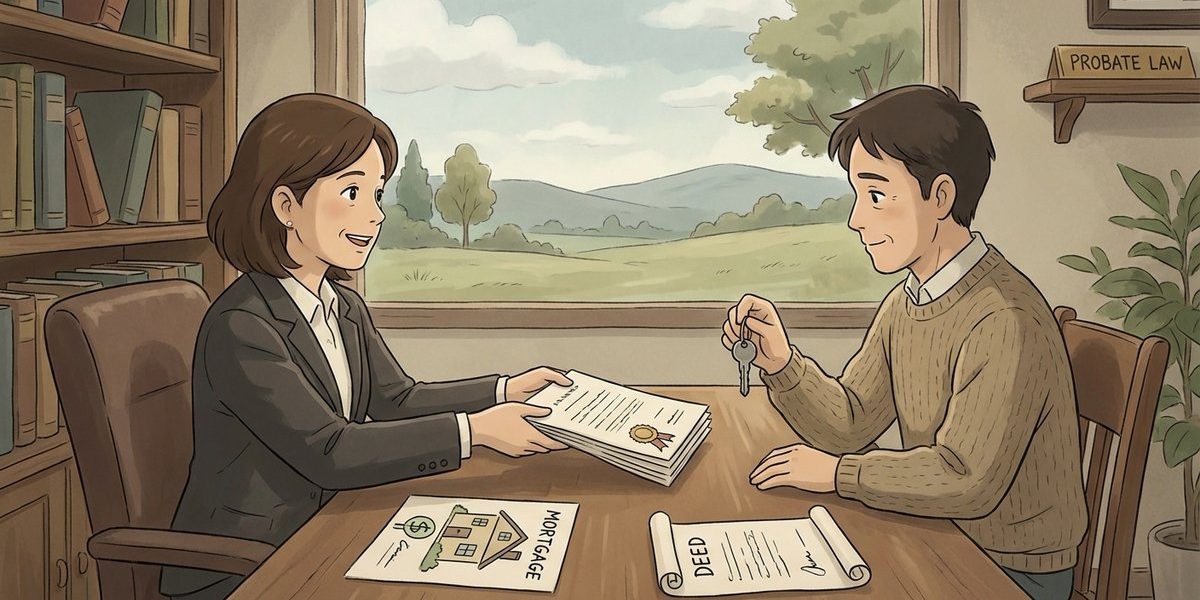
What documents can I provide to prove I’m the sole heir and entitled to deal with the mortgage after probate is finished? – North Carolina
Short Answer
In North Carolina, a mortgage company usually wants documents that show (1) the homeowner has died, (2) who has legal authority to act for the estate (if the estate is still open), and (3) who received title to the home after the estate was closed. Common proof includes a certified death certificate, certified Letters Testamentary/Letters of Administration (if there was a personal representative), and certified copies of the probate closing paperwork from the Clerk of Superior Court. If the goal is to deal with the mortgage as the new owner, the most persuasive document is typically a recorded deed or other recorded instrument showing title in the heir’s name.
Understanding the Problem
In North Carolina probate, the key question is: after an estate is administered and closed, what paperwork shows that a single heir is the person entitled to communicate with the mortgage servicer and handle the loan tied to the decedent’s home. The actor is the sole heir/beneficiary, the duty is proving authority or ownership, and the relief sought is getting the servicer to recognize the correct party without forcing a reopened estate. Timing matters because the request comes after the Clerk of Superior Court has closed the estate file, while the mortgage company is sending default notices and demanding additional probate action.
Apply the Law
In North Carolina, probate records are maintained through the Clerk of Superior Court (Estates Division) in the county where the estate was opened. If there was a will, a duly probated will is effective to pass title, but for real property the will and probate information often must be recorded in the county where the land is located to protect title against certain third parties. In practice, mortgage servicers typically ask for certified probate documents (showing who had authority during administration and that the estate is now closed) plus recorded land records (showing who owns the home now).
Key Requirements
- Proof of death: A certified death certificate is commonly required for mortgage and title-related transactions, even if the Clerk did not require it to open probate.
- Proof of authority (if acting for the estate): If the estate was open and a personal representative handled the mortgage, certified Letters Testamentary (executor) or Letters of Administration (administrator) show who had legal authority to act.
- Proof of ownership after probate: To deal with the mortgage as the successor owner, the strongest proof is recorded documentation showing the home is now titled in the heir’s name (or that the heir is the only person entitled to the property under the will or intestacy).
What the Statutes Say
- N.C. Gen. Stat. § 31-39 (Probate necessary to pass title; recordation for real property) – Explains that a duly probated will is effective to pass title and addresses timing/recording issues that can matter for real property.
Analysis
Apply the Rule to the Facts: The facts describe a sole heir trying to assume or otherwise deal with an existing mortgage after the estate was administered and closed, while the servicer is sending default letters and pushing to reopen the estate. That situation usually calls for a document package that proves death, shows what happened in probate (including that the file is closed), and shows who owns the home now. If the servicer’s concern is “who can talk to us,” certified probate documents often solve the communication issue; if the concern is “who owns the collateral,” recorded land records are usually what moves the needle.
Process & Timing
- Who gathers the proof: The heir/beneficiary (or counsel). Where: Clerk of Superior Court (Estates) for certified probate copies; Register of Deeds for recorded land records in the county where the home is located. What: Certified copies of the probate file documents and a certified death certificate; recorded deed(s) and recorded will/probate filings if applicable. When: As soon as the servicer requests proof or sends a default/acceleration notice, because those letters often have short response windows.
- Send a complete “successor” package: Provide the servicer with (a) death certificate, (b) certified probate authority/closing documents, and (c) recorded ownership documents. Ask the servicer to confirm in writing what else is required to update the account and where to upload/fax documents.
- Fix any title/probate gaps if the servicer rejects the proof: If the estate file does not clearly show who took title (or if the land records do not reflect the heir yet), the next step is usually a targeted filing with the Clerk of Superior Court and/or a corrective recording in the county registry, rather than a full “reopen” unless a specific probate task truly remains.
Exceptions & Pitfalls
- “Sole heir” is not the same as “personal representative”: If the servicer wants proof of who could act for the estate during administration, it may insist on certified Letters. If the estate is closed, Letters may no longer be “active,” so the servicer may also need certified proof of closing and proof of current ownership.
- Title proof often requires land-record documents: A will and probate paperwork may show who should inherit, but servicers and insurers often look for recorded documents in the county registry that tie the decedent’s ownership to the heir’s ownership.
- County-to-county variation: Clerks’ offices can differ on what they will certify and how they label closing documents. Asking for “certified copies of the probate file, including the order/receipt showing the final account was approved and the estate closed” usually gets better results than asking for a generic “probate closing letter.”
- Incomplete packages trigger unnecessary “reopen” demands: Servicers sometimes default to “reopen the estate” when they do not receive (a) certified documents, (b) the full chain of probate authority/closing, or (c) clear ownership records. Submitting a complete, certified, organized packet can prevent that loop.
Conclusion
In North Carolina, the best way to prove sole-heir status and the right to deal with a mortgage after probate is finished is to provide certified proof of death, certified probate records from the Clerk of Superior Court showing what happened in the estate (including that it is closed), and recorded land records showing the home is now in the heir’s name (or otherwise passed under the probated will). The most practical next step is to request certified copies from the Clerk and submit the full packet to the servicer before the default-letter deadline.
Talk to a Probate Attorney
If a mortgage servicer is sending default letters after an estate is closed and demanding the estate be reopened, our firm has experienced attorneys who can help organize the right certified probate and title documents, respond to the servicer, and clarify the fastest path to get the account updated. Call us today at 919-341-7055.
Disclaimer: This article provides general information about North Carolina law based on the single question stated above. It is not legal advice for your specific situation and does not create an attorney-client relationship. Laws, procedures, and local practice can change and may vary by county. If you have a deadline, act promptly and speak with a licensed North Carolina attorney.

