
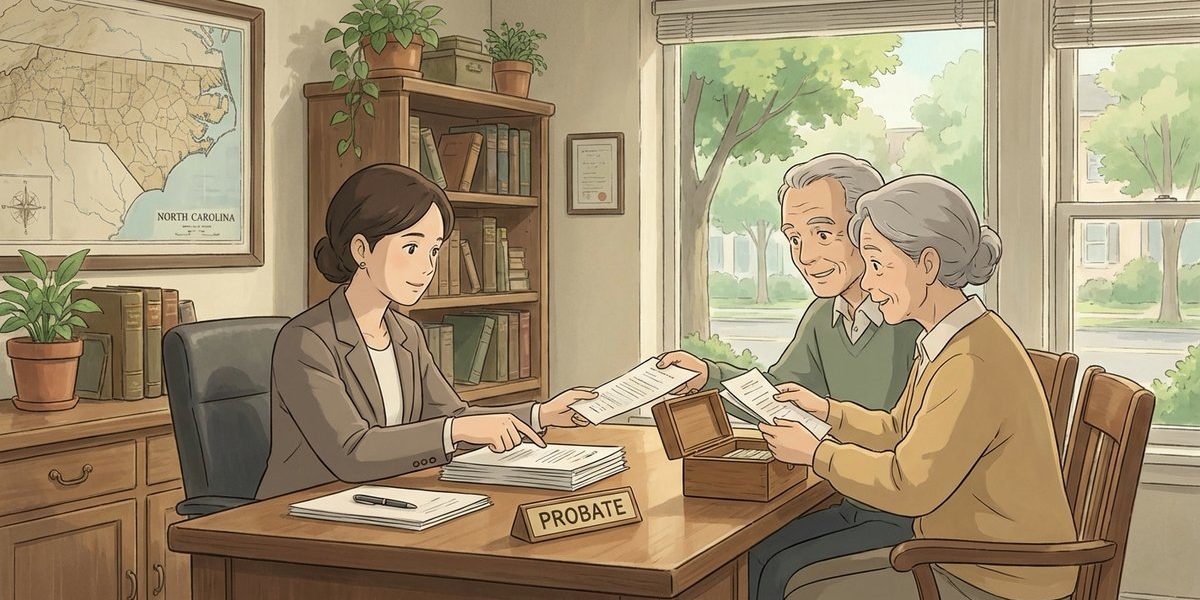
What documents and information do I need to provide now that probate has started? – North Carolina
Short Answer
In North Carolina, once probate has started and a personal representative is (or will be) acting, the next step is gathering documents that prove authority and let the estate be identified, protected, and administered. In practice, that means providing the clerk of superior court paperwork (if anything is still pending) and then collecting asset, debt, and beneficiary information so required notices, an inventory, and later accountings can be completed. The exact list varies by county and by whether there is a will, but most estates need the same core set of records.
Understanding the Problem
In North Carolina probate, the key question is what information the personal representative must gather and provide after the estate has been opened with the Clerk of Superior Court so the administration can move forward. The focus is not on whether probate was necessary, but on what paperwork and details are typically needed next to identify estate property, confirm who is entitled to notice, and keep the estate on track for required filings and eventual closing.
Apply the Law
North Carolina estate administration is supervised by the Clerk of Superior Court. After an estate is opened, the personal representative (executor or administrator) has ongoing duties to collect and safeguard estate assets, identify interested persons, address valid claims, and complete required filings with the clerk. The clerk may require specific forms and supporting documents, and local practice can vary by county, but the core rule is consistent: the personal representative must be able to prove authority, document what the decedent owned and owed, and support the numbers reported to the court.
Key Requirements
- Proof of authority and identity: Documents showing who is serving as personal representative and basic identifying information needed to administer the estate through the Clerk of Superior Court.
- Asset and debt documentation: Records that show what the decedent owned, how it was titled, approximate date-of-death values, and what bills or liabilities exist.
- Interested-person information: Names, addresses, and relationships for heirs and (if there is a will) beneficiaries, so required notices and communications can be handled correctly.
What the Statutes Say
- N.C. Gen. Stat. § 31-11.6 (Self-proved wills) – Explains how a will can be made “self-proved,” which can reduce the need to locate witnesses during probate.
- N.C. Gen. Stat. § 31-39 (Probate necessary to pass title; timing limits) – Addresses the importance of probate for passing title and includes timing rules that can matter if a will is not promptly probated.
Analysis
Apply the Rule to the Facts: Here, the will and the estate have already been opened in North Carolina, so the immediate need is usually not “starting” probate but supporting the personal representative’s next required steps. That typically means gathering (1) proof of appointment (Letters), (2) a complete list of assets and debts with backup documents, and (3) accurate contact information for heirs/beneficiaries so notices and filings can be completed without delays.
Process & Timing
- Who gathers and provides information: The personal representative (often with counsel). Where: filings go through the Clerk of Superior Court (Estates) in the county where the estate is administered. What: the clerk commonly uses North Carolina AOC estate forms (for example, the application that starts the file is often on AOC Form E-201, and counties may require additional supporting paperwork). When: begin immediately after the estate is opened, because early deadlines can start running as soon as the personal representative qualifies.
- First “document packet” to assemble (typical): (a) certified death certificate; (b) the original will and any codicils (if not already filed); (c) Letters Testamentary or Letters of Administration; (d) contact list for heirs/beneficiaries; (e) a list of known bills and creditors; (f) mail forwarding and access details for the decedent’s records (paper and digital) so statements can be collected.
- Next “financial packet” to assemble (typical): statements and title documents for bank accounts, investment accounts, retirement accounts, life insurance, vehicles, and real estate; plus documentation for mortgages, credit cards, medical bills, and other debts. These records support the estate inventory and later accountings that the clerk may require before approving a closing filing.
Exceptions & Pitfalls
- Missing will formalities or missing witnesses: If the will is not self-proved, the clerk may require additional proof (often involving witness affidavits). A self-proved will can simplify this step. See N.C. Gen. Stat. § 31-11.6.
- Incomplete asset list because of titling: Many assets pass outside probate (for example, joint accounts with survivorship or beneficiary-designated accounts). Even so, the personal representative often still needs documentation to confirm what is probate vs. non-probate and to support the inventory and communications.
- Not collecting “proof” for values and balances: The clerk’s filings are easier to complete (and easier to defend if questioned) when each listed asset has a statement, payoff, or other record showing date-of-death balance/value and ownership.
- Address problems for heirs/beneficiaries: Returned mail and bad addresses can delay required notices and slow down closing. Building a verified contact list early helps keep the estate on schedule.
- Real estate in multiple counties: If the decedent owned real property in a different county, additional recording steps may be needed for title purposes. See N.C. Gen. Stat. § 31-39.
Conclusion
In North Carolina, once probate has started, the personal representative typically must promptly provide (and keep organized) proof of appointment, a complete list of heirs/beneficiaries with contact information, and documentation for every asset and debt so the clerk-required inventory and later filings can be completed. The most important next step is to gather statements, titles, and creditor information and be ready to file the estate’s required inventory with the Clerk of Superior Court by the deadline set by North Carolina law and applicable estate procedures.
Talk to a Probate Attorney
If probate has started and the estate needs to move forward with inventories, notices, and court filings, our firm has experienced attorneys who can help explain what documents are needed and what timelines apply. Call us today at (919) 341-7055.
Disclaimer: This article provides general information about North Carolina law based on the single question stated above. It is not legal advice for your specific situation and does not create an attorney-client relationship. Laws, procedures, and local practice can change and may vary by county. If you have a deadline, act promptly and speak with a licensed North Carolina attorney.

