
What do I need to do if I have my parent’s estate documents but do not know who drafted them? – NC
Short Answer
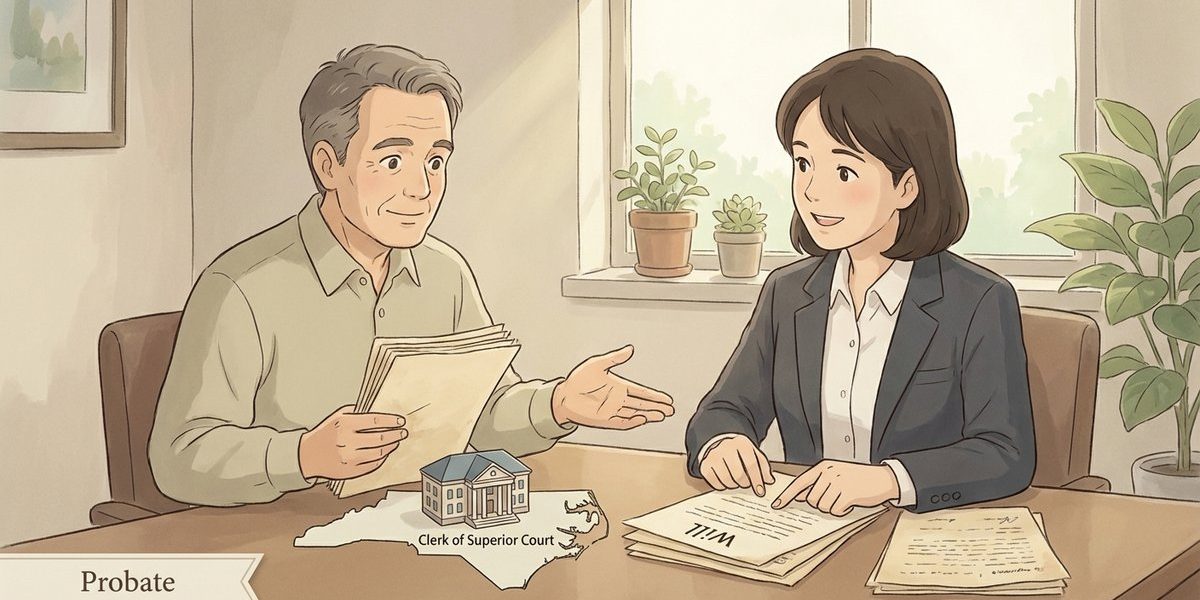
In North Carolina, having the estate documents is usually enough to start the probate process even if the drafting attorney is unknown. The same lawyer who prepared the estate plan does not have to handle probate. The key step is to locate the original will, if there is one, and deliver it to the Clerk of Superior Court in the proper county so the named executor can apply to qualify.
Understanding the Problem
In North Carolina probate, the main question is whether the person holding a deceased parent’s estate documents can move forward with the estate without first identifying the lawyer who prepared them. The usual decision point is simple: if the original will and related papers are available, can the named executor present them to the Clerk of Superior Court and ask to be appointed, or is the unknown drafting attorney a required part of that process. This issue often comes up when a parent dies, a child finds signed estate papers, and the estate is expected to be opened in the county where the parent lived.
Apply the Law
Under North Carolina law, probate is handled through the Clerk of Superior Court in the county with jurisdiction over the estate. The controlling issue is not who drafted the documents. It is whether there is a valid original will, whether it can be delivered to the clerk, and whether the person seeking appointment is eligible to qualify as personal representative. If the will was made self-proved, the clerk may admit it more easily because the witness proof is built into the document. If the original will cannot be found, different procedures may apply, including a lost-will process. A named executor should present the will as soon as possible after death, and if the named executor does not do so promptly, another interested person may seek probate after notice.
Key Requirements
- Original will: North Carolina probate usually requires the original signed will, not just a copy, unless a separate lost-will procedure is used.
- Proper court filing: The will should be delivered to the Clerk of Superior Court in the county that has probate jurisdiction over the estate, along with the application to probate the will and issue letters.
- Qualified personal representative: The person named as executor may ask the clerk to issue Letters Testamentary, and that person may hire any probate attorney to assist. The drafting attorney is not required to handle the estate.
What the Statutes Say
- N.C. Gen. Stat. § 31-11 (Will deposited with clerk for safekeeping) – a will may have been placed with the clerk during the parent’s lifetime, so the clerk can be asked to check if the original is on deposit.
- N.C. Gen. Stat. § 31-11.6 (Self-proved wills) – a self-proved will can be admitted to probate without the usual witness testimony process.
- N.C. Gen. Stat. § 31-39 (Probate necessary to pass title) – a will generally must be probated to pass title, and delay can create title problems if probate is not started in time.
Analysis
Apply the Rule to the Facts: Here, the parent recently passed away, the child has the estate documents, and the child expects to seek appointment as executor in North Carolina. Those facts usually mean the next issue is not finding the drafting attorney, but confirming whether the original will is in hand and then presenting it to the clerk in the proper county. If the documents include a self-proving affidavit, that may make probate more straightforward. If the papers are only copies, the clerk may require additional steps before the estate can move forward.
North Carolina practice also treats the original signed will as important. Even when documents are scanned or e-filed, the original will still must be delivered to the clerk’s office. If the family cannot identify the lawyer who prepared the estate plan, practical clues may still appear in the papers, such as a signature block, notary page, or cover letter, but probate does not depend on hiring that same lawyer. Another probate attorney can review the documents, prepare the application, and help with qualification.
If the original will is missing, one focused variable changes the answer. When the family has only a copy, the estate may need a lost-will proceeding rather than routine probate. If no original can be found at home, another place to check is the clerk’s office because North Carolina allows a testator to deposit a will there for safekeeping. That search can matter more than identifying the drafting attorney.
For a broader overview of related issues, see find out whether there is a will and who should handle the estate and what to file to open a probate estate when named as executor in the will.
Process & Timing
- Who files: usually the person named as executor in the will. Where: the Clerk of Superior Court in the North Carolina county with probate jurisdiction over the estate. What: the original will, death certificate, and the Application for Probate and Letters (AOC Form E-201), if qualification is requested. When: as soon as possible after death; if the named executor does not present the will promptly, an interested person may seek probate after notice.
- The clerk reviews the will, determines whether it can be admitted to probate in common form, and decides whether the proposed executor can qualify. If the will is self-proved, that can reduce the need for separate witness proof. Local clerk practices can vary by county.
- If the clerk admits the will and the executor qualifies, the clerk issues Letters Testamentary. That document gives the executor authority to collect estate assets, give required notices, and continue the estate administration process.
Exceptions & Pitfalls
- If the family has only copies and not the original will, routine probate may not be available, and a lost-will proceeding may be necessary.
- Filing papers without actually probating the will is not always enough, especially when title to real property must pass through the estate.
- Families sometimes spend time searching for the drafting attorney when the more urgent task is locating the original will, checking with the clerk for safekeeping deposits, and opening the estate on time.
Conclusion
In North Carolina, the person holding a deceased parent’s estate documents usually does not need to find the lawyer who drafted them before probate can begin. The key threshold is whether the original will can be located and delivered to the Clerk of Superior Court. The most important next step is to file the original will and Application for Probate and Letters with the clerk in the proper county as soon as possible.
Talk to a Probate Attorney
If a family is dealing with a parent’s estate documents, trying to locate the original will, or preparing to open probate in North Carolina, our firm has experienced attorneys who can help explain the process, required filings, and timing. Call us today at 919-341-7055.
Disclaimer: This article provides general information about North Carolina law based on the single question stated above. It is not legal advice for your specific situation and does not create an attorney-client relationship. Laws, procedures, and local practice can change and may vary by county. If you have a deadline, act promptly and speak with a licensed North Carolina attorney.

