
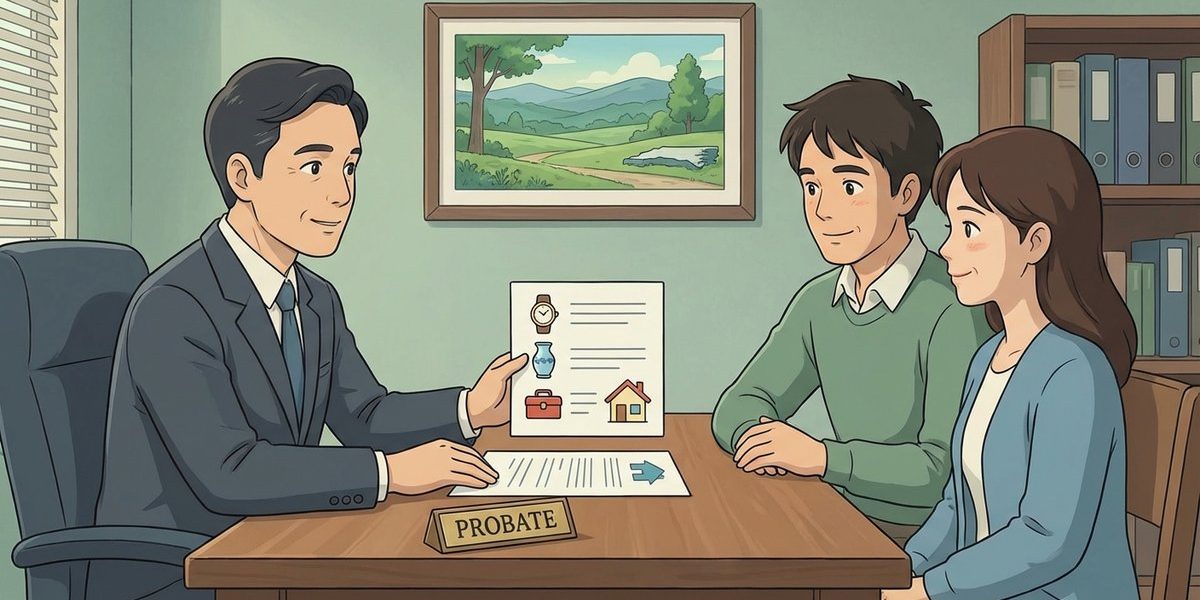
What can we do if items were taken from the home after the death, and there may be a police report? – North Carolina
Short Answer
In North Carolina, when property disappears from a deceased person’s home after death, the usual next step is for the estate’s personal representative (executor/administrator) to identify what is missing, preserve proof, and use probate tools to demand return of estate property. Depending on the situation, the personal representative (and sometimes an “interested person”) can ask the Clerk of Superior Court to order an examination of the person believed to have the property and demand its return, or file a civil action in Superior Court to recover the items. A police report can help document the loss, but probate remedies often focus on getting the property (or its value) back into the estate so estate expenses and creditor claims can be paid.
Understanding the Problem
In North Carolina probate, the key question is: what can be done when personal property is removed from a deceased person’s home after the death, and the estate needs those items (or their value) accounted for as part of administering the estate. The actor is usually the estate’s personal representative, whose job includes gathering and protecting estate assets so valid expenses and creditor claims can be handled before distributions. The trigger is the discovery that items are missing and there is reason to believe a specific person has them or disposed of them.
Apply the Law
North Carolina law gives the personal representative authority and responsibility to locate, assemble, and protect estate assets and to use court procedures to recover property that belongs to the estate. When property is believed to be in someone else’s possession, the law provides two common tracks: (1) an estate proceeding before the Clerk of Superior Court to examine the person believed to have the property and demand recovery, and (2) a civil action in Superior Court to sue for recovery of the property (and, in some cases, to seek temporary court orders to prevent further transfer or loss while the case is pending). These tools are designed to get missing property identified, traced, and returned (or compensated) so the estate can pay expenses and creditor claims before heirs receive distributions.
Key Requirements
- Estate authority: A qualified personal representative (or, in some situations, another “interested person”) must have standing to act for the estate in probate.
- Identifiable estate property: The missing items must be property that belonged to the decedent (or became part of the estate) rather than property owned by someone else.
- Reasonable basis and proof: The request should be supported with a clear list of missing items and facts showing why a particular person likely has the property or knows where it went (photos, receipts, witness statements, texts, a police report number, etc.).
What the Statutes Say
- N.C. Gen. Stat. Chapter 28A (Administration of Decedents’ Estates) – North Carolina’s main probate statute framework, including estate proceedings before the Clerk of Superior Court.
- N.C. Gen. Stat. § 28A-15-12 (Actions to recover property of decedent) – Authorizes procedures to recover property belonging to the estate, including an estate proceeding to examine a person believed to possess estate property and a civil action to recover property.
- N.C. Gen. Stat. § 28A-2-6 (Contested estate proceedings) – Sets procedural rules for contested estate proceedings before the Clerk of Superior Court, including how the clerk can apply civil procedure rules.
Analysis
Apply the Rule to the Facts: The facts describe an estate administration where heirs cannot cooperate and the estate needs funds held back to pay estate expenses and creditor claims, including funeral reimbursement. If items were taken from the home after death, that can reduce what the estate can use to pay those expenses and can also complicate a sale of a co-owned house if the home’s contents are disputed. The personal representative’s practical job is to (1) identify what is missing, (2) document the loss (including any police report), and (3) use the Clerk of Superior Court and/or Superior Court to compel information and recovery so the estate can be administered and claims can be addressed.
Process & Timing
- Who files: Usually the personal representative (executor/administrator). In some situations, an interested person may start an estate proceeding to examine someone believed to have estate property. Where: Clerk of Superior Court (estate file) for an estate proceeding; Superior Court for a civil action to recover property. What: A verified petition in the estate (with a detailed list of missing items and the basis for believing a person has them), and/or a civil complaint seeking return of property (and sometimes temporary court orders to preserve property). When: As soon as the loss is discovered, especially if items could be sold, moved, or destroyed.
- Information-gathering step: The clerk can order an examination process in an estate proceeding to require a person to answer questions about estate property and to demand recovery. In contested matters, the clerk may apply selected civil procedure rules and can expand the rules that apply, which can matter if formal discovery becomes necessary.
- Recovery/enforcement step: If the property is not returned voluntarily, the estate may pursue a Superior Court action to obtain a judgment for return of the property (or its value, depending on the claim) and then use lawful enforcement tools. If there is a risk of immediate loss, the estate may ask the court for temporary orders aimed at preserving the property while the case is pending.
Exceptions & Pitfalls
- Ownership disputes: A common defense is that the items were not the decedent’s property (for example, they belonged to a co-owner, a roommate, or were gifted before death). Clear documentation (photos, receipts, witness statements) matters.
- Waiting too long to inventory and secure the home: Delay can make it harder to prove what was present at death and who removed it. Early steps often include changing locks (when legally appropriate), photographing rooms, and creating a written inventory.
- Relying only on a police report: A police report can be helpful evidence, but it does not automatically return property to the estate. Probate and civil court procedures are often needed to compel information and recovery.
- Filing in the wrong forum: Some disputes fit best as an estate proceeding before the Clerk of Superior Court; others require a civil action in Superior Court. Choosing the wrong path can cause delay and added cost.
- Overlooking the estate’s bigger picture: When the estate needs funds reserved for expenses and creditor claims, missing property can affect the estate’s ability to pay. The recovery strategy should align with the estate’s administration plan, including any planned sale of real estate and the need to hold back proceeds for claims.
Conclusion
In North Carolina, when items are taken from a home after a death, the estate’s personal representative can document what is missing and use probate tools to demand information and recovery. State law allows an estate proceeding to examine a person believed to have estate property and demand its return, and it also allows a civil action in Superior Court to recover estate property when needed. The next step is to prepare a detailed, evidence-backed inventory of missing items and file the appropriate verified petition with the Clerk of Superior Court promptly.
Talk to a Probate Attorney
If items went missing after a death and the estate still needs to pay expenses and creditor claims, our firm has experienced attorneys who can help evaluate the best North Carolina probate procedure to recover property and keep the administration on track. Call us today at [919-341-7055].
Disclaimer: This article provides general information about North Carolina law based on the single question stated above. It is not legal advice for your specific situation and does not create an attorney-client relationship. Laws, procedures, and local practice can change and may vary by county. If you have a deadline, act promptly and speak with a licensed North Carolina attorney.

