
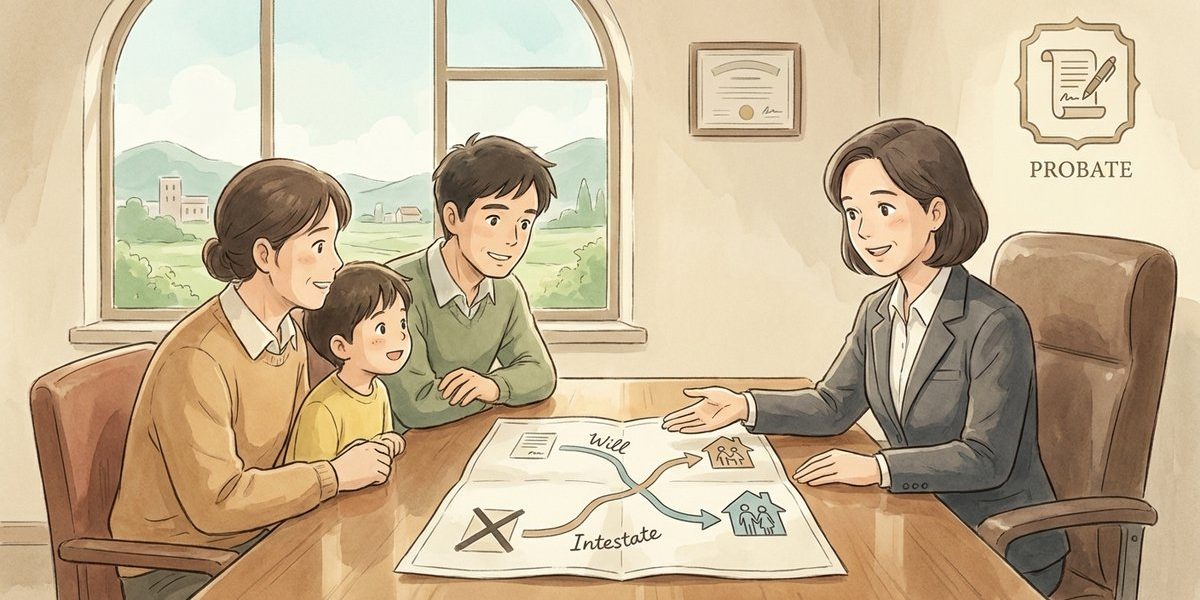
If we can’t use the will, can we still open the estate as if there is no will and keep the same outcome for the heirs? – NC
Short Answer
Sometimes, but not automatically. In North Carolina, if a will cannot be admitted to probate, the estate may be opened as an intestate estate, which means the property passes under the state’s intestacy rules rather than under the will. The outcome for the heirs stays the same only if the intestate heirs and shares match what the will would have done, or if valid renunciations or disclaimers redirect interests in a way the law allows.
Understanding the Problem
In North Carolina probate, the single issue is whether an estate can move forward through the clerk of superior court without using the offered will, while still leaving the same family members in the same practical positions. The answer depends on who would inherit if there were no valid will, whether the offered document can be proved as a will or as a copy, and whether any person who would inherit must sign additional waiver, renunciation, or disclaimer papers. This question is about the legal path for opening the estate, not about changing the family’s preferred result by agreement alone.
Apply the Law
North Carolina gives the clerk of superior court original probate authority. If an original will is available and valid, the estate is generally administered under that will. If the original cannot be used, North Carolina law may still allow probate of a copy in limited situations, but if the will is not admitted, the estate is treated as intestate and the heirs are determined under Chapter 29. That matters because intestacy follows fixed classes of heirs, and those classes may or may not match the older will. A renunciation or disclaimer can affect who ultimately receives property, but it must be done correctly and cannot simply rewrite the estate informally.
Key Requirements
- Valid probate path: The clerk must have a lawful basis to open the estate either as testate under a probated will, including a properly proved copy when allowed, or as intestate if no will is admitted.
- Correct heirs under intestacy: If the estate proceeds without a will, North Carolina decides who inherits by statute. If there is no surviving spouse or descendants, surviving parents usually take first; if no parent survives, siblings and their descendants may take next.
- Proper renunciation or disclaimer paperwork: If an heir wants the property to pass as though that person did not take it, the heir must use a written renunciation or disclaimer that meets North Carolina requirements. That step can change the practical outcome, but only within the statutory rules.
What the Statutes Say
- N.C. Gen. Stat. § 7A-241 (Probate jurisdiction) – The clerk of superior court handles probate and estate administration.
- N.C. Gen. Stat. § 31-39 (Probate necessary to pass title) – A will must be probated to pass title, with a key two-year limit in many cases.
- N.C. Gen. Stat. § 98-4 (Copy of lost will may be probated) – North Carolina allows probate of a copy in certain lost-record situations if the proof requirements are met.
- N.C. Gen. Stat. § 29-15 (Intestate succession to property other than real property) – Sets the order of inheritance for heirs other than a surviving spouse, including parents and then siblings.
- N.C. Gen. Stat. § 29-16 (Distribution among classes) – Explains how shares are divided within a class, such as among siblings and descendants of deceased siblings.
- N.C. Gen. Stat. § 29-10 (Renunciation of intestate share) – Directs that renunciation of an intestate share is governed by Chapter 31B.
- N.C. Gen. Stat. § 31B-1 (Right to renounce succession) – Allows heirs and devisees to renounce or disclaim interests by signed, acknowledged written instrument.
Analysis
Apply the Rule to the Facts: Here, the family is trying to open a North Carolina estate using an older will that appears tied to another jurisdiction, and the clerk is questioning both the affidavit language and whether the filed will is an original. That creates two separate paths: prove the will or a copy under the correct North Carolina rules, or open the estate as intestate. If the decedent’s surviving parent and another close relative would inherit in the same shares under North Carolina intestacy as they would under the will, the practical result may stay the same. If intestacy would add other heirs or different shares, then the result changes unless those persons execute valid renunciations or disclaimers and the paperwork is accepted.
North Carolina practice also treats beneficiary identification as an early and important step in qualification. That means the application for letters should match the correct heirship theory from the start, and personal representatives should avoid assuming the family can preserve a preferred result without checking the statutory classes first. The same is true for disclaimers: they are formal written acts, not informal family understandings, and they work only within the statutory rules.
For a closely related issue, see don’t have the original will. If the concern is whether additional relatives must sign off before an intestate filing can move forward, see won’t sign paperwork giving up their inheritance rights.
Process & Timing
- Who files: the proposed executor or administrator, usually through counsel. Where: the office of the Clerk of Superior Court in the North Carolina county with estate jurisdiction. What: an application to probate the will and qualify, or an application for letters of administration if proceeding intestate, along with any required affidavits, heir information, and any renunciation or disclaimer documents. When: as soon as the probate path is clear; if relying on a will to pass title, a key outside limit may be two years from the date of death under North Carolina law.
- If the clerk questions whether the will is original or whether out-of-state execution language matches North Carolina requirements, the filing party may need revised affidavits, proof of execution, or a separate effort to establish a copy of the will. If that proof is not available or is not accepted, the estate may need to proceed as intestate with all heirs identified under Chapter 29.
- After qualification, the personal representative receives letters testamentary or letters of administration, gives notice as required, and administers the estate for the persons legally entitled to inherit under the accepted probate theory.
Exceptions & Pitfalls
- A copy of a will is not the same as an admitted will. If the original cannot be proved and the copy does not meet North Carolina requirements, the estate may default to intestacy.
- The same family outcome cannot be assumed. Intestacy may bring in additional heirs or different shares, especially if there is a surviving spouse, descendants, or relatives in the next class.
- Renunciations and disclaimers must be formal, signed, and acknowledged. Service or notice problems can delay qualification or create later disputes.
Conclusion
Yes, a North Carolina estate can be opened as intestate if the will cannot be admitted, but the heirs do not automatically keep the same result. The outcome stays the same only if North Carolina intestacy gives the same people the same shares, or if valid renunciation or disclaimer papers lawfully redirect the interest. The key next step is to file the correct probate or administration application with the Clerk of Superior Court and, if the will is meant to control title, offer it for probate within the required time.
Talk to a Probate Attorney
If a family is dealing with a questioned will, a possible copy probate, or an intestate filing that may change who inherits, our firm has experienced attorneys who can help explain the available paths, paperwork, and deadlines. Call us today at 919-341-7055.
Disclaimer: This article provides general information about North Carolina law based on the single question stated above. It is not legal advice for your specific situation and does not create an attorney-client relationship. Laws, procedures, and local practice can change and may vary by county. If you have a deadline, act promptly and speak with a licensed North Carolina attorney.

