
If the property avoids probate, what steps are needed to close out the estate matter with the law firm? – North Carolina
Short Answer
In North Carolina, if the main asset (like a home) already transferred out of the parent’s name before death, a full probate estate may not be needed. To close out the matter with the law firm, the key steps are usually (1) confirming the home truly passed outside probate, (2) confirming whether any other assets or debts still require an estate file with the Clerk of Superior Court, and (3) signing a closing letter and arranging return of original documents and a final invoice.
Understanding the Problem
In North Carolina probate, the decision point is whether anything still requires an estate administration through the Clerk of Superior Court after a parent’s death when the home is already in the child’s name. If the home transfer was completed before death, the question becomes whether there is any remaining reason to open (or keep open) an estate file, such as other assets titled only in the parent’s name, creditors that must be handled through an estate, or a will that needs to be probated to protect title. If no probate administration is needed, the remaining work is mostly confirming the facts, documenting the conclusion, and formally ending the attorney-client engagement.
Apply the Law
North Carolina probate is the court-supervised process used to appoint a personal representative (executor/administrator) to collect assets titled in the decedent’s name, pay valid debts, and distribute what remains. If an asset is not titled in the decedent’s name at death (for example, because it was transferred earlier), that asset generally is not part of the probate estate. Even when the home avoids probate, other items (like a bank account titled only in the parent’s name) can still require an estate process, and a will may still need to be probated to protect against later title problems.
Key Requirements
- Confirm the home is non-probate property: The deed and county land records must show the parent no longer owned the home at death (or that it passed by survivorship).
- Confirm whether anything else requires an estate: Assets titled only in the parent’s name, unpaid debts, or a need to probate a will can still trigger a probate filing with the Clerk of Superior Court.
- Document closure of the legal matter: The law firm typically closes the file with a written closing letter, a final accounting/invoice, and return of original documents.
What the Statutes Say
- N.C. Gen. Stat. § 41-64 (Tenancy by the entirety; survivorship) – explains that when spouses own property as tenants by the entirety, the surviving spouse owns it by survivorship at death (not through probate).
- N.C. Gen. Stat. § 41-71 (Joint tenancy with right of survivorship) – explains how a deed can create survivorship ownership if the instrument clearly states that intent.
- N.C. Gen. Stat. § 31-39 (Probate of will; effect on title) – addresses when probate is needed for a will to be effective against certain creditors or purchasers and includes a time limitation tied to estate closing or two years from death.
Analysis
Apply the Rule to the Facts: Here, the parent transferred the home into the child’s name about a year before death, which suggests the home may not be a probate asset because it was not titled in the parent’s name at death. The next legal question is whether any other assets or debts still require opening an estate with the Clerk of Superior Court. If the home is the only meaningful asset and there are no probate-only assets to collect, the law firm’s work usually shifts to confirming the transfer is valid and then closing the file with clear documentation.
Process & Timing
- Who provides information: The family member handling affairs (often the named executor in a will, if one exists). Where: the law firm first, and then (if needed) the Clerk of Superior Court in the county where the decedent lived. What: deed/closing documents for the home transfer, death certificate, any will, and a list of remaining assets and debts. When: as soon as practical after death, especially if bills, insurance, or a future sale/refinance of the home is anticipated.
- Decision step (probate needed or not): If there are probate assets or a will that should be probated for title-protection reasons, the next step is opening an estate and later filing the required closing paperwork (such as a final account) with the Clerk. If there are no probate assets and no reason to file, the next step is confirming “no administration needed” and documenting that conclusion.
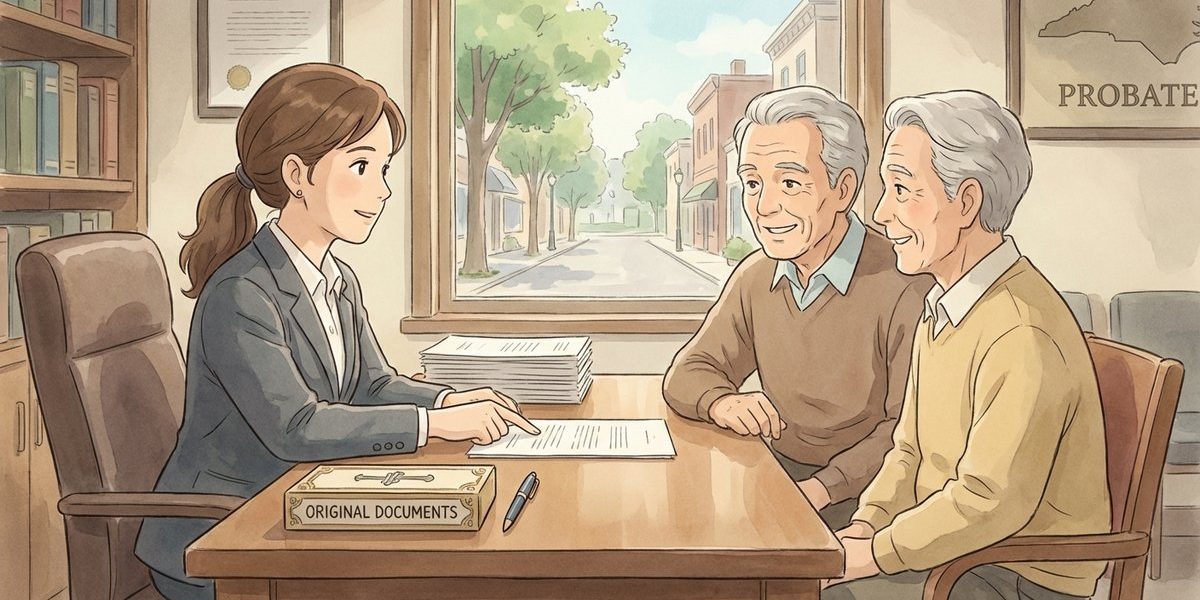
- Close the law firm matter: The firm typically issues a closing letter confirming the scope of work completed, returns original documents (like the original will, if provided), provides a final invoice, and confirms how long the file will be retained before destruction under the firm’s file-retention policy.
Exceptions & Pitfalls
- Home transfer issues: A deed can be challenged if it was not properly executed/recorded, or if there are disputes about capacity, undue influence, or fraud. A quick title review often prevents later problems when selling or refinancing.
- Other assets still trigger probate: Even if the home avoids probate, a bank account, refund check, lawsuit claim, or personal property titled only in the parent’s name can still require an estate process to collect and distribute.
- Debts and creditor pressure: Some families assume “no probate” means “no bills.” Creditors may still exist, and the best approach depends on what assets exist, who owns them now, and whether an estate administration would provide a structured way to handle claims.
- Will not filed: If a will exists, failing to address whether it should be probated can create avoidable title and family-dispute risk later, even when a major asset passed outside probate.
Conclusion
In North Carolina, when a home was transferred into a child’s name before the parent’s death, that home often is not a probate asset, so a full probate estate may not be needed. The practical next step is to confirm whether any other assets or debts require an estate file with the Clerk of Superior Court and whether a will should be probated for title-protection reasons. If no probate filing is needed, the matter is usually closed by issuing a closing letter and returning original documents after the deed and remaining asset/debt picture are confirmed.
Talk to a Probate Attorney
If you’re dealing with a parent’s death and it looks like the home (or other assets) may avoid probate, our firm has experienced attorneys who can help confirm what still needs to be done and what can be closed out. Call us today at (919) 341-7055.
Disclaimer: This article provides general information about North Carolina law based on the single question stated above. It is not legal advice for your specific situation and does not create an attorney-client relationship. Laws, procedures, and local practice can change and may vary by county. If you have a deadline, act promptly and speak with a licensed North Carolina attorney.

