
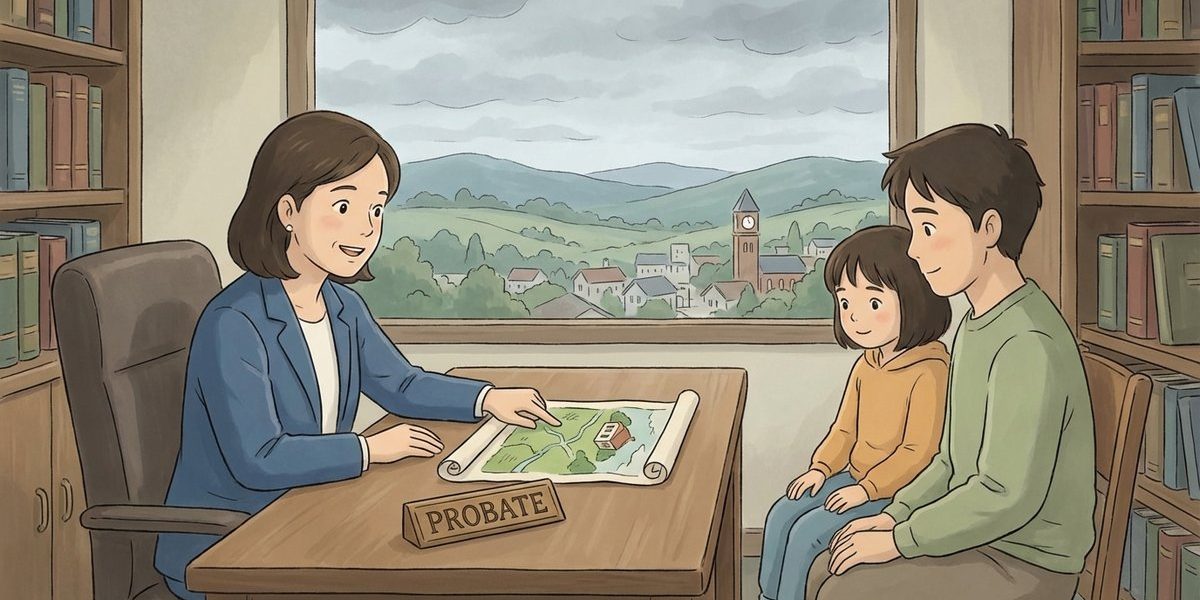
If the other parent is deceased, how does that affect my child’s rights to any inherited land or proceeds? – North Carolina
Short Answer
In North Carolina, if a parent who would have inherited is already deceased, that parent’s child can often inherit in that parent’s place, depending on the family tree and whether the deceased owner left a valid will. If the child is a minor, the child can still inherit, but a court-supervised process is usually needed to receive, hold, or sell the child’s share of land or sale proceeds. A letter addressed to a minor about “possible land” often relates to identifying heirs, clearing title, or starting a sale or partition process.
Understanding the Problem
In North Carolina probate, the key question is: when a relative dies owning land (or an interest in land) and one of the potential heirs is already deceased, can that deceased heir’s minor child step into that spot and claim a share of the land or the money from a sale? The answer depends on whether the deceased landowner had a will, how the family line runs, and whether the child is legally recognized in the family line for inheritance purposes. When the potential heir is a minor, the Clerk of Superior Court often becomes involved to make sure the minor’s interest is protected.
Apply the Law
North Carolina inheritance rights usually come from one of two places: (1) a will (testate estate) or (2) North Carolina’s intestate succession laws when there is no will. If there is no will, North Carolina generally distributes property down the family line. When an heir in that line has already died, North Carolina commonly distributes that deceased heir’s share to that heir’s living descendants (often called taking “by representation”). For a minor who inherits, the child may own an interest in the land, but adults generally cannot sell or sign away the minor’s real estate interest without a court-approved guardianship or special proceeding handled through the Clerk of Superior Court.
Key Requirements
- Inheritance path (will vs. no will): A valid will controls who receives the land or proceeds. If there is no will, North Carolina’s intestate succession statutes control who inherits and in what shares.
- Representation through a deceased parent: If the child’s parent would have been in the line to inherit but died earlier, the child may inherit that parent’s share under North Carolina’s “by representation” distribution rules.
- Minor’s share must be protected: If the child is under 18, receiving funds and especially selling or transferring real estate typically requires a court-supervised setup (often a guardian of the estate and/or a clerk-supervised process) so the minor’s interest is handled for the minor’s benefit.
What the Statutes Say
- N.C. Gen. Stat. § 29-15 (Intestate shares of heirs other than a surviving spouse) – Sets the order of who inherits when there is no will (children/descendants first, then parents, then siblings, etc.).
- N.C. Gen. Stat. § 29-16 (Distribution among classes) – Explains how shares are divided among children and the descendants of deceased children (distribution “by representation”).
- N.C. Gen. Stat. § 35A-1224 (Criteria for appointment of guardians) – Allows the Clerk of Superior Court to appoint a guardian of the estate for a minor when needed to manage property.
- N.C. Gen. Stat. § 35A-1301 (Special proceedings to sell, exchange, mortgage, or lease a ward’s real estate) – Provides a court process for selling or otherwise dealing with a minor’s real estate interest, with added protections for minors.
- N.C. Gen. Stat. § 35A-1227 (Funds owed to minors) – Describes lawful ways funds or property owed to a minor may be handled (including delivery to the clerk in some situations and use of other statutory options).
Analysis
Apply the Rule to the Facts: The letter addressed to a minor about relatives who may own land suggests someone is trying to identify heirs or clear title to real property. If the child’s other parent is deceased and that parent would have been the heir of the landowner (for example, the landowner was the deceased parent’s parent), North Carolina’s intestate rules often pass that deceased parent’s share down to the child. Because the child is a minor, any attempt to sign deeds, approve a sale, or receive and manage sale proceeds usually requires a clerk-supervised process so the minor’s share is protected and used only for the minor’s benefit.
Process & Timing
- Who files: Often the estate’s personal representative (executor/administrator), another heir, or a lawyer handling a title issue. Where: Typically the Clerk of Superior Court in the North Carolina county where the estate is administered and/or where the land is located. What: Commonly an heirship inquiry, a request for information, or a court filing to identify heirs, open an estate, or move forward with a sale/partition. When: The letter may include a response deadline set by the sender; court deadlines vary by procedure and can change based on the type of case.
- Confirm the child’s legal link in the family tree: The sender may request names, dates, and documents (for example, birth certificates or death certificates) to confirm that the minor is the descendant who takes in place of a deceased parent.
- Set up authority to act for the minor if action is required: If the matter involves selling land, signing closing documents, or receiving significant proceeds, a guardian of the estate or another court-approved arrangement may be required before anything can be finalized.
Exceptions & Pitfalls
- A will can change everything: If the landowner left a valid will, the child’s rights depend on the will’s terms, not intestate succession.
- Parentage and legal status issues: Inheritance can turn on whether the deceased parent-child relationship is legally recognized for inheritance purposes. If there is any dispute, it may require additional proof or a court determination. (Related reading: disputes about parentage or legal recognition.)
- Do not sign away a minor’s rights informally: A parent generally cannot simply sign a deed, settlement, or closing document on behalf of a minor to transfer the minor’s real estate interest without the right court authority.
- Do not treat the child’s money as household money: When proceeds belong to a minor, the court expects the funds to be preserved and used for the minor’s benefit, not routine parental support obligations.
- Title problems can look like “inheritance letters”: Some letters are part of clearing title for old “heirs property.” That can be legitimate, but it is also an area where scams and high-pressure tactics appear. Independent verification through the Clerk of Superior Court and land records is important before providing sensitive information.
Conclusion
In North Carolina, the death of the other parent often means a minor child can inherit in that parent’s place when a relative’s land passes through the family line, especially in an intestate estate distributed by representation. The child can own an interest in inherited land or sale proceeds, but a minor’s share usually requires court supervision to receive, hold, or sell it. The practical next step is to confirm whether an estate or land case is pending and, if action is required, file the appropriate guardianship or special proceeding with the Clerk of Superior Court before any transfer or closing moves forward.
Talk to a Probate Attorney
If a minor child received a letter about possible inherited land or proceeds and the other parent is deceased, a probate attorney can help confirm what the letter relates to, verify the child’s heirship rights, and identify what court approvals are required to protect the child’s share. Call us today at [919-341-7055].
Disclaimer: This article provides general information about North Carolina law based on the single question stated above. It is not legal advice for your specific situation and does not create an attorney-client relationship. Laws, procedures, and local practice can change and may vary by county. If you have a deadline, act promptly and speak with a licensed North Carolina attorney.

