
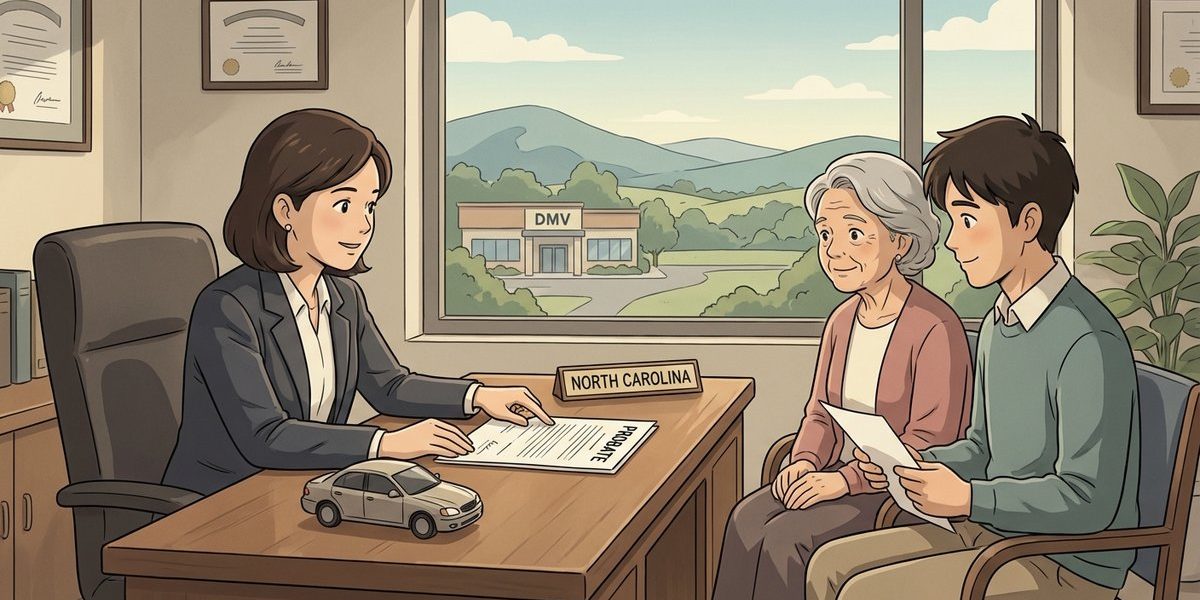
If the lender says they have no record of the loan, who can issue a lien release so the estate can transfer the vehicle? – NC
Short Answer
In North Carolina, the lienholder of record normally issues the lien release. If the lender truly has no record and cannot provide a release, the estate is not automatically stuck. The North Carolina Division of Motor Vehicles may remove the lien if the owner or estate can provide available proof that the debt was satisfied or otherwise discharged, along with a sworn affidavit, and DMV does not receive a timely objection from the secured party.
Understanding the Problem
In North Carolina probate, the main question is whether a vehicle titled in a decedent’s name can be transferred when DMV still shows a lien, but the lender says it has no loan record. The key decision point is who has authority to clear that lien entry so the estate’s personal representative, heir, or transferee can complete the title transfer. Timing matters because the transfer process usually cannot move forward until the lien issue is resolved or DMV accepts another lawful method to clear the title record.
Apply the Law
North Carolina law starts with the usual rule that the secured party shown on the title must release its security interest after the debt is satisfied or otherwise discharged. For vehicle titles, the main forum is the North Carolina Division of Motor Vehicles, either through a local license plate agency or DMV headquarters in Raleigh. If the lienholder cannot or will not provide a release, state law gives the owner a backup path: present whatever evidence is available showing the debt was satisfied or otherwise discharged, plus a sworn affidavit, and DMV may cancel the lien after giving notice to the secured party and waiting for any objection.
Key Requirements
- Lienholder of record first: The first source for a release is the lender or other secured party listed in DMV records or on the title.
- Proof of satisfaction or discharge: If no release is available, the estate should gather any documents showing the financing was denied, the vehicle was paid for by another source, or no debt remains secured by that lien entry.
- Sworn affidavit and DMV review: DMV can consider an affidavit and supporting records, notify the secured party at its last known address, and remove the lien if the proof is sufficient and no objection is filed in time.
What the Statutes Say
- N.C. Gen. Stat. § 20-58.4 (Release of security interest) – sets the normal lien-release process and allows DMV to accept other evidence plus a sworn affidavit when getting a release from the secured party is impossible.
- N.C. Gen. Stat. § 20-77 (Transfer by operation of law) – explains how title can pass after death through estate or inheritance procedures, but a creditor’s lien remains an issue until properly cleared.
- N.C. Gen. Stat. § 20-59 (Lienor must surrender title when lien is satisfied) – makes it unlawful for a lienholder holding title to fail to surrender it within 10 days after the lien has been paid and satisfied when called upon by the person legally entitled to it.
Analysis
Apply the Rule to the Facts: Here, state records still show a lender lien, but the reported facts say the financing was denied and a parent paid for the vehicle instead. If that is correct, the first choice is still to obtain a written release or lien letter from the lender of record because DMV usually expects the lienholder to clear its own entry. If the lender has no file and cannot issue a release, the estate may need to present alternate proof to DMV showing the claimed secured debt was satisfied or otherwise discharged.
North Carolina practice also matters. In estate vehicle transfers, DMV often requires the personal representative or transferee to confirm whether a lien appears in DMV records before using duplicate-title or transfer forms, and a lien release letter is commonly needed when DMV’s records do not match the practical reality. If the original title is missing, DMV Form MVR-4 may be part of the process, and a duplicate title is generally issued subject to recorded liens unless a proper lien release or other accepted proof is submitted.
The estate should also separate two issues that often get confused: probate authority to transfer the vehicle, and title authority to remove the lien. The personal representative, heirs in a qualifying small-estate setting, or another lawful transferee may have authority to transfer the decedent’s vehicle under estate rules, but that does not by itself erase a lien notation. The lien issue usually must be resolved by the lienholder of record or by DMV under the affidavit-and-proof procedure allowed by statute.
Process & Timing
- Who files: the personal representative, or in a qualifying inheritance transfer the proper heir or transferee. Where: North Carolina Division of Motor Vehicles through a local license plate agency or DMV headquarters in Raleigh. What: title transfer papers, estate authority documents, and if needed Form MVR-4 for a duplicate title or duplicate title with lien removal. When: start as soon as the estate confirms DMV still shows the lien; if the lienholder has the title and the lien is satisfied, the lienholder generally must release it within the earlier of 10 days after demand or 30 days from satisfaction, and electronic lien releases have a seven-business-day rule.
- If the lender says it has no record, gather supporting documents such as denial records, proof of payment from another source, correspondence from the lender disclaiming any account, and any dealership or successor-company records available. Submit those materials with a sworn affidavit explaining why a direct lien release cannot be obtained and why the debt shown by DMV has been satisfied or otherwise discharged.
- DMV then reviews the submission and sends notice to the secured party’s last known address before cancelling the lien. If the secured party objects within 15 days after DMV sends notice, DMV will not cancel the lien administratively; if no objection is filed and DMV finds the proof sufficient, DMV can clear the lien and allow issuance of a transferable title.
Exceptions & Pitfalls
- A lender that says it has no record may still be a successor, merged entity, or servicer issue, so the estate should confirm whether another company now holds the old files before asking DMV to cancel the lien.
- A paid-for vehicle is not the same as a released lien. DMV usually needs either a release from the lienholder of record or enough alternate proof to satisfy the statute.
- Missing title problems can slow everything down. A duplicate title request may still show the old lien, so the estate should address the lien issue at the same time rather than assuming probate papers alone will fix it. For related transfer paperwork issues, see what documents the estate process typically needs to transfer or sell a vehicle and updated court paperwork showing legal possession of the car.
Conclusion
In North Carolina, the lienholder of record normally issues the lien release for a vehicle title. If that lender has no record and cannot provide one, the estate can ask DMV to remove the lien by filing title paperwork with available proof that the debt was satisfied or otherwise discharged, plus a sworn affidavit, and then waiting through DMV’s notice process, including the 15-day objection period.
Talk to a Probate Attorney
If an estate is trying to transfer a vehicle but DMV still shows a lien that no lender will release, our firm has experienced attorneys who can help sort out the title record, probate authority, and timing. Call us today at 919-341-7055.
Disclaimer: This article provides general information about North Carolina law based on the single question stated above. It is not legal advice for your specific situation and does not create an attorney-client relationship. Laws, procedures, and local practice can change and may vary by county. If you have a deadline, act promptly and speak with a licensed North Carolina attorney.

