
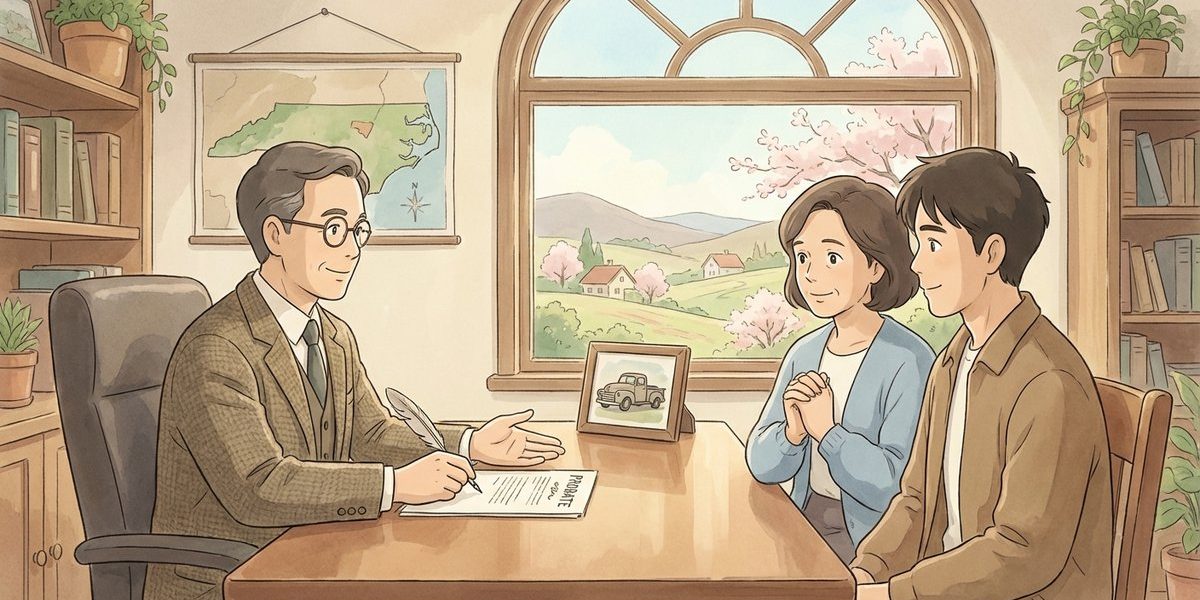
If the deceased person’s child is the next of kin, do they have to sign the vehicle over to the surviving partner? – NC
Short Answer
No. In North Carolina, an unmarried surviving partner does not automatically inherit a vehicle titled only in the deceased person’s name. If the deceased died without a will and left a child, the child is usually the heir to that personal property, but transfer of the truck still must follow the proper estate or title process. The child does not have a general legal duty to sign the truck over to the surviving partner unless a valid probate process, court order, or approved estate transfer requires it.
Understanding the Problem
In North Carolina probate, the decision point is whether the deceased person’s child, as the apparent heir when there is no surviving spouse, must transfer a truck titled only in the deceased person’s name to a long-term partner who was never married to the deceased. The issue turns on who inherits under intestacy, who has authority to handle estate property, and what probate or title step must happen before the vehicle can be retitled.
Apply the Law
When a North Carolina resident dies without a will, property passes under the intestacy statutes. A surviving unmarried partner is not treated the same as a surviving spouse for inheritance purposes. If the decedent left a child and no spouse, the child generally stands first in line to inherit the decedent’s personal property after estate costs and valid claims are handled. Even so, inheritance and title transfer are not always the same step. In practice, the vehicle usually must be handled through the estate, through a small-estate procedure if available, or through whatever DMV paperwork applies to estates before title can move to anyone else. The main forum is usually the Clerk of Superior Court handling estates in the county where the decedent lived, with DMV title work following that estate authority.
Key Requirements
- No automatic rights for an unmarried partner: A long-term relationship alone does not create intestate inheritance rights in North Carolina.
- Heirship comes first: If there is no surviving spouse and the decedent left a child, the child is usually the person entitled to inherit the vehicle as part of the estate.
- Proper transfer authority is still required: A vehicle titled only in the decedent’s name normally should be transferred by a duly authorized estate process, not just by informal agreement or private payment.
What the Statutes Say
- N.C. Gen. Stat. § 29-13 (Intestate estate passes under Chapter 29) – says a person who dies without a will leaves property to heirs under North Carolina intestacy law, subject to administration costs and lawful claims.
- N.C. Gen. Stat. § 29-15 (Persons entitled under intestacy other than surviving spouse) – provides that when there is no surviving spouse, the intestate estate passes to the issue of the decedent, which is the relevant rule here rather than the statute on a surviving spouse’s share.
Analysis
Apply the Rule to the Facts: Here, the truck was titled only in the decedent’s name, the decedent died without a will, and the surviving partner was not married to the decedent. Under those facts, the partner does not inherit the truck automatically. If the child is the decedent’s only heir, the child likely has the inheritance interest, but that does not mean the child must personally sign the truck over just because money was sent for notarization or because there was an informal understanding.
North Carolina practice also draws an important line between ownership rights and transfer authority. Estate property is usually handled by a personal representative or through a simplified estate procedure if the estate qualifies. Guidance on North Carolina estate administration also treats title in the decedent’s name as something that must be gathered and transferred through the estate process, and it recognizes that heirs may hold the beneficial interest while formal transfer still requires the correct probate step.
Another practical point is that title to property in the decedent’s name may pass to heirs by operation of law, but the DMV still expects proper authority before issuing a new title. So if the child stops responding, the surviving partner usually cannot force a transfer based only on a private arrangement. The better question becomes whether the estate can be opened, whether a small-estate option is available, or whether the heir will assign the inherited interest through the proper paperwork. For related discussion, see open probate, or use a simplified small-estate option just to retitle a vehicle and if a non-spouse partner wants to keep one of the deceased’s vehicles.
Process & Timing
- Who files: usually an heir or another qualified person seeking estate authority. Where: the Estates Division before the Clerk of Superior Court in the North Carolina county where the decedent lived. What: either an estate administration filing or, if the estate qualifies, a small-estate collection procedure, followed by DMV title paperwork.
- Once the clerk issues authority or accepts the simplified estate filing, the authorized person can gather the truck as an estate asset, address any lien or claim issues, and complete the DMV transfer steps.
- Final step and expected outcome/document: the authorized estate representative or qualifying affiant completes the title transfer paperwork so DMV can issue a new title to the heir, purchaser, or other approved transferee.
Exceptions & Pitfalls
- A written will, payable-on-death arrangement, joint ownership with survivorship, or lienholder interest can change the answer.
- A child who is the heir may choose to sell or assign the inherited interest, but that is different from being legally required to give the vehicle to the surviving partner.
- Common mistakes include paying money before confirming who has estate authority, relying on unsigned promises, and trying to use a power of attorney after death. A power of attorney ends at death, so post-death vehicle transfers must come from estate authority instead.
Conclusion
In North Carolina, if the deceased person was not married and died without a will, the child as next of kin usually inherits the truck before an unmarried partner does. That does not mean the child must sign the vehicle over to the surviving partner. The key next step is to file the proper estate matter with the Clerk of Superior Court in the decedent’s county so an authorized person can handle the truck through the correct probate and DMV transfer process.
Talk to a Probate Attorney
If a vehicle is stuck after a death because the heir will not cooperate or the title is still only in the decedent’s name, our firm has experienced attorneys who can help explain the estate process and title options. Call us today at 919-341-7055.
Disclaimer: This article provides general information about North Carolina law based on the single question stated above. It is not legal advice for your specific situation and does not create an attorney-client relationship. Laws, procedures, and local practice can change and may vary by county. If you have a deadline, act promptly and speak with a licensed North Carolina attorney.

