
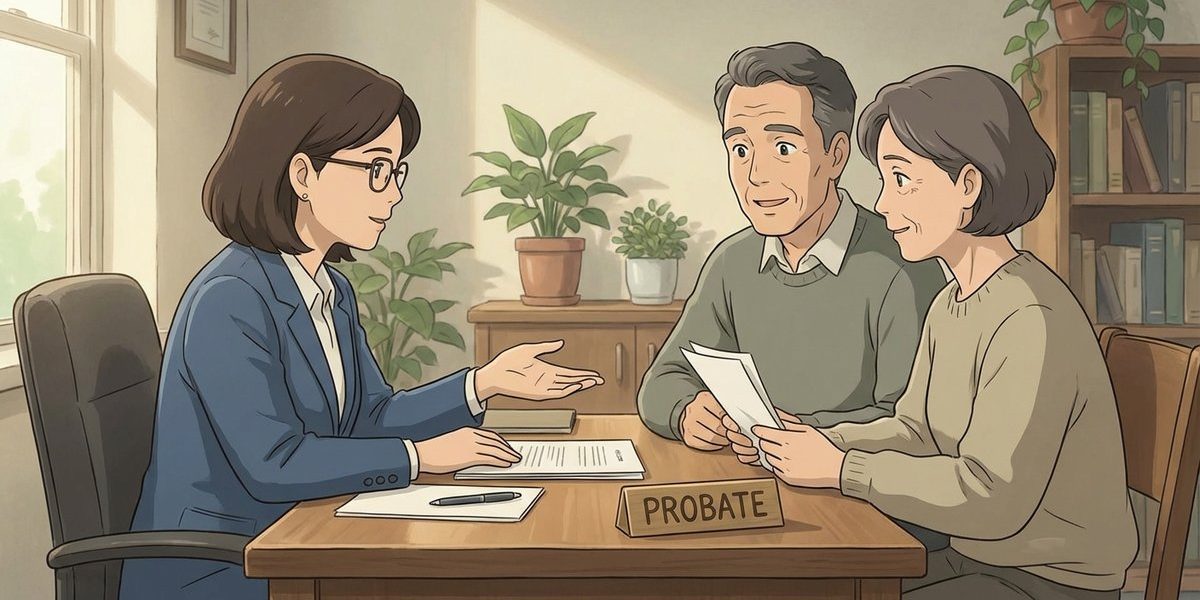
If the death certificate can’t be corrected quickly, are there other ways to prove marital status for survivor benefits? – North Carolina
Short Answer
Yes. In North Carolina, a death certificate is commonly requested for survivor benefits, but it is not the only way to prove a legal marriage when the marital-status box is wrong. A certified marriage certificate (or a delayed marriage certificate, if the original was never properly filed) is usually the strongest substitute. Many benefit programs will also accept a combination of court records and sworn statements while a formal amendment request is pending.
Understanding the Problem
Under North Carolina probate and benefit-claim practice, the issue is whether a surviving spouse can show a valid, existing marriage when a government record lists the decedent as “divorced.” The decision point is what proof can be used to establish marital status for survivor benefits when the death certificate cannot be corrected fast enough. The focus is on proving the marriage itself (and that it was not legally ended) so a benefits office, insurer, or agency can process a survivor claim.
Apply the Law
In North Carolina, marital status is proven primarily through marriage records kept by the Register of Deeds and, when needed, through court records. A death certificate is an important document, but the law also provides ways to correct vital records and to create a delayed marriage certificate when the marriage return was not properly filed. In probate settings, the Clerk of Superior Court often relies on sworn filings to open an estate, even though third parties (like benefit administrators) may still insist on certified records.
Key Requirements
- Proof a legal marriage occurred: Usually a certified marriage certificate from the county Register of Deeds where the license was issued (or where the record is kept).
- Proof the marriage was still in place at death: Commonly shown by the absence of a divorce judgment, plus consistent records (tax filings, beneficiary designations, insurance paperwork) and sworn statements if needed.
- Proof acceptable to the specific benefits program: Each agency or plan can set documentation rules, so the claim often succeeds by providing multiple consistent documents while the death certificate amendment is pending.
What the Statutes Say
- N.C. Gen. Stat. § 130A-118 (Amendment of birth and death certificates) – Allows amendments to death certificates after filing through a formal request process governed by the State Registrar’s rules.
- N.C. Gen. Stat. § 51-21 (Issuance of delayed marriage certificates) – Authorizes a delayed marriage certificate when the officiant’s return was not filed, using affidavits and, if necessary, a special proceeding before the Clerk of Superior Court.
- N.C. Gen. Stat. § 51-18.1 (Correction of errors in marriage records) – Allows correction of certain marriage-record errors through affidavits submitted to the Register of Deeds.
Analysis
Apply the Rule to the Facts: Here, the death certificate lists the decedent as divorced even though the couple was married. That mismatch can slow survivor benefits because many agencies start with the death certificate as a quick “status check.” The most direct workaround is to prove the marriage with a certified marriage certificate (or a delayed marriage certificate if the marriage record was never properly completed) and to support it with other consistent records while the amendment request under North Carolina vital-records procedures is pending.
Process & Timing
- Who files: The surviving spouse (or an authorized representative). Where: (a) For marriage records, the Register of Deeds in the county that issued/holds the marriage record; (b) for probate-related filings, the Clerk of Superior Court in the county where the estate is opened; and (c) for death-certificate amendments, the North Carolina State Registrar/Vital Records process. What: Certified marriage certificate request; if needed, a request for a delayed marriage certificate supported by affidavits; and a written amendment request for the death certificate. When: As soon as a benefits claim is being prepared, because benefit administrators often place claims on hold until acceptable proof is received.
- Submit alternate proof to the benefits administrator: Provide a certified marriage certificate first. If the administrator still flags the “divorced” entry on the death certificate, provide additional documents that consistently show the marriage (for example, beneficiary designations, insurance enrollment records, or other official records) and a short written explanation that a correction request is pending.
- Use a court-backed record if the paper trail is incomplete: If the marriage record cannot be located or was never properly filed, pursue a delayed marriage certificate. If the Register of Deeds cannot approve it based on affidavits alone, North Carolina law allows a special proceeding before the Clerk of Superior Court to determine whether the ceremony occurred and to certify findings so the delayed certificate can be issued.
Exceptions & Pitfalls
- Death certificate “controls everything” is a common myth: Many offices treat it as a starting point, not the final word. A certified marriage certificate (and related official records) can often move a claim forward while the amendment is pending.
- Missing marriage record: If the officiant never filed the return, a delayed marriage certificate may be necessary. Waiting too long can make it harder to locate witnesses and affidavits.
- Confusing separation with divorce: Living apart does not end a marriage. Some administrators still ask for proof there was no divorce; a records search in counties where either spouse lived can be important.
- Probate vs. benefits documentation: Opening an estate may be possible without a death certificate, but benefit administrators often require certified copies. Planning for multiple certified copies early can prevent delays.
For more detail on building a paper trail when a vital record is wrong, see what documents should be gathered to prove a legal marriage.
Conclusion
Yes—when a North Carolina death certificate incorrectly lists a decedent as divorced, marital status for survivor benefits can often be proven with other records, especially a certified marriage certificate (or a delayed marriage certificate if the original was never properly filed). A formal amendment request can still be pursued under North Carolina’s vital-records process, but claims may move faster by submitting the marriage record and other consistent documentation right away. If a probate spouse’s allowance is involved, the next step is to file the verified petition with the Clerk of Superior Court within six months after letters are issued.
Talk to a Probate Attorney
If a survivor-benefits claim is being delayed because the death certificate lists the wrong marital status, our firm has experienced attorneys who can help gather the right records, coordinate with the Register of Deeds and the Clerk of Superior Court, and keep deadlines on track. Call us today at [919-341-7055].
Disclaimer: This article provides general information about North Carolina law based on the single question stated above. It is not legal advice for your specific situation and does not create an attorney-client relationship. Laws, procedures, and local practice can change and may vary by county. If you have a deadline, act promptly and speak with a licensed North Carolina attorney.

