
If I can’t find a timeshare deed online, where should I search and what information do I need to provide to locate it? – North Carolina
Short Answer
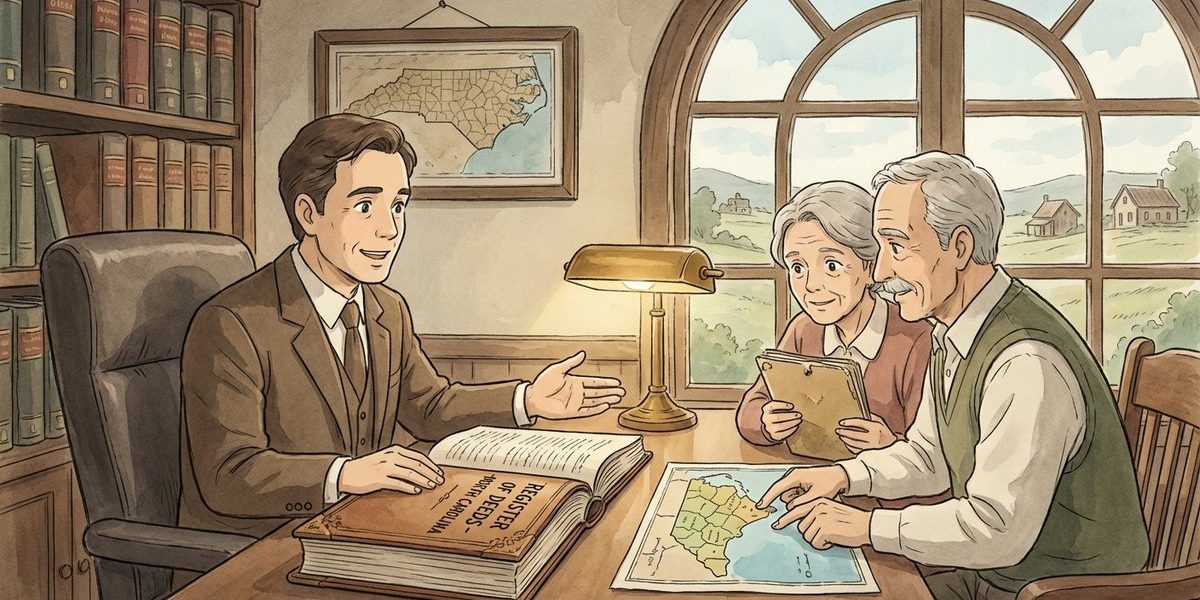
In North Carolina, a deeded timeshare interest is typically found in the county’s Register of Deeds “real property” or “official records,” not on the property appraiser/tax site. To locate it, the most useful information is the owner’s name (including prior names), the resort/property location (county), and any approximate purchase/transfer date. If an online search fails, the Register of Deeds staff can often locate the recorded instrument and provide a copy by email.
Understanding the Problem
In North Carolina probate administration, a common question is: if a timeshare interest is connected to a resort property and a deed cannot be found on the county tax/property appraiser website, where should the deed be searched and what details must be provided to confirm whether the timeshare is deeded. The decision point is whether the interest shows up in the county’s recorded land records (which usually control ownership) versus only appearing as a billing or membership record. The practical goal is to identify the correct county office and provide enough identifying information for staff to locate the recorded document.
Apply the Law
In North Carolina, ownership of real property interests is generally tracked through documents recorded in the county land records maintained by the Register of Deeds. A property tax/appraiser site is designed for taxation and valuation and may not reliably show a timeshare deed (especially if the interest is a small fractional interest, uses a legal description that does not match the street address, or is indexed differently). For estate work, confirming whether the decedent owned a deeded interest usually means locating the recorded instrument (or confirming that no such instrument exists) in the county where the underlying real property is located.
Key Requirements
- Search the right office: Use the Register of Deeds for recorded deeds and other instruments affecting title, rather than relying only on the tax/appraiser site.
- Use the right search fields: Recorded documents are commonly indexed by grantor/grantee name (seller/buyer) and sometimes by book/page or instrument number.
- Provide enough identifiers: Names (including prior names), county, and an approximate timeframe (purchase/transfer year) materially improve the chance of finding the correct recorded document.
What the Statutes Say
- N.C. Gen. Stat. § 161-22.1 (Indexing of certain recorded instruments) – requires the register of deeds to index specified recorded instruments so they can be located in the public records by the relevant names.
- N.C. Gen. Stat. § 93A-40 (Timeshare program registration requirement) – addresses regulation of timeshare programs in North Carolina; it does not replace the need to check county land records when the question is whether an interest is deeded.
Analysis
Apply the Rule to the Facts: The timeshare deed was not found on the property appraiser site, which is common because those sites focus on tax accounts and may not display timeshare interests clearly. The correct next step is the county Register of Deeds “official records” search, usually by the owner’s name and an approximate purchase/transfer timeframe. Here, staff located a document in official records and offered to email it, which strongly suggests there is a recorded instrument that can be reviewed to confirm whether the interest is deeded and how it is titled.
Process & Timing
- Who searches/requests: the personal representative, an heir/devisee, or the law office with appropriate authorization. Where: the Register of Deeds in the North Carolina county where the resort real property is located. What: request a copy of the recorded instrument (often a deed, timeshare deed, or other conveyance document) and ask for the book/page or instrument number for citation in the estate file. When: as early as possible in the estate administration, before making decisions about maintenance fees, transfer, or sale.
- Provide identifying details for the search: full legal name of the owner (and any prior names), spouse name if the interest may have been titled jointly, approximate year of purchase/transfer, resort name/unit/week if known, and any partial legal description or parcel reference from statements.
- Verify what was found: review the document to confirm (a) whether it is actually a deeded real property interest, (b) how title is held (for example, sole ownership vs. joint ownership), and (c) whether there are related recorded documents (such as corrective deeds or trustee/estate conveyances) that also need to be pulled.
Exceptions & Pitfalls
- Not all timeshares are deeded: some interests are “right-to-use” or membership-based and may not appear as a deed in county land records; in that situation, the resort/management company’s ownership records and contract documents become critical.
- Name indexing issues: a missed middle initial, prior surname, or a spouse’s name can cause an online search to fail; broader date ranges and alternate name searches often solve this.
- Wrong county: the deed is recorded where the underlying real property is located, which may differ from where the owner lived or where the estate is being administered.
For broader estate asset searches, it can also help to cross-check tax records, bank records, and other paperwork to identify where real estate interests exist and what counties to search. Related guidance may be found in this firm’s discussion of find out what real estate the deceased owned and how to find out what assets are in the estate when documents are missing.
Conclusion
In North Carolina, if a timeshare deed cannot be found on a property appraiser/tax website, the next place to search is the county Register of Deeds official land records, usually by grantor/grantee name. The most helpful information to provide is the owner’s full legal name (including prior names), the county where the resort property is located, and an approximate purchase or transfer date, plus any unit/week details if available. The next step is to request a certified or plain copy of the recorded instrument from the Register of Deeds as soon as possible.
Talk to a Probate Attorney
If an estate involves a timeshare interest and the recorded deed cannot be located online, our firm has experienced attorneys who can help confirm how the interest is titled and what paperwork is needed for the estate timeline. Call us today at 919-341-7055.
Disclaimer: This article provides general information about North Carolina law based on the single question stated above. It is not legal advice for your specific situation and does not create an attorney-client relationship. Laws, procedures, and local practice can change and may vary by county. If you have a deadline, act promptly and speak with a licensed North Carolina attorney.

