
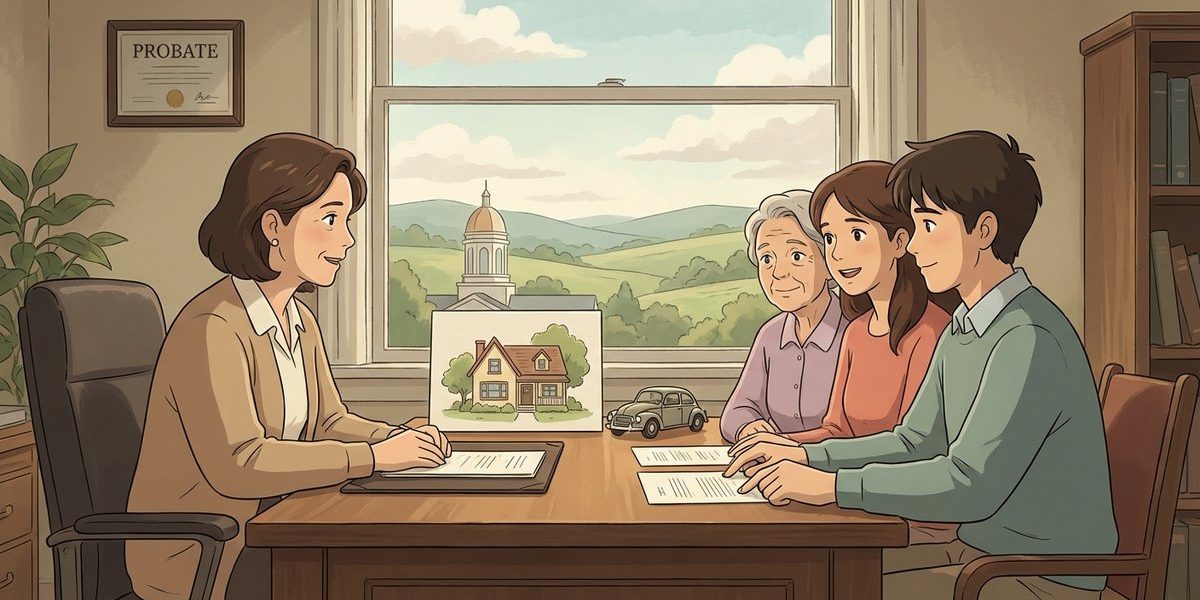
How do we handle transferring a paid-off house and a vehicle when there is no will and no surviving spouse? – North Carolina
Short Answer
In North Carolina, when someone dies without a will and without a surviving spouse, the house and vehicle usually pass to the decedent’s heirs under the state’s intestate succession rules, but the transfer often still requires probate filings through the Clerk of Superior Court. If a relative opened the estate and left a sibling off the heir list, the practical first step is to get the Clerk to recognize the correct heirs before any deed or DMV title transfer is completed. Once heirs are confirmed, the vehicle may be transferable through a DMV affidavit process in some estates, while the house typically requires probate documentation and careful handling of creditor issues.
Understanding the Problem
When a North Carolina resident dies without a will and without a surviving spouse, the key question becomes: who has the legal right to receive the paid-off house and the vehicle, and what paperwork is required to move title into the heirs’ names? In a situation where a relative has already opened an estate and claims a sibling is “not related,” the decision point is whether the probate file correctly identifies all heirs, because the Clerk of Superior Court relies on that information when issuing estate authority and approving distributions.
Apply the Law
North Carolina’s intestate succession statutes control who inherits when there is no will. If there is no surviving spouse, the estate passes through a priority order (for example, to children/descendants first; if none, then parents; if none, then siblings and the descendants of deceased siblings). The probate court in North Carolina is the Clerk of Superior Court (in the county where the estate is opened), and that office oversees the appointment of the personal representative (administrator) and the process used to identify heirs and distribute assets.
Key Requirements
- Correct heirship under intestate succession: Heirs must match the class of relatives entitled to inherit when there is no spouse (such as children, then parents, then siblings, depending on who survived the decedent).
- Authority to transfer title: A vehicle title transfer may be possible through a DMV affidavit procedure in limited situations, but other times the administrator must handle it as part of the estate administration.
- Real estate and creditor timing: Even when heirs inherit the house by intestacy, selling or transferring real estate soon after death can create creditor-risk issues if the estate has not handled notice to creditors through the probate process.
What the Statutes Say
- N.C. Gen. Stat. § 29-13 (Intestate property generally) – Provides that an intestate estate passes to heirs, subject to administration costs and lawful claims.
- N.C. Gen. Stat. § 29-15 (Heirs other than a surviving spouse) – Sets the priority order for who inherits when there is no surviving spouse (children/descendants, then parents, then siblings, etc.).
- N.C. Gen. Stat. § 29-16 (How shares are divided within a class) – Explains how to divide shares among children/descendants or among siblings and descendants of deceased siblings.
Analysis
Apply the Rule to the Facts: The facts describe a North Carolina intestate estate with no surviving spouse and an allegation that a sibling was omitted from the list of heirs. Under North Carolina law, if the decedent had no surviving children or parents, siblings are commonly in the inheriting class, and the estate paperwork should identify them so the Clerk can supervise proper distribution. If the administrator is treating a sibling as “not related,” the transfer of both the house and the vehicle should pause until heirship is corrected, because title transfers based on an incorrect heir list can create major problems later.
Process & Timing
- Who files: The omitted sibling (or another interested person). Where: The Clerk of Superior Court (Estates) in the North Carolina county where the estate is pending. What: A filing asking the Clerk to address heirship and correct the estate record (often done through a verified petition in the estate file, with supporting proof of relationship such as birth certificates or other records). When: As soon as the omission is discovered, and before the administrator distributes assets or signs transfer documents.
- Vehicle transfer step: If no personal representative has qualified (or none is expected to qualify) and the situation fits DMV’s requirements, heirs may be able to use the DMV’s “Affidavit of Authority to Assign Title” process to retitle the vehicle. If an administrator is already appointed, the safer and more common path is for the administrator to handle the vehicle as an estate asset and distribute it to the rightful heir(s) after the Clerk recognizes the correct heirs.
- House transfer step: Real estate commonly requires probate documentation to satisfy title and closing requirements. If the heirs plan to keep the house, they often record estate documents that show who inherited. If the heirs plan to sell, timing and creditor-notice issues matter, and the administrator may need to be involved to reduce the risk that a later creditor claim disrupts the transaction.
Exceptions & Pitfalls
- Wrong “heir class” assumptions: Siblings do not inherit if the decedent left surviving children (or other lineal descendants), and parents can come ahead of siblings if living. The correct class under G.S. 29-15 must be confirmed before any transfer.
- Half-siblings and “whole blood” issues: North Carolina generally does not distinguish between whole-blood and half-blood relatives for intestate succession, which can matter when someone is being excluded based on family history. See N.C. Gen. Stat. § 29-3.
- DMV affidavit limits: The DMV affidavit method is not a universal substitute for probate. If an estate is already open and contested, DMV and title offices often require clearer estate authority before retitling.
- Real estate transfers without cleaning up probate: Even if heirs “inherit automatically,” a later dispute about heirs can cloud title. Correcting the estate record first usually saves time and legal expense later.
For more background on heirship disputes in an intestate estate, see how to get added as an heir and how to challenge an attempt to declare an heir ineligible.
Conclusion
In North Carolina, when there is no will and no surviving spouse, the paid-off house and vehicle pass to heirs under the intestate succession statutes, but transfers should not happen until the Clerk of Superior Court has the correct heirs listed in the estate file. If a sibling was left off, the next step is to file with the Clerk in the pending estate to correct heirship before the administrator distributes property. If a sale of the house is likely within about two years of death, addressing probate and creditor-notice issues early is critical.
Talk to a Probate Attorney
If there is a dispute about who the heirs are and the estate includes a house and a vehicle, our firm has experienced attorneys who can help explain the probate process, what to file with the Clerk of Superior Court, and what timelines matter before property is transferred. Call us today at [919-341-7055].
Disclaimer: This article provides general information about North Carolina law based on the single question stated above. It is not legal advice for your specific situation and does not create an attorney-client relationship. Laws, procedures, and local practice can change and may vary by county. If you have a deadline, act promptly and speak with a licensed North Carolina attorney.

