
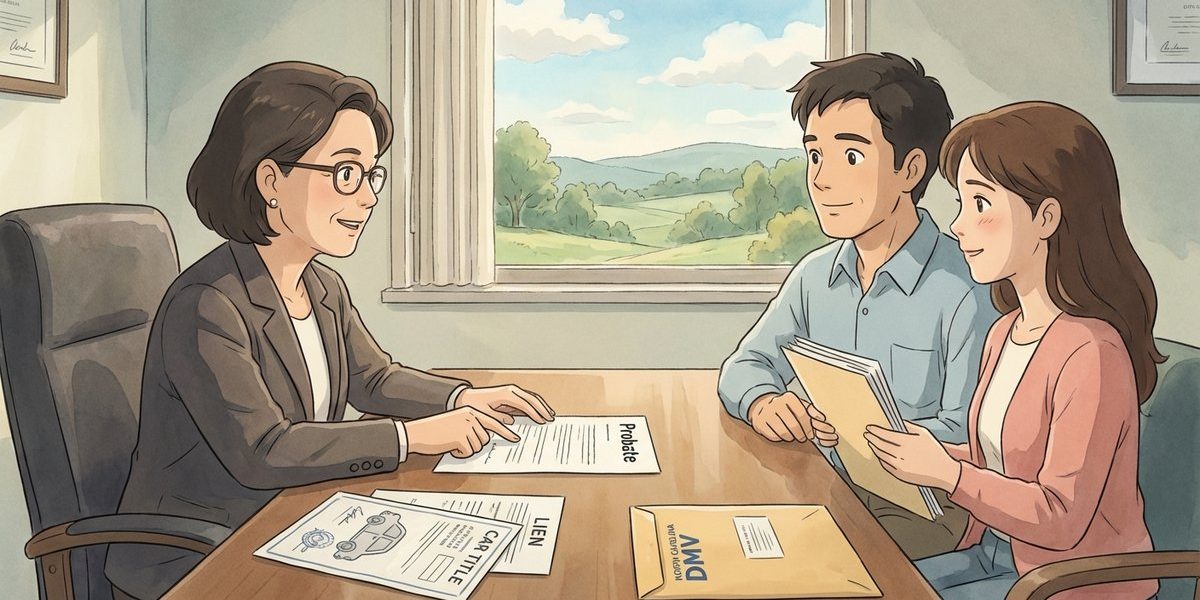
How do I transfer a deceased parent’s vehicle through the estate when there were title and lien paperwork problems? – NC
Short Answer
In North Carolina, a deceased parent’s vehicle usually transfers through the estate by having the personal representative apply for a new title through the NCDMV using the estate authority papers and the vehicle title documents. When the title is missing or the DMV still shows an old lien, the transfer often cannot be completed until the estate obtains a duplicate title, a lien release, or both. The administrator should match the DMV paperwork to the probate file and keep clear records of the transfer so the final accounting and distribution are easier to defend if a dispute arises.
Understanding the Problem
In North Carolina probate, the main question is whether the estate administrator can complete a vehicle transfer when the deceased owner’s title papers are incomplete or the lien record does not match the current payoff status. The decision point is usually simple: whether the administrator has enough authority and enough corrected DMV paperwork to move title out of the estate. That matters because the vehicle transfer should be finished before the estate files its final accounting and makes final distributions.
Apply the Law
Under North Carolina law, a vehicle that passes because of death is transferred through the Division of Motor Vehicles by operation of law, not by an ordinary sale signed by the deceased owner. The personal representative must show authority to act for the estate, identify the vehicle and any recorded liens, and submit the title application required by the NCDMV. If the original title is unavailable, the estate may need a duplicate title application; if a lien was paid but still appears in DMV records, the estate usually must obtain a lien release before the DMV will issue clean title. The main forum is the NCDMV Vehicle Services Section, with supporting estate authority coming from the Clerk of Superior Court in the county where the estate is pending.
Key Requirements
- Estate authority: The person signing must be the duly appointed administrator or executor and should be able to provide certified Letters of Administration or Letters Testamentary.
- Correct title record: The estate must present the original title if available, or use the duplicate-title process if the title is lost, never received, or otherwise unavailable.
- Lien resolution: Any recorded lien must be satisfied, released, or assumed in a way the DMV will accept before the transfer can be completed as intended.
What the Statutes Say
- N.C. Gen. Stat. § 20-77 (Transfer by operation of law) – lets a transferee obtain a new title when ownership passes by death or other operation of law and allows certain inheritance transfers on estate documents or heir affidavits.
- N.C. Gen. Stat. § 20-52 (Application for certificate of title) – requires a title application that identifies the owner, vehicle, and all liens.
- N.C. Gen. Stat. § 20-72 (Transfer by owner) – explains title assignment rules and highlights the importance of delivering proper title documents to complete a transfer.
Analysis
Apply the Rule to the Facts: Here, the administrator has already opened the estate, handled most claims and expenses, and worked through a vehicle title issue. That usually means the first rule element, estate authority, is already in place through the probate appointment. The remaining risk is documentation: if the title problem or lien problem was fixed informally but not fully reflected in DMV records and the estate file, the final accounting can invite another challenge from a sibling who already questioned the administration.
If the original title was missing, North Carolina practice commonly uses DMV Form MVR-4 to request a duplicate title, and that same process may also be used in a deceased-owner transfer situation when the title cannot be found. If the DMV still showed a lien that had actually been paid off, the estate generally needed a lien release from the lienholder before the DMV would issue the replacement or transferred title without that encumbrance. In practice, local plate agencies do not always handle deceased-owner title problems the same way, so estates often need complete backup papers and sometimes help from DMV headquarters in Raleigh.
Once the vehicle is transferred or sold, the estate should document whether it was distributed to one heir or sold for estate funds. That record should line up with the inventory, receipts, disbursements, and the final accounting. If the vehicle was part of a larger effort to finish distributions and close the estate, careful paperwork matters for the same reason discussed in documenting the sale of an estate vehicle and proving a vehicle was properly transferred out of the estate.
Process & Timing
- Who files: the estate administrator or executor. Where: the North Carolina Division of Motor Vehicles, usually through a local license plate agency or the NCDMV Vehicle Services Section in Raleigh, with supporting probate papers from the Clerk of Superior Court in the county estate file. What: the signed certificate of title if available, or DMV Form MVR-4 for a duplicate title if the original is lost or unavailable; DMV Form MVR-1 if a separate title application is needed; certified Letters of Administration; often a certified death certificate; and any lien release letter or lien satisfaction paperwork. When: as soon as the title problem is identified and before the final accounting is filed if the vehicle is still an estate asset. For a duplicate title request, there is a 15-day mandatory waiting period after the application is received before the duplicate title can be issued.
- Next, the DMV reviews the title chain, lien status, and application materials. If the lien record is incomplete or inconsistent, the DMV may require additional proof from the lienholder. Processing can vary by office, and estates with missing title papers often move more smoothly when the submission is complete and consistent with the probate file.
- Final step: the DMV issues the new title in the name of the buyer or beneficiary, or otherwise completes the transfer out of the estate. The administrator should then keep copies of the issued title, transfer forms, lien release, and any receipt or distribution record to support the final accounting and closing papers.
Exceptions & Pitfalls
- A vehicle with survivorship ownership may pass outside the estate, which changes the paperwork and may make full estate transfer steps unnecessary.
- A paid lien that still appears in DMV records can block the transfer until the estate gets a proper lien release from the lender; a payoff alone may not be enough.
- Common mistakes include signing in the wrong capacity, failing to attach certified Letters, omitting odometer or damage disclosures when required, and closing the estate before the DMV title record matches the accounting.
- Notice and dispute problems can grow when one heir receives the vehicle or its sale proceeds without a clear paper trail showing value, transfer date, and how that item was treated in the final distribution.
Conclusion
In North Carolina, an administrator can transfer a deceased parent’s vehicle through the estate only after the estate authority, title record, and lien record all line up with what the NCDMV requires. When title or lien paperwork is defective, the key threshold is whether the estate can supply a valid title path, often through a duplicate-title application and lien release. The next step is to file the corrected title package with the NCDMV before the final accounting, allowing at least the 15-day duplicate-title waiting period if MVR-4 is required.
Talk to a Probate Attorney
If you’re dealing with an estate vehicle transfer that has missing title papers, unresolved lien records, or heir disputes that could affect the final accounting, our firm has experienced attorneys who can help you understand your options and timelines. Call us today at 919-341-7055.
Disclaimer: This article provides general information about North Carolina law based on the single question stated above. It is not legal advice for your specific situation and does not create an attorney-client relationship. Laws, procedures, and local practice can change and may vary by county. If you have a deadline, act promptly and speak with a licensed North Carolina attorney.

