
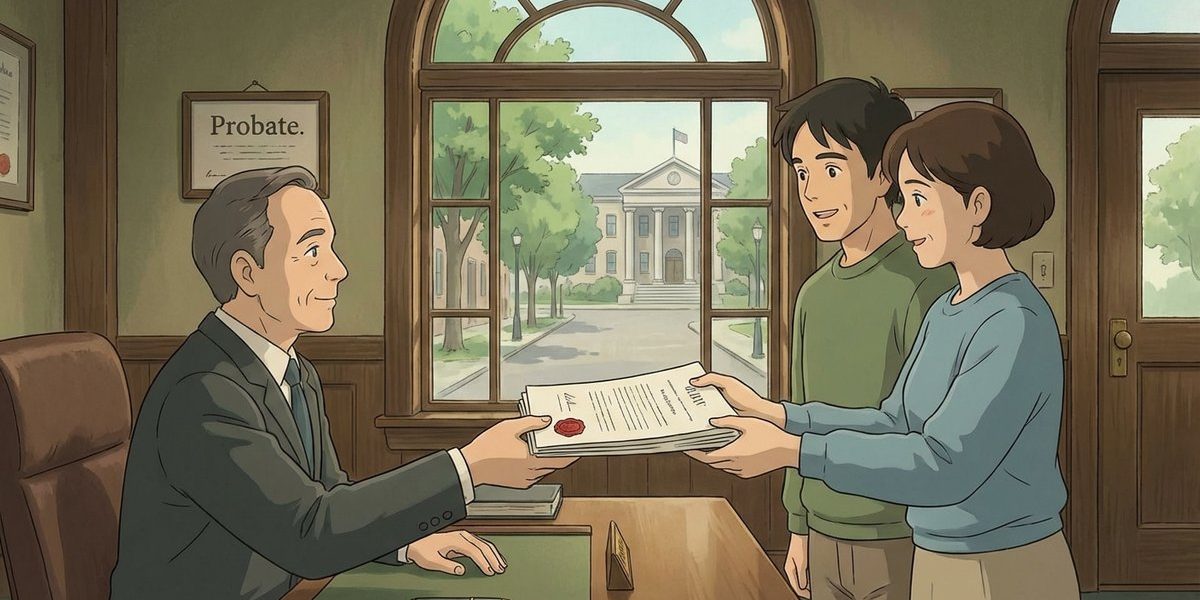
How do I request extra certified copies of the will or my executor paperwork if a court, bank, or insurer asks for them? – North Carolina
Short Answer
In North Carolina, extra certified copies usually come from the Clerk of Superior Court (Estates) in the county where the estate was opened. The request is typically for a certified copy of the will and probate file and/or certified Letters Testamentary (or Letters of Administration if there was no will). Most offices can issue additional certified copies on request for a fee, and many institutions will accept a certified copy but will not accept a plain photocopy.
Understanding the Problem
In North Carolina probate, the key question is: can extra “court-certified” copies of the will and executor paperwork be obtained after qualification when a bank, insurer, or another court requires proof that the personal representative has authority? This comes up most often after the Clerk of Superior Court qualifies an executor, the original will stays in the estate file, and multiple third parties each want “their own” certified set. The same issue can matter when an estate action may be filed later, such as a wrongful death claim, or when property may exist in another jurisdiction and proof of authority must be shown again.
Apply the Law
In North Carolina, the Clerk of Superior Court in the county where the estate is administered keeps the official estate file, including the will and the order admitting the will to probate. A “certified copy” is a copy the Clerk’s office stamps and certifies as a true copy from the court record. For most practical purposes, third parties ask for certified copies of (1) the will and probate record and/or (2) the Letters Testamentary (executor) or Letters of Administration (administrator), because those letters are the document that shows current authority to act for the estate.
Key Requirements
- Request the right document: Many banks and insurers want certified Letters Testamentary (or Letters of Administration), not just a certified will.
- Request from the correct office: The request generally goes to the Clerk of Superior Court (Estates) in the county where the estate was opened and the will was probated.
- Match the receiving party’s standard: Some situations require a certified copy, while others (especially out-of-state real property or certain court filings) may require a more formal court-authenticated packet (often called an “exemplified” copy in practice).
What the Statutes Say
- N.C. Gen. Stat. § 98-5 (Certified copy of will and record of probate as evidence) – Allows a properly certified copy of the will and probate record, certified by the Clerk, to be used as competent evidence when needed.
- N.C. Gen. Stat. § 8-36 (Authenticated copy of record of administration) – Recognizes properly certified records of administration/letters as evidence when administration occurred in another jurisdiction.
Analysis
Apply the Rule to the Facts: Here, the estate was opened and the executor was qualified in the local North Carolina jurisdiction, and the original will is filed with that Clerk’s office. If a bank, insurer, or a court handling a wrongful death case asks for “certified copies,” the practical solution is to request additional certified Letters Testamentary and, if needed, a certified copy of the will and probate record from the same Clerk of Superior Court where the estate is on file. If assets later appear in another jurisdiction or disagreements arise, having multiple certified sets on hand often prevents delays when proof of authority must be shown quickly.
Process & Timing
- Who files: The qualified executor (or the executor’s attorney). Where: The Clerk of Superior Court (Estates) in the county where the estate was opened in North Carolina. What: A request for certified copies of (a) the Letters Testamentary (or Letters of Administration) and/or (b) the will and probate record from the estate file. When: Usually anytime after the estate is opened; timing depends on the Clerk’s processing and local office practice.
- Confirm what the third party actually needs: Many institutions only need certified letters dated within a certain recent window, while others want a certified copy of the will plus the order/certificate of probate. Asking the requester for their exact wording can avoid ordering the wrong item.
- Receive and safeguard the copies: Keep one certified set in reserve for future needs (for example, if a later-discovered asset requires additional proof of authority, or if an out-of-state court requires a court-authenticated packet).
Exceptions & Pitfalls
- Certified will vs. certified letters: A certified copy of the will shows what the will says, but certified Letters Testamentary are usually what proves the executor currently has authority to act.
- Out-of-state property or proceedings: Another state may require an exemplified (more formally authenticated) copy of the probate proceedings, not just a standard certified copy. Requirements vary by state and by the type of asset.
- Using old letters: Some banks and insurers reject letters that are “stale” (even if still legally valid). If a rejection happens, ordering a fresh certified set from the Clerk often solves it.
- Mixing in death certificates: Many institutions also require a certified death certificate, which is obtained through vital records (not from the estate file). Planning for both documents can prevent repeat trips and delays.
Conclusion
In North Carolina, extra certified copies of executor paperwork usually come from the Clerk of Superior Court (Estates) where the estate was opened. The most commonly requested document is a certified copy of the Letters Testamentary, sometimes along with a certified copy of the will and probate record. The next step is to request the needed certified copies from the Clerk’s office in the county of probate as soon as a bank, insurer, or court asks for them, especially if a separate lawsuit filing deadline may be approaching.
Talk to a Probate Attorney
If you’re dealing with requests for certified copies of a will, Letters Testamentary, or other probate paperwork for a bank, insurer, or a court case, our firm has experienced attorneys who can help you understand your options and timelines. Call us today at (919) 341-7055.
Disclaimer: This article provides general information about North Carolina law based on the single question stated above. It is not legal advice for your specific situation and does not create an attorney-client relationship. Laws, procedures, and local practice can change and may vary by county. If you have a deadline, act promptly and speak with a licensed North Carolina attorney.

