
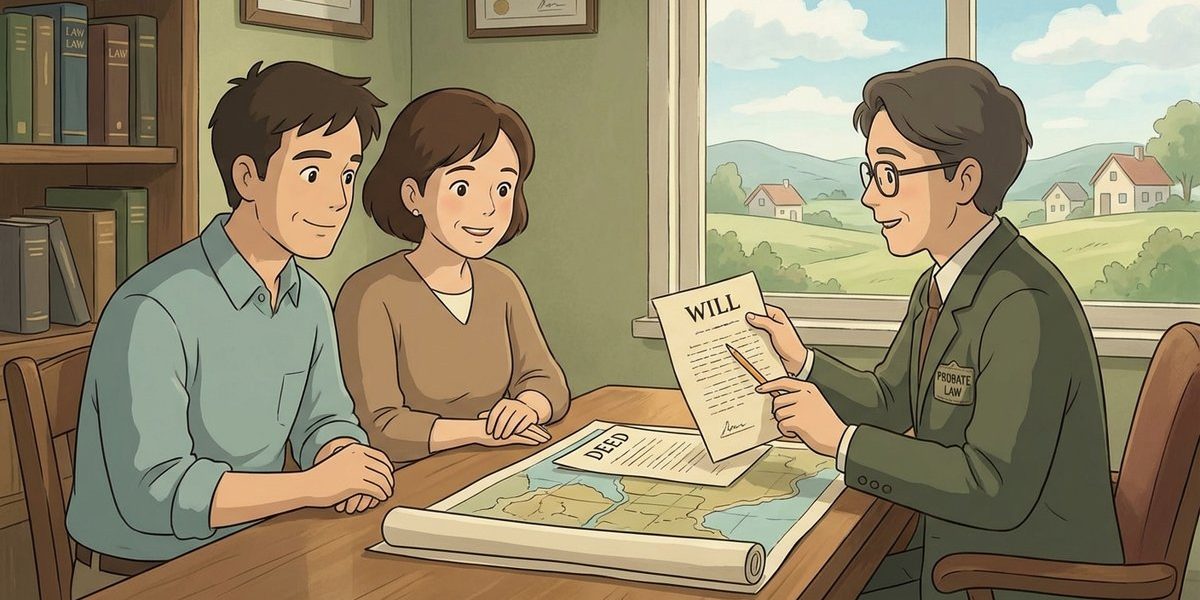
How do I prove that the property named in the will is the same property shown on the deed and county records? – North Carolina
Short Answer
In North Carolina, the usual way to prove the will’s “house description” matches the county’s deed records is to match the will’s description to the property’s legal description (metes-and-bounds or lot/block) and the property’s recorded deed chain, not just the street address. If the will uses a wrong or incomplete address, the estate typically relies on recorded documents (deeds, plats, tax parcel records) and, if needed, sworn statements or a court proceeding to clear up an ambiguity. When the will’s wording is truly unclear, North Carolina law allows a court to reform an ambiguous will to reflect the decedent’s intent if proven by clear and convincing evidence.
Understanding the Problem
Under North Carolina probate practice, the decision point is whether the will’s description of the real estate is clear enough to identify one specific parcel in the county’s land records. When a deceased parent’s will lists “the home at [address]” but the address is incorrect, incomplete, or not a valid legal address, the personal representative (executor) and the Clerk of Superior Court may need additional proof that the will is referring to the same parcel shown on the recorded deed and county records. The goal is to transfer the intended property with a title record that a future buyer or lender can follow.
Apply the Law
North Carolina treats a duly probated will as effective to pass title, but real estate transfers still have to be supported by land-record evidence that identifies the parcel with reasonable certainty. In practice, that means tying the will’s description to the property’s recorded legal description (and the decedent’s ownership) through the Register of Deeds records, and then using probate filings and recordings to make the chain of title clear. If the will’s language is ambiguous because of a mistake (like a wrong address), a court can reform the will’s terms to match the decedent’s intent when the required proof standard is met.
Key Requirements
- Match the parcel by legal description (not just address): Use the deed’s legal description, recorded plat references, lot/block, or metes-and-bounds calls to identify the exact parcel in the county records.
- Show the decedent owned that parcel at death: Confirm the deed into the decedent (and any later deeds, liens, or boundary adjustments) so the probate transfer connects to the correct ownership record.
- Resolve ambiguity before recording a transfer: If the will’s description could point to more than one parcel (or to no parcel), use supporting records and, when necessary, a court order that clarifies or reforms the will so the title record is clear.
What the Statutes Say
- N.C. Gen. Stat. § 31-39 (Probate necessary to pass title; recordation in county where real property lies) – A probated will can pass title, and for real property in another county a certified copy must be filed in that county within the statute’s time limits to protect against certain purchasers and lien creditors.
- N.C. Gen. Stat. § 31-61 (Reformation of will to correct mistakes) – A court may reform an ambiguous will to match the testator’s intent if intent and mistake are proven by clear and convincing evidence.
- N.C. Gen. Stat. § 31-40 (What property passes by will) – A will can dispose of property the testator owns at death, including interests acquired after the will was signed.
Analysis
Apply the Rule to the Facts: Here, the will lists real property, but one address appears incorrect or not a valid legal address. The practical proof usually starts by pulling the last recorded deed into the parent (and any recorded plats) and comparing that legal description to whatever identifying information the will provides (street name, subdivision name, nearby landmarks, prior owner, or other clues). If the will’s wording still reasonably points to the same single parcel once the deed and plat are reviewed, the estate can document that match in the probate file and in the land records; if the wording could point to multiple parcels or creates real doubt, the estate may need a court order clarifying or reforming the will before attempting a transfer.
Process & Timing
- Who gathers proof: The personal representative (or the devisee working through the personal representative). Where: the county Register of Deeds for deeds/plats and the Clerk of Superior Court (Estates) for the probate file. What: obtain certified copies of the probated will and probate certificate (and, if needed, recorded deeds and plats) and identify the parcel by legal description and tax parcel number.
- Build the “match” file: Compare (a) the will’s description, (b) the deed’s legal description, (c) the recorded plat reference (if any), and (d) the county tax parcel record. If the will uses an incorrect street address, the deed/plat and parcel ID often supply the missing precision. If there is still uncertainty, a survey or title search may be needed to confirm boundaries and the correct parcel.
- Clear the record for title purposes: If the match is straightforward, the estate proceeds with the normal probate-to-title steps (often including recording certified probate documents in the county where the land is located). If the will is ambiguous in a way that affects which parcel was intended, the estate may seek a court order (including possible reformation under North Carolina law) so the land records clearly show what property was devised and to whom.
Exceptions & Pitfalls
- Relying on a street address alone: Addresses can change, be duplicated, or be “non-legal.” Title examiners usually care most about the legal description and recorded plat reference.
- Multiple parcels fit the will’s wording: If the will says “my property on Oak Street” and the decedent owned two Oak Street parcels, the estate may need a court ruling to avoid a cloud on title.
- Unrecorded changes: If the decedent informally adjusted boundaries, used part of a neighbor’s driveway, or never recorded a corrective deed, the county records may not match family understanding. A survey and corrective instruments may be required.
- Skipping the “record in the right county” step: When the will is probated in one county but the land is in another, failing to file certified probate documents where the land sits can create avoidable title problems later. See N.C. Gen. Stat. § 31-39.
- Assuming reformation is automatic: Reformation requires an ambiguity and a strong proof showing both intent and mistake. See N.C. Gen. Stat. § 31-61.
Conclusion
In North Carolina, proving the will’s “named property” matches the deed and county records usually means matching the will’s wording to the property’s recorded legal description and confirming the decedent’s ownership in the Register of Deeds chain of title. A wrong street address often can be cured by using deeds, plats, and parcel records, but a true ambiguity may require a court order, including possible reformation under G.S. 31-61. The next step is to gather the deed/plat and file the appropriate certified probate documents in the county where the land is located.
Talk to a Probate Attorney
If there is a will-to-deed mismatch for inherited real estate and the goal is a clean transfer that will hold up in future sales or refinancing, our firm has experienced attorneys who can help sort out the county records, probate filings, and timelines. Call us today at [919-341-7055].
Disclaimer: This article provides general information about North Carolina law based on the single question stated above. It is not legal advice for your specific situation and does not create an attorney-client relationship. Laws, procedures, and local practice can change and may vary by county. If you have a deadline, act promptly and speak with a licensed North Carolina attorney.

