
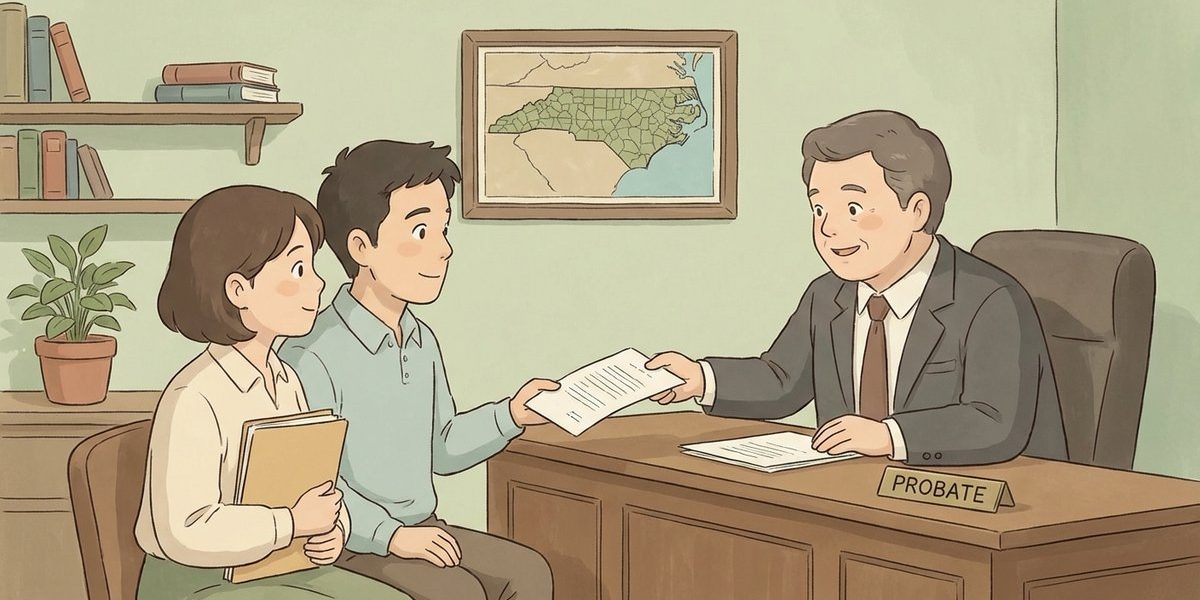
How do I open probate and get the paperwork that proves I’m the executor so I can transfer the house and vehicle into my name? – North Carolina
Short Answer
In North Carolina, probate is opened by filing the will and a request to qualify with the Clerk of Superior Court (Estates) in the county where the decedent lived. Once the Clerk approves the filing and the nominated executor qualifies, the Clerk issues Letters Testamentary (often called “letters”), which is the court paperwork most banks, the DMV, and others require to recognize executor authority. Transferring a vehicle may sometimes be done with a DMV affidavit process, but transferring real estate usually requires the will to be probated and the right documents recorded.
Understanding the Problem
Under North Carolina probate law, the key question is: how can a person named in a will qualify through the Clerk of Superior Court to receive official executor authority so title-related paperwork can be completed for a house/land and a vehicle. The decision point is whether the estate needs a formal opening with executor qualification to obtain “letters,” because those letters are what third parties typically require before allowing transfers or access to estate property.
Apply the Law
In North Carolina, the Clerk of Superior Court has exclusive original jurisdiction over probate and estate administration. The Clerk can admit a will to probate and appoint/qualify the executor (also called the “personal representative”). After qualification, the Clerk issues Letters Testamentary, which serve as proof that the executor has authority to act for the estate (for example, to deal with the DMV, financial institutions, and estate administration tasks).
Key Requirements
- File in the right place: The estate is opened with the Clerk of Superior Court (Estates Division) in the proper county (typically where the decedent was domiciled at death).
- Get the will admitted and qualify: The Clerk must accept the will for probate and then the nominated executor must complete the qualification steps the Clerk requires before letters are issued.
- Use the letters to complete transfers: Once issued, certified copies of Letters Testamentary are used to show authority to transfer or manage assets; real estate transfers often also require recording probate documents in the county where the property sits.
What the Statutes Say
- N.C. Gen. Stat. § 7A-241 (Probate jurisdiction) – gives the Clerk of Superior Court authority over probate and estate administration.
- N.C. Gen. Stat. § 31-39 (Probate needed to pass title; recordation) – explains why probating the will (and recording certified copies in the county where the land is located) matters for title to real property.
Analysis
Apply the Rule to the Facts: Here, the decedent died in North Carolina with a will that appears to leave the house/land and personal property to the intended beneficiary, and the named executor needs court authority to handle transfers. Because there are estate expenses and debts (funeral costs, credit cards, possible medical bills), opening an estate and qualifying is often the practical way to create a clear process for paying valid claims and documenting what happens to property. Family pressure does not change who has legal authority; the Clerk’s issuance of Letters Testamentary is what typically settles the “who is in charge” question for third parties.
Process & Timing
- Who files: The person named as executor in the will (or another eligible person if the named executor cannot serve). Where: The Clerk of Superior Court (Estates) in the county tied to the decedent’s domicile. What: The original will (if available), a certified death certificate (often requested), and the Clerk’s estate opening/qualification forms; then request Letters Testamentary once qualified. When: As soon as practical, especially if bills are due, property needs to be insured/maintained, or a title transfer is time-sensitive.
- Get certified letters: After qualification, request multiple certified copies of Letters Testamentary. Many institutions and agencies will not accept a plain copy.
- Transfer the vehicle and address the house/land: For a vehicle, the DMV may accept a specific affidavit-based process in some situations, but many estates still use letters to avoid delays. For real estate, the will generally must be probated, and certified probate documents may need to be recorded in the county where the property is located to make the chain of title clear.
Exceptions & Pitfalls
- Some assets may not require probate: A joint bank account with survivorship typically passes outside the estate, but that does not automatically pay estate debts; creditors may still look to estate assets, and in some cases non-probate transfers can be reached if the estate cannot pay valid debts.
- Vehicle transfer paperwork is picky: The DMV process can require the correct form version and supporting documents. Using the wrong form, a photocopy when an original is required, or missing notarization can cause rejection and delays.
- Real estate does not “transfer into the executor’s name” just because probate is opened: The executor’s job is to administer the estate. Title may pass to the beneficiary under the will, but clearing title for a later sale or refinance often requires the probate and recording steps to be done correctly.
- Debts and expenses come first: Paying family members or transferring property too early can create problems if valid creditor claims exist. Funeral costs paid out of pocket may be reimbursable, but the estate’s overall cash flow and claim priority matter.
- Family conflict and information demands: Only the qualified personal representative has authority to act for the estate. Some information becomes part of the estate file, but not every demand from extended family requires an immediate response outside the formal process.
Conclusion
In North Carolina, opening probate to get executor authority usually means filing the will and qualifying with the Clerk of Superior Court so the Clerk can issue Letters Testamentary. Those letters are the main paperwork used to prove authority to handle estate tasks and complete transfers, including DMV title work and the steps needed to clear real estate title. The most important next step is to file the will and application to qualify with the Clerk of Superior Court (Estates) in the proper county as soon as practical, especially when debts, expenses, or title transfers are pending.
Talk to a Probate Attorney
If opening an estate, getting Letters Testamentary, and transferring a house and vehicle is creating delays or family conflict, our firm has experienced attorneys who can help explain options and timelines under North Carolina probate procedure. Call us today at [919-341-7055].
Disclaimer: This article provides general information about North Carolina law based on the single question stated above. It is not legal advice for your specific situation and does not create an attorney-client relationship. Laws, procedures, and local practice can change and may vary by county. If you have a deadline, act promptly and speak with a licensed North Carolina attorney.

