
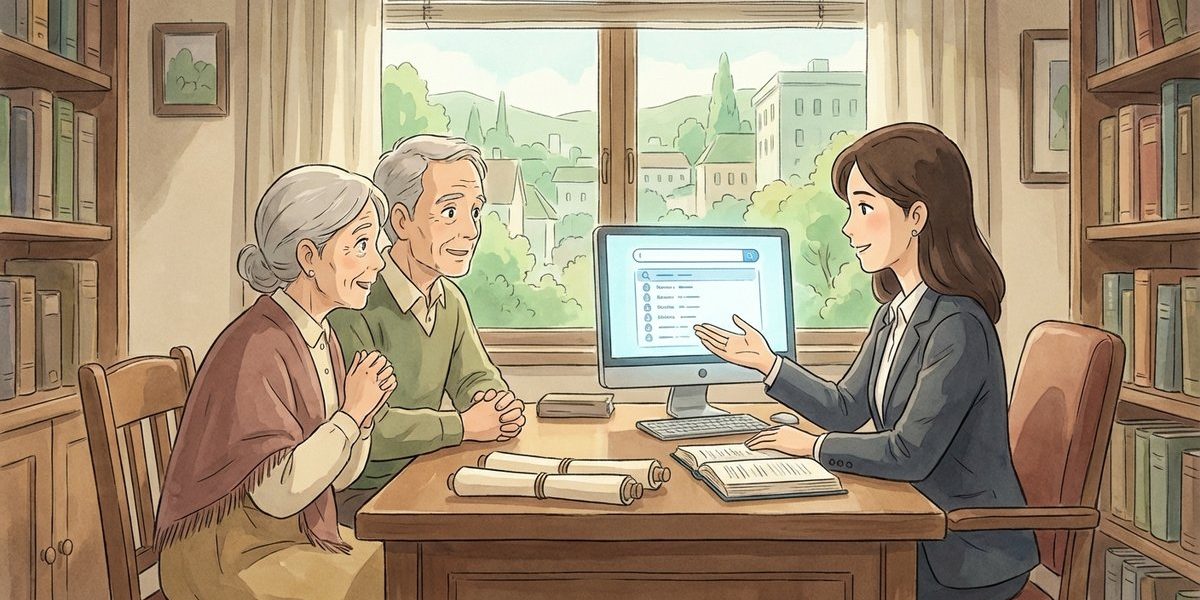
How do I look up an estate or court file online if I don’t have the file number? – North Carolina
Short Answer
In North Carolina, most estate files are maintained by the Clerk of Superior Court (Estates Division), and the public can usually search for them by a person’s name instead of a file number. The most common approach is to use the North Carolina court case search tools to look up the estate by the decedent’s name (and sometimes the personal representative’s name), then confirm the correct county and case type. If the online search does not show enough detail, the next step is to contact the Estates Division in the county where the estate was opened or request copies through the court’s portal.
Understanding the Problem
In North Carolina probate matters, the practical question is: can an estate file be found online using a name search when the estate file number is unknown, and what information is needed to locate the correct record? This comes up after calling a Clerk of Superior Court Estates Department and hearing automated options for opening a new estate, scheduling or changing an appointment, and instructions for searching court case information online and requesting copies through an e-filing portal. The decision point is whether the available identifying information (usually a name and county) is enough to locate the correct estate file in the court’s system.
Apply the Law
North Carolina places probate and estate administration under the exclusive original jurisdiction of the superior court division, handled day-to-day by the Clerk of Superior Court acting as the judge of probate. Clerks must keep indexes for estates that allow access by the estate name and related names, and—unless a law restricts access—court records maintained by the clerk are generally open for public inspection during regular office hours. In practice, that indexing is what makes a name-based search possible even when the file number is unknown.
Key Requirements
- Enough identifying information to narrow the search: Usually the decedent’s full name (including common variations), and ideally the county where the estate was opened or where the person lived at death.
- The correct case category: Estates are typically listed under an estate/administration category rather than a standard civil lawsuit category, so filtering by case type matters.
- Confirming the match: Because many people share names, the search result should be verified using details like the county, filing date range, or the personal representative/executor name.
What the Statutes Say
- N.C. Gen. Stat. § 7A-241 (Probate jurisdiction) – Probate and estate administration are handled in the superior court division through the Clerk of Superior Court as judge of probate.
- N.C. Gen. Stat. § 7A-109 (Clerk records and indexing; public inspection) – Clerks must maintain files and indexes (including for estates) and, unless prohibited by law, those records are open to public inspection during regular office hours.
Analysis
Apply the Rule to the Facts: The caller’s situation fits the common problem the clerk’s indexing system is designed to solve: locating an estate file without a file number. Because North Carolina clerks maintain indexed estate records, a name-based search is often the first step, followed by confirming the correct county and matching details. If the online search results are incomplete or unclear, the Estates Division can usually confirm whether an estate exists in that county and explain how to request copies through the portal described in the recording.
Process & Timing
- Who searches: Any member of the public (unless a specific record is restricted by law). Where: The Clerk of Superior Court (Estates Division) in the county where the estate was opened, and the North Carolina court system’s online case lookup tools. What: Search by the decedent’s name (and try variations), then narrow by county and case type (estate/administration). When: As soon as the need arises, especially before any deadline tied to an estate dispute or required filing.
- Confirm the correct file: Use matching details (county, approximate filing date, personal representative name) to avoid pulling the wrong file when multiple results appear.
- Request copies if needed: If documents are needed (regular or certified copies), follow the clerk’s instructions for requesting copies through the e-filing/records portal or through the Estates Division. For more on copies, see request certified copies or regular copies of an estate court file.
Exceptions & Pitfalls
- Wrong county: Estates are typically filed in a specific county, and searching the wrong county can make it look like no estate exists.
- Name variations and common names: A missing middle name, hyphenated surname, or spelling variation can hide the correct result; multiple matches can also lead to pulling the wrong file.
- Online access limits: Some information may not display remotely, and some records can have access restrictions; in those situations, the Estates Division may require an in-person request or a portal request for copies.
Conclusion
In North Carolina, an estate file can often be located online without a file number by searching the decedent’s name and confirming the correct county and case type, because the Clerk of Superior Court maintains indexed estate records. Probate matters are handled through the clerk as the judge of probate, and most clerk-maintained records are generally open for public inspection unless a law restricts access. The most important next step is to run a name-based search and then confirm the correct county file with the Estates Division before requesting copies through the portal.
Talk to a Probate Attorney
If a court file search is tied to an estate administration issue or a time-sensitive dispute, our firm has experienced attorneys who can help explain options, locate the right file, and track timelines. Call us today at (919) 341-7055.
Disclaimer: This article provides general information about North Carolina law based on the single question stated above. It is not legal advice for your specific situation and does not create an attorney-client relationship. Laws, procedures, and local practice can change and may vary by county. If you have a deadline, act promptly and speak with a licensed North Carolina attorney.

