
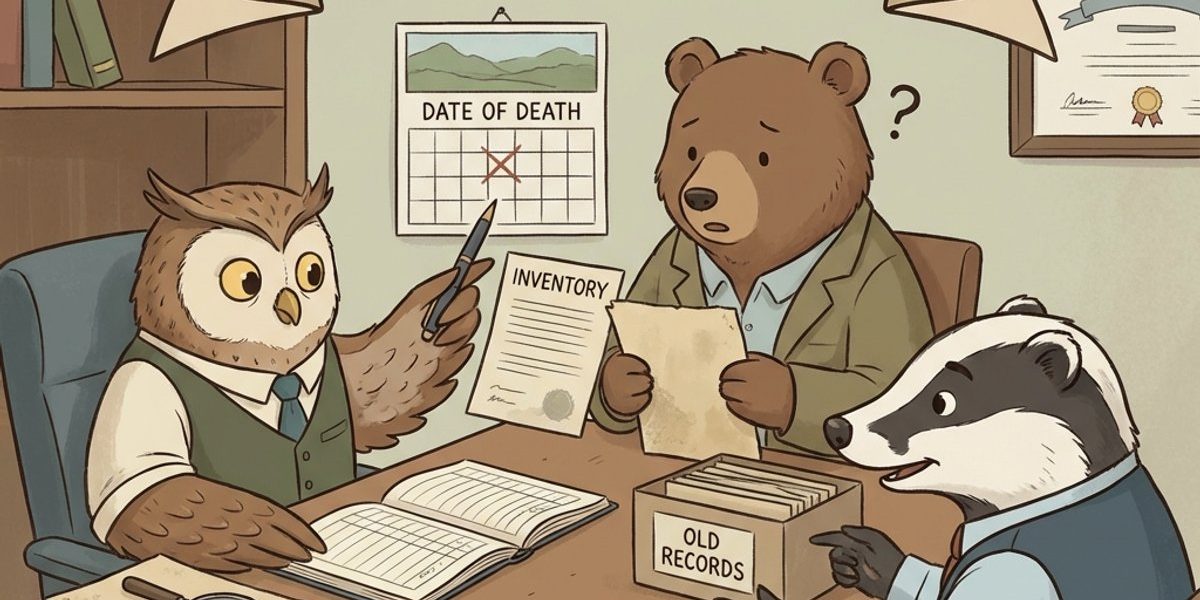
How do I inventory assets at the time of death when records are decades old? – North Carolina
Short Answer
In North Carolina, the estate inventory is a list of probate assets valued as of the decedent’s date of death, even if the paperwork is old or incomplete. If exact values or account details are not available by the inventory deadline, the personal representative can often file the best available information and then correct it with a supplemental inventory or later reporting. Amounts discovered or received after death—such as unclaimed property paid out years later—are typically treated as estate receipts in the accounting, not as date-of-death inventory items.
Understanding the Problem
In North Carolina probate, a personal representative must decide how to prepare an inventory that reports what the decedent owned at the moment of death when bank, brokerage, and ownership records are incomplete, missing, or decades old. The key question is how to identify which assets belong on the inventory at date-of-death values versus which items should be reported later as receipts because they were created, located, or paid out after death. The issue often comes up when old accounts surface through unclaimed property searches or when assets were liquidated after death and the proceeds were moved into a different account.
Apply the Law
North Carolina requires the personal representative to file an inventory with the Clerk of Superior Court that is as complete as reasonably possible and that values probate property as of the date of death. The inventory’s purpose is to show what property is in (or can be brought into) the estate for paying claims and making distributions. When information is missing or values are not yet known, North Carolina practice allows the inventory to be filed with the best available detail and then corrected by filing a supplemental inventory or by later reporting, depending on the Clerk’s local expectations.
Key Requirements
- Include the right categories of property: List probate assets owned in the decedent’s name or payable to the estate, and separately identify certain property that may be reachable if needed to pay claims (how an item is classified can affect what appears on the inventory and later accountings).
- Use date-of-death values: The inventory reports fair market value as of the date of death, not the value when an account is later found, liquidated, or transferred.
- File on time and update when needed: The inventory is due within three months after qualification, and the Clerk can grant an extension for good cause. If new assets are discovered or values were wrong or incomplete, the personal representative should update the filing (often by supplemental inventory) or follow the Clerk’s preferred method of correction.
What the Statutes Say
- N.C. Gen. Stat. Chapter 28A (Administration of Decedents’ Estates) – Contains the core rules on inventories, supplemental inventories, and estate accountings; specific sections apply depending on the issue.
- N.C. Gen. Stat. § 116B-3 (Unclaimed personalty on settlements of decedents’ estates) – Addresses when certain unclaimed estate property must be paid to the State Treasurer as part of closing an estate with no known heirs.
Analysis
Apply the Rule to the Facts: The personal representative’s inventory should focus on what the grandparent owned at death and what was payable to the estate at that time, valued as of the date of death, even if the supporting records are old. Unclaimed property that represents an asset the grandparent owned at death may belong on the inventory at a date-of-death value if that value can be reasonably determined. By contrast, unclaimed property that was created years later (for example, a later-issued payment, reissued check, or later-identified proceeds) is usually better treated as an estate receipt when it is actually received, with clear notes tying it back to the underlying source.
Process & Timing
- Who files: The personal representative (or collector). Where: The Clerk of Superior Court (Estates) in the county where the estate is administered in North Carolina. What: Commonly the AOC inventory form used by the Clerk (often titled “Inventory for Decedent’s Estate”). When: File the inventory within 3 months after qualification; request an extension from the Clerk if a good reason exists.
- Build the inventory from documents that still exist: Gather statements closest to the date of death, old passbooks, stock certificates, vehicle titles, deeds, and any available year-end summaries. When values are unclear, obtain a reasonable date-of-death valuation (and consider using an appraiser for items like real property, valuable personal property, or hard-to-value interests). If a value cannot be determined by the deadline, some estates list the item with an “undetermined” value and then update later.
- Correct and reconcile later discoveries: If a search later reveals additional accounts or the original values were wrong, file a supplemental inventory or follow the Clerk’s preferred correction method. Separately, report money that comes into the estate after death (including unclaimed property payouts and liquidation proceeds received after death) as receipts on the annual or final accounting, with documentation showing the source and date received.
Exceptions & Pitfalls
- Mixing “date-of-death assets” with “later receipts”: A common mistake is listing post-death liquidation proceeds as if they were the original date-of-death asset. A cleaner approach is to inventory the underlying asset at date-of-death value (if it existed then) and later show the liquidation proceeds as a receipt, with an explanation tying the receipt back to the inventoried asset.
- Over-including nonprobate property: Some assets pass outside probate (for example, certain beneficiary-designated assets). Whether an item belongs on the inventory can depend on how it was titled and who it was payable to at death. Local Clerk practices can also affect how certain “recoverable” items are listed.
- Failing to update when new information appears: When additional property becomes known or a value was misleading, the estate should be updated. Waiting until the end without a clear paper trail can create delays at audit time.
- Insufficient detail for tangible property: Vehicles and valuable items should be described with identifying details (like VIN/title information for vehicles) and listed at date-of-death values. High-value or specifically gifted items are usually best listed separately rather than bundled into a single household-goods line item.
- Unclaimed property and closing issues: Unclaimed amounts can raise special closing requirements in certain estates (including potential payment to the State Treasurer in narrow situations). The correct treatment depends on the estate’s facts and who is entitled to the funds.
Conclusion
In North Carolina, the inventory reports probate assets owned at death and values them as of the date of death, even when records are old or incomplete. When details or values are unknown by the deadline, the inventory should be filed with the best available information and then corrected through a supplemental inventory or other Clerk-approved method. Amounts discovered or paid out after death—such as certain unclaimed property proceeds—are typically reported as estate receipts in the accounting. Next step: file the inventory with the Clerk of Superior Court within 3 months after qualification (or request an extension).
Talk to a Probate Attorney
If a personal representative is dealing with decades-old records, unclaimed property, and questions about what belongs on the date-of-death inventory versus the estate accounting, our firm has experienced attorneys who can help clarify the categories, documentation, and timelines. Call us today at (919) 341-7055.
Disclaimer: This article provides general information about North Carolina law based on the single question stated above. It is not legal advice for your specific situation and does not create an attorney-client relationship. Laws, procedures, and local practice can change and may vary by county. If you have a deadline, act promptly and speak with a licensed North Carolina attorney.

