
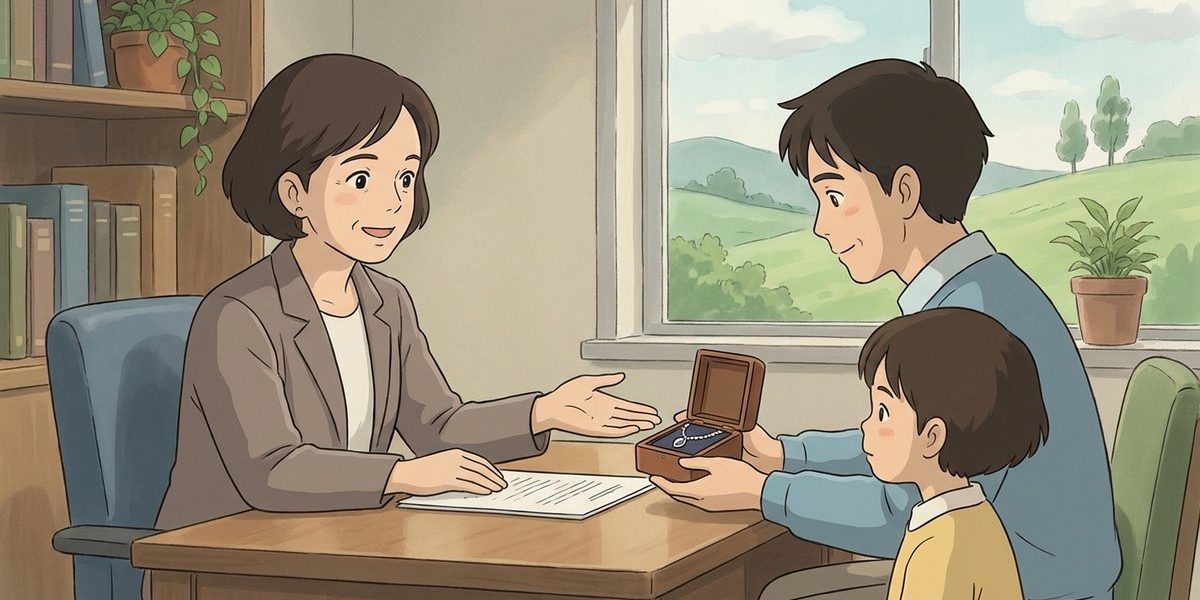
How do I handle an item of jewelry being held for a minor so it counts toward the minor’s inheritance share? – North Carolina
Short Answer
In North Carolina, a personal representative can usually treat jewelry being held for a minor as part of that minor’s inheritance by making a documented, irrevocable transfer of the jewelry into a proper minor-holding arrangement and then showing that transfer on the estate’s accounting/distribution records. A common approach is a transfer to a custodian under the North Carolina Uniform Transfers to Minors Act (UTMA), using the statute’s required “as custodian for [minor] under the North Carolina UTMA” wording and a written transfer instrument that describes the jewelry. If the transfer would be to the personal representative as custodian, or if the total UTMA transfers exceed certain thresholds, the clerk may require court authorization.
Understanding the Problem
In a North Carolina estate administration, the personal representative may need to distribute a minor beneficiary’s share, but the share includes (or is satisfied in part by) a specific item of tangible personal property such as jewelry. The decision point is whether the jewelry can be transferred into a legally recognized “hold for the minor” arrangement in a way that the Clerk of Superior Court will accept as a completed distribution that reduces (or satisfies) the minor’s inheritance share. The concern often arises when the proposed transfer would be titled or documented as a transfer to the personal representative “as custodian,” which can trigger extra clerk review.
Apply the Law
North Carolina allows several statutory pathways to handle property due to a minor from an estate. One commonly used pathway is the North Carolina Uniform Transfers to Minors Act (UTMA), which lets a personal representative make an irrevocable transfer of property to an adult custodian for the minor, using specific statutory wording and documentation. Another pathway (depending on the situation) is delivering the property to a guardian or guardian of the estate for the minor, or distributing certain small personal property amounts to a parent/guardian with clerk approval. Which path works depends on the type/value of property, whether a custodian is nominated in the will, and whether the personal representative is trying to name themself as custodian.
Key Requirements
- Use a legally recognized “minor holding” method: The transfer should be made under a statute the clerk recognizes for minor beneficiaries (often UTMA, guardianship-related procedures, or a clerk-approved distribution to a parent/guardian in limited situations).
- Make the transfer irrevocable and well-documented: The estate records should show what was transferred, to whom (and in what capacity), and that it was for the minor’s benefit so it can be credited against the minor’s share.
- Address court-authorization triggers: Under UTMA, extra approval may be required if the personal representative is also the proposed custodian or if the value transferred crosses a statutory threshold.
What the Statutes Say
- N.C. Gen. Stat. § 33A-9 (How to create custodial property and make a UTMA transfer) – Provides the required wording and a statutory transfer instrument form that can be used to transfer property (including property not otherwise specifically listed) to a custodian for a minor.
- N.C. Gen. Stat. § 33A-5 (UTMA transfer authorized by will or trust) – Allows a personal representative to make a UTMA transfer when the will/trust authorizes it and addresses who must be selected if a custodian is nominated.
- N.C. Gen. Stat. § 33A-6 (UTMA transfer by fiduciary; court authorization triggers) – Allows UTMA transfers by a personal representative even without express authorization in some situations, but requires court authorization if the transfer is to the transferor or if the value transferred totals more than $10,000.
- N.C. Gen. Stat. § 35A-1227 (Funds/property owed to minors; cross-references probate options) – Recognizes multiple ways minors can receive property, including UTMA transfers and other probate/guardianship-related procedures.
- N.C. Gen. Stat. § 28A-25-6 (Payment of small sums to parent or guardian of minor) – Allows certain limited distributions for a minor to be made to a parent, guardian, or other person having care and custody of the minor under specified conditions and dollar limits.
Analysis
Apply the Rule to the Facts: Here, the personal representative needs to move a minor beneficiary’s share into a custodial arrangement and wants the transfer to count toward the minor’s inheritance share. For jewelry, UTMA can work because it allows a transfer of property to an adult custodian by a written instrument that identifies the property, and it provides a standard form and required “as custodian for [minor] under the North Carolina UTMA” language. The main risk in these facts is that the proposed custodian is the same person as the personal representative (the transferor), which is a specific UTMA trigger that generally requires court authorization, so the clerk may insist on a petition/order before accepting the distribution as complete.
Process & Timing
- Who files: The personal representative. Where: The Estates Division of the Clerk of Superior Court that issued the personal representative’s letters in North Carolina. What: If using UTMA for jewelry, prepare a written UTMA transfer instrument that clearly describes the jewelry and identifies the custodian using the statutory UTMA wording; if court authorization is required (for example, because the transfer is to the personal representative as custodian), file the appropriate petition/motion in the estate file requesting authorization before completing the transfer. When: Before filing the final account and before asking for discharge, so the accounting can show the jewelry as distributed/credited to the minor’s share.
- Complete the transfer and document control: Deliver the jewelry to the named custodian and obtain a signed acknowledgment/receipt in the custodian capacity. Keep photographs, a detailed description (metal, stones, markings, appraisals if available), and a chain-of-custody note so the estate file supports the credit against the minor’s share.
- Reflect it on the estate accounting: On the distribution schedule/accounting, list the jewelry as a distribution to “(Custodian name), as custodian for (Minor name) under the North Carolina UTMA,” with the value used for the share calculation, and keep the receipt/acknowledgment with the estate records in case the clerk requests it.
Exceptions & Pitfalls
- Transfer-to-self problem (common clerk concern): If the personal representative is also the proposed UTMA custodian, UTMA generally requires court authorization for that transfer. A frequent solution is selecting a different eligible adult custodian (if appropriate) or obtaining an order authorizing the personal representative to serve as custodian.
- $10,000 UTMA threshold: UTMA has a court-authorization trigger when the total value transferred under that section will exceed $10,000 (even if done in more than one transfer). Jewelry plus other assets intended for UTMA should be valued and totaled before choosing the “no-order” route.
- Using the wrong method for the wrong asset: Some procedures are better suited to money than unique tangible items. If the plan is to liquidate jewelry and then distribute cash, that can change the analysis and may require additional documentation and approvals.
- Weak descriptions and missing receipts: If the transfer paperwork does not clearly identify the jewelry, the clerk may not treat it as a completed distribution credited against the minor’s share. A detailed description and a custodian acknowledgment reduce disputes later.
- Mixing the minor’s property with someone else’s property: Custodial property should be kept separate and tracked. Poor recordkeeping can create later disputes and can complicate the personal representative’s final accounting.
For more context on court paperwork and common clerk expectations when a minor is involved, see what happens in probate when one of the heirs is still a minor and what legal setup is required to hold and manage the inheritance until adulthood.
Conclusion
In North Carolina, jewelry can count toward a minor’s inheritance share if the personal representative makes a documented, irrevocable transfer using a recognized minor-holding method—often a UTMA custodianship—and then reports that transfer as a distribution/credit on the estate accounting. UTMA requires specific custodian wording and a written instrument that identifies the jewelry, and court authorization is commonly required if the personal representative is also the custodian or if UTMA transfers exceed $10,000. The next step is to file a request with the Clerk of Superior Court for authorization if a UTMA trigger applies, before filing the final account.
Talk to a Probate Attorney
If a North Carolina estate involves a minor beneficiary and property like jewelry needs to be credited toward that minor’s share, our firm has experienced attorneys who can help evaluate the best transfer method, prepare the documentation the clerk typically expects, and map out the timing for closing the estate. Call us today at [919-341-7055].
Disclaimer: This article provides general information about North Carolina law based on the single question stated above. It is not legal advice for your specific situation and does not create an attorney-client relationship. Laws, procedures, and local practice can change and may vary by county. If you have a deadline, act promptly and speak with a licensed North Carolina attorney.

