
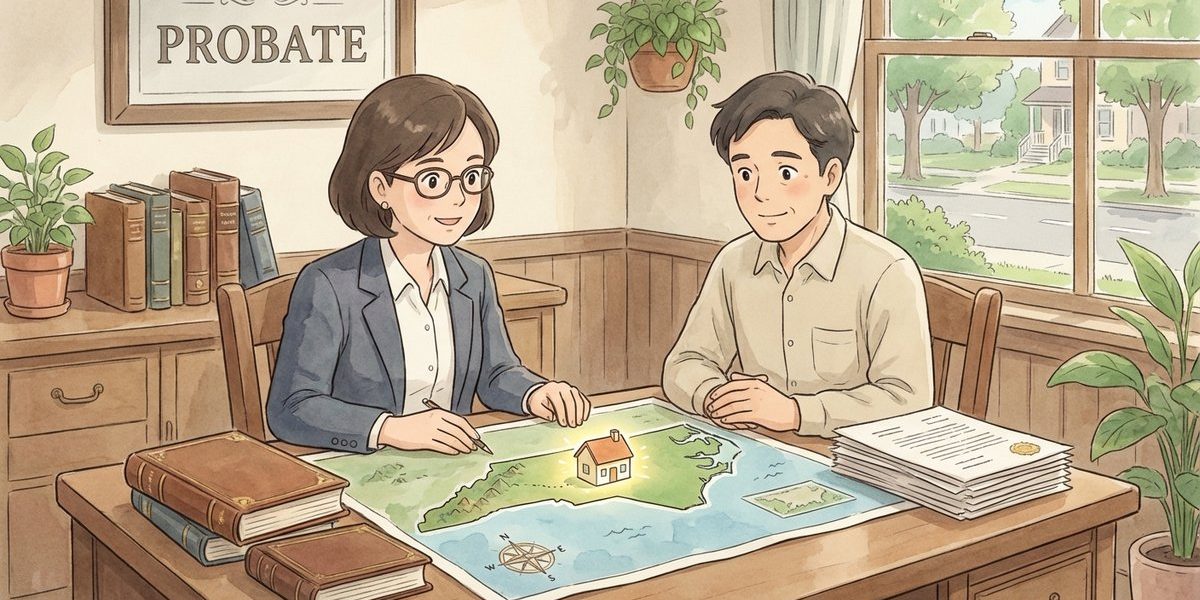
How do I get a deceased parent’s house transferred into my name when there was no will and I’m the only heir? – NC
Short Answer
In North Carolina, a deceased parent’s house usually does not get retitled into an only child’s name just because there was no will. The heir’s ownership interest arises under intestacy law, but in most cases the estate still needs an administrator appointed by the Clerk of Superior Court so someone has authority to deal with the mortgage servicer, creditors, and estate paperwork. After the estate process is opened and any required claims period and administration steps are handled, the house is typically transferred into the heir’s sole record title by an estate deed or other recorded title document in the county where the property is located.
Understanding the Problem
In North Carolina probate, the main question is whether an only heir can get a deceased parent’s house placed into that heir’s name when the parent died intestate and no estate representative has been appointed. The key decision point is usually not who inherits, but who has legal authority to act for the estate and when the title record can be cleaned up. That issue often matters right away when a mortgage servicer will not discuss the loan or recognize a transfer without formal estate papers from the Clerk of Superior Court.
Apply the Law
Under North Carolina law, when a person dies without a will, property passes under the intestacy statutes, subject to estate administration costs and lawful claims. Real property can vest in the heir at death, but that does not eliminate the need for probate administration when someone must collect information, address creditor issues, handle notices, and sign documents for the estate. The usual forum is the Estates Division before the Clerk of Superior Court in the county where venue is proper, and a practical timing issue is the creditor claim period that follows the administrator’s qualification and notice process.
Key Requirements
- Heirship under intestacy: The person claiming the house must actually be the decedent’s heir under North Carolina intestate succession rules.
- Appointment of an administrator: Someone usually must qualify as personal representative so banks, servicers, and other parties have a legally recognized person to deal with.
- Title cleanup after administration: Even if ownership passes by law, the land records often still need a recorded deed or other estate filing to show clear title in the heir’s individual name.
What the Statutes Say
- N.C. Gen. Stat. § 29-13 (Descent and distribution upon intestacy) – Intestate property passes to heirs, but remains subject to administration costs and lawful claims.
- N.C. Gen. Stat. § 30-20 (Procedure for assignment; order of clerk) – The clerk handles statutory family allowance issues, which can affect estate administration even when there is no will.
Analysis
Apply the Rule to the Facts: Here, the parent died without a will, owned a house, and the child appears to be the only heir. That strongly suggests the child is the person entitled to inherit the real property under North Carolina intestacy law, but the mortgage servicer’s refusal to discuss the loan without estate papers shows why appointment of an administrator is still often necessary. Even where there are no known creditor problems, the estate remains subject to administration expenses and lawful claims before the title record is fully updated.
North Carolina practice also treats title and administration as related but separate issues. An heir may have an ownership interest at death, yet third parties often still require Letters of Administration before they will release information, accept instructions, or recognize a transfer path. In a simple one-heir estate, the administrator is often the same person who will ultimately receive the house, but that person must still act first in a fiduciary role for the estate and only later in an individual role as owner.
If one variable changes, the answer can change. For example, if a surviving spouse exists, the intestacy share may differ, and if a family allowance or creditor claim appears, the estate may need to address that before a clean transfer can be recorded. If no one opens the estate, the heir may still have practical possession of the home, but title problems usually remain and the servicer may continue refusing to communicate beyond limited payment matters.
Process & Timing
- Who files: the heir seeking appointment as administrator. Where: the Estates Division before the Clerk of Superior Court in the proper North Carolina county. What: an application for Letters of Administration and the estate qualification paperwork required by the clerk. When: as soon as practical after death, especially if the house has a mortgage, taxes, insurance, or maintenance issues that need active management.
- After qualification, the administrator gives required notice to creditors and begins gathering estate information. In a routine estate, this is the stage when the administrator can usually communicate with the mortgage servicer, confirm payoff or payment information, and determine whether any other estate issues must be cleared before title work is completed. Timing can vary by county and by how quickly the clerk issues letters and reviews filings.
- Once the administration steps are complete or far enough along for counsel to confirm the property can be distributed, the administrator signs and records the appropriate estate deed or other title document in the county land records so the heir holds sole record title. The final estate paperwork is then filed with the clerk.
Exceptions & Pitfalls
- A surviving spouse, unknown child, adopted child, or other heir can change who inherits under intestacy, even when the estate first appears simple.
- A common mistake is assuming that being the only heir automatically gives authority to sign for the estate or force a mortgage servicer to communicate. It usually does not.
- Another common problem is failing to check for taxes, insurance, mortgage default, or recorded liens while waiting to open the estate. Delay can create avoidable title and payment issues.
- Family allowance rights and later-discovered creditor claims can affect administration, even if no problems are known at the start.
- Recording nothing in the land records leaves a gap between inherited rights and marketable title, which can cause trouble when refinancing, selling, or insuring the property later.
Conclusion
In North Carolina, an only heir can usually receive a deceased parent’s house when there was no will, but the practical first step is usually to open the estate and get appointed as administrator by the Clerk of Superior Court. Intestate inheritance is still subject to administration costs and lawful claims. The key next step is to file for Letters of Administration with the clerk in the proper county, then complete the estate process and record the title document needed to place the house in the heir’s sole name.
Talk to a Probate Attorney
If a parent died without a will and a mortgage servicer will not discuss the home or transfer issues without estate papers, our firm has experienced attorneys who can help explain the North Carolina probate process, title steps, and timing. Call us today at 919-341-7055. For related guidance on opening the estate, see open an estate when a family member died without a will or start the probate process and get someone appointed as the administrator.
Disclaimer: This article provides general information about North Carolina law based on the single question stated above. It is not legal advice for your specific situation and does not create an attorney-client relationship. Laws, procedures, and local practice can change and may vary by county. If you have a deadline, act promptly and speak with a licensed North Carolina attorney.

