
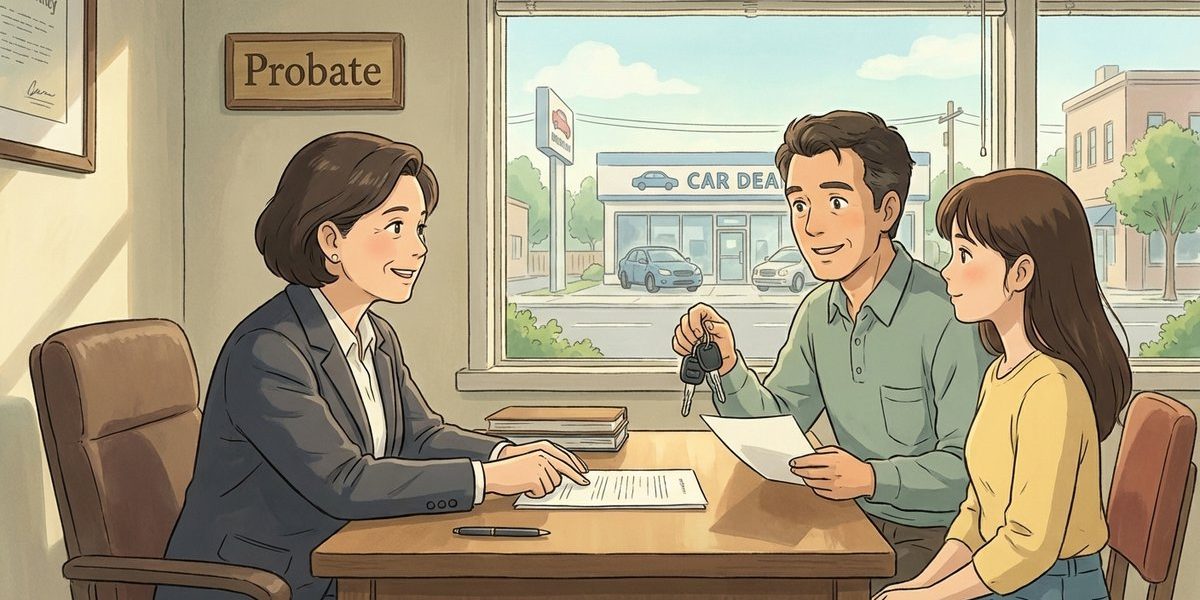
Do I need to transfer the deceased person’s car title into my name before selling it to a dealership, or can it go directly to the buyer? – North Carolina
Short Answer
In North Carolina, an executor (personal representative) usually does not need to retitle the deceased person’s car into the executor’s personal name before selling it to a dealership. In most cases, the executor can sign the existing title as the seller (in a representative capacity) and deliver the properly assigned title and required supporting documents so the dealership can apply for a new title in its name (or in a later buyer’s name). The key is having the legal authority to sign and having DMV-acceptable paperwork, especially if the original title is missing or there is a lien.
Understanding the Problem
Under North Carolina probate administration, can a personal representative sell a deceased owner’s vehicle to a dealership without first putting the title into the personal representative’s own name? The decision point is whether North Carolina’s title-transfer rules allow the estate’s authorized signer to transfer ownership directly to the dealership as the buyer, rather than creating an extra “middle” title in the personal representative’s individual name.
Apply the Law
North Carolina treats a vehicle title transfer as a formal, document-driven process. When a vehicle owner dies, the person with authority to act for the estate (often the executor/personal representative appointed by the Clerk of Superior Court) can typically sign the title to transfer the vehicle directly to the buyer. The buyer (here, a dealership) then handles its side of the DMV paperwork to obtain the new title. A dealership that takes the vehicle for resale generally is not required to register the vehicle in its own name before reselling, but it still needs a properly executed reassignment on the title and must avoid “blank” assignments.
Key Requirements
- Proper signing authority: The seller must be the person legally authorized to act for the estate (commonly the executor/personal representative with current Letters).
- Proper title assignment (not in blank): The title must be signed and completed correctly, including naming the dealership as transferee, and executed in the manner DMV requires (often notarized or otherwise compliant with state requirements).
- Supporting DMV documents are available: The transaction typically requires the existing title (or a DMV-approved substitute process if the title is missing), proof of death, and proof of the personal representative’s authority; liens must be addressed.
What the Statutes Say
- N.C. Gen. Stat. § 20-72 (Transfer by owner) – Requires a properly executed assignment and warranty of title naming the transferee; accepting or delivering a title assigned in blank can be a crime.
- N.C. Gen. Stat. § 20-75 (Dealer transferee rules) – A licensed dealer holding a vehicle for resale has special rules and can reassign title for resale, but must complete the reassignment properly.
- N.C. Gen. Stat. § 20-77 (Transfer by operation of law) – Addresses transfers when ownership changes by operation of law (including inheritance/devise) and describes documentation DMV may require in those situations.
Analysis
Apply the Rule to the Facts: Here, the executor/beneficiary is already administering a North Carolina estate where the creditor claim period has ended and the estate is near the accounting/closing stage. Because the executor has authority to act for the estate, the cleaner approach is usually to sell the vehicle as an estate asset by signing the title as the personal representative and transferring it directly to the dealership as buyer, rather than retitling it into the executor’s personal name first. That avoids an extra DMV title transaction and helps keep the paper trail consistent with the estate inventory and accounting.
Process & Timing
- Who files: The buyer (the dealership) typically submits the title paperwork to DMV for titling/reassignment, but the personal representative must provide the correctly signed title and supporting documents. Where: North Carolina DMV (often through a local license plate agency; some items may be mailed to DMV headquarters depending on the situation). What: The existing certificate of title signed by the personal representative as seller; commonly a certified death certificate and certified Letters Testamentary/Letters of Administration. If the title is missing, DMV may require a duplicate-title process (often using DMV Form MVR-4) before the transfer can be completed. When: As part of estate administration, before the final accounting is completed and the estate is closed, so the sale proceeds can be accounted for properly.
- Dealership reassignment step: If the dealership is taking the vehicle for resale, it may hold the vehicle under dealer rules and later reassign the title to the next buyer, but it still needs a properly completed transfer from the estate (no “open title”).
- Estate accounting step: The personal representative should keep the bill of sale/closing statement from the dealership and deposit the proceeds into the estate account (if one is being used) so the final accounting matches the inventory and distributions.
Exceptions & Pitfalls
- Missing title: If the original title cannot be found, DMV may require a duplicate-title process before a dealership can take good title. This is a common reason a “direct-to-buyer” sale stalls.
- Liens: If there is a recorded lien, the lien must be released or otherwise handled as part of the sale. Dealerships often will not complete the purchase until lien status is clear.
- Incorrect signature/capacity: Signing only a personal name (instead of clearly signing as personal representative) can create DMV rejection or confusion about who had authority to sell.
- Title assigned in blank: North Carolina law treats “open titles” seriously; the transferee name should be completed and the assignment executed properly to avoid criminal exposure and DMV refusal.
- Insurance/tax listing issues for non-dealer transfers: When the buyer is an individual beneficiary or third party (not a dealer), DMV often requires proof of insurance and tax listing steps for the new owner; a dealership purchase usually avoids some of those buyer-side hurdles, but the estate-side paperwork still must be correct.
For more background on estate vehicle paperwork, see what documents the estate process typically needs to transfer or sell a vehicle and how estates handle selling vehicles to pay debts.
Conclusion
In North Carolina, a personal representative usually does not need to retitle a deceased person’s car into the personal representative’s own name before selling it to a dealership. The typical approach is a direct transfer from the estate: sign the certificate of title in a representative capacity, provide certified proof of death and authority, and ensure the dealership is named as transferee (no blank assignment). As a next step, gather the title, certified death certificate, and certified Letters and complete the transfer paperwork before filing the final estate accounting.
Talk to a Probate Attorney
If an estate vehicle needs to be sold to a dealership and there are questions about title paperwork, liens, or what must be shown in the final accounting, our firm has experienced attorneys who can help explain options and timelines. Call us today at [CONTACT NUMBER].
Disclaimer: This article provides general information about North Carolina law based on the single question stated above. It is not legal advice for your specific situation and does not create an attorney-client relationship. Laws, procedures, and local practice can change and may vary by county. If you have a deadline, act promptly and speak with a licensed North Carolina attorney.

