
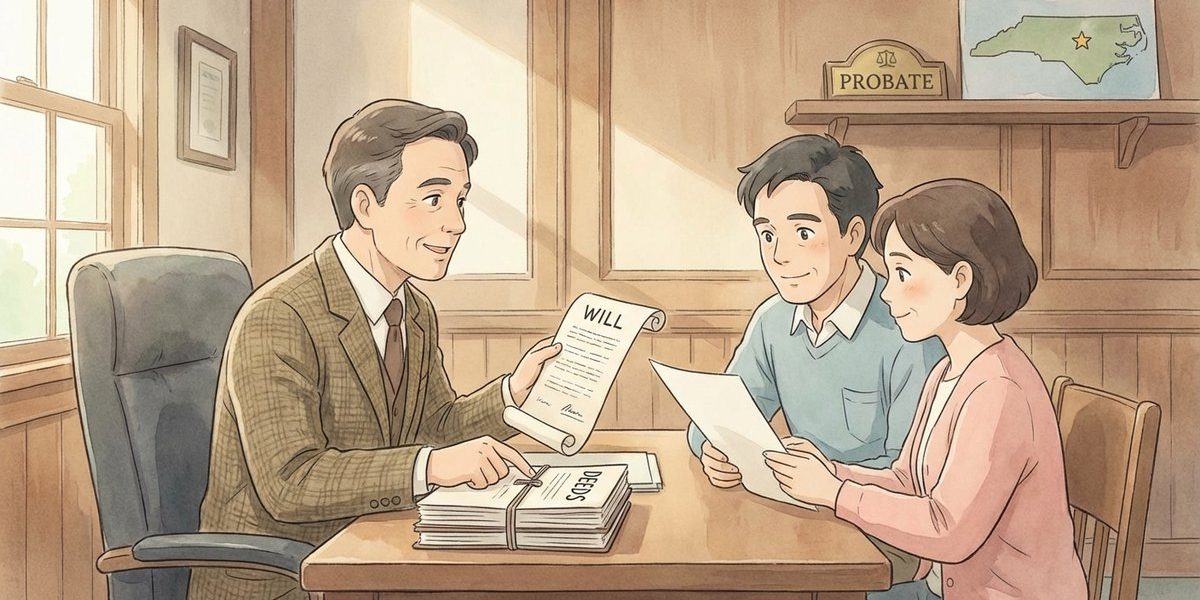
Do I need to record a quitclaim deed to show my name on the inherited property, or is the court order enough? – North Carolina
Short Answer
In North Carolina, a properly probated will can pass title to real estate, but the probate paperwork usually must be filed in the county where the land is located for the public records to clearly show the transfer. A quitclaim deed is not always required, but recording the right probate documents (and sometimes a personal representative’s deed) is often the practical way to “clean up” the chain of title. If the land is in a different North Carolina county, filing a certified copy of the will and probate certificate in that county is a key step.
Understanding the Problem
Under North Carolina probate practice, the question is whether a court-issued probate order (showing a will was admitted and an executor/personal representative was appointed) is enough to put inherited land into a beneficiary’s name in the land records, or whether a quitclaim deed must be recorded. The decision point is how North Carolina treats title passing by will versus what the Register of Deeds and title examiners typically need to see in the county where the property sits to reflect ownership clearly.
Apply the Law
North Carolina generally treats real estate as passing to the devisee under a duly probated will, but the public land records still need the right recorded documents to protect the devisee’s title against later purchasers or lien creditors who might rely on the record. When the real property is located in a different North Carolina county than the county where the estate was opened, North Carolina law requires filing certified probate documents in the county where the land lies for the will to be effective against certain third parties.
Key Requirements
- A will admitted to probate: The will must be properly probated through the Clerk of Superior Court so it is legally recognized to pass title.
- Record notice in the county where the land is located: For land in a different North Carolina county, the county where the land sits typically needs a certified copy of the will and the certificate/order of probate filed there so the land records reflect the transfer.
- A clear “chain of title” for future transactions: Even if title passes by will, a future buyer or lender often expects recorded probate documents (and sometimes a personal representative’s deed) to make the ownership trail easy to follow.
What the Statutes Say
- N.C. Gen. Stat. § 31-39 (Probate necessary to pass title; recordation in county where real property lies) – Explains that a duly probated will is effective to pass title, and addresses when probate/recording is required to protect title against lien creditors or purchasers; it also requires filing certified probate documents in the county where the real property is located when the will was probated in another NC county.
Analysis
Apply the Rule to the Facts: Here, the will leaves everything to the child, and probate is underway or completed with certified copies available. Because the vacant land is in a different jurisdiction and there is already a complicated chain of title (prior heir-property division), relying only on “having the court order” can still leave the land records unclear in the county where the land sits. The usual fix is to record the certified probate documents in the county where the land is located so the public record shows why ownership changed.
Process & Timing
- Who files: Typically the executor/personal representative or the devisee (often through counsel). Where: the Clerk of Superior Court and/or Register of Deeds in the North Carolina county where the land is located. What: certified copy of the will and certified copy of the certificate/order of probate (and any other certified probate documents the local recording office requires). When: as soon as practical after probate, and in any event within the time limits that protect the devisee’s title against third parties.
- If the land is outside North Carolina: North Carolina probate paperwork may not automatically change title in another state. A separate proceeding in the state where the land is located (often called an ancillary probate or similar process) may be required before that state’s land records will show the devisee as owner.
- When a deed is used: If a title company, lender, or future buyer needs a cleaner chain of title, the personal representative may sign and record a personal representative’s deed (often without warranties). A quitclaim deed is one possible deed type, but it is not the only approach and is not always the preferred one for clearing title.
Exceptions & Pitfalls
- Different county, different record: Probating the will in one North Carolina county does not automatically protect title to land in another county unless certified probate documents are filed in the county where the land lies.
- “Court order” versus “land records”: A probate order can establish rights, but a Register of Deeds index typically reflects ownership based on recorded instruments. If nothing is recorded where the land is located, the record may still show the decedent (or earlier heirs) as the last owner of record.
- Heir-property history: Prior family divisions, missing deeds, or unclear descriptions can require additional corrective documents or a quiet title/perfection action before a future sale or refinance.
- Out-of-state land: If the land is not in North Carolina, North Carolina probate documents alone usually do not update that other state’s title records.
Conclusion
In North Carolina, a duly probated will can pass title to inherited real estate, but the land records usually need certified probate documents filed in the county where the property is located to clearly show the transfer and protect the devisee against certain third-party claims. A quitclaim deed is not always required, but a recorded probate filing (and sometimes a personal representative’s deed) is often the practical path to clear title. Next step: file a certified copy of the will and the certificate/order of probate with the proper county office where the land sits.
Talk to a Probate Attorney
If dealing with inherited land where the probate case is in one place but the property is recorded somewhere else, a small recording step can make a major difference in future sales, financing, and title insurance. Our firm has experienced attorneys who can help identify what should be recorded and where, and coordinate any ancillary or title-curing work if needed. Call us today at (919) 341-7055.
Disclaimer: This article provides general information about North Carolina law based on the single question stated above. It is not legal advice for your specific situation and does not create an attorney-client relationship. Laws, procedures, and local practice can change and may vary by county. If you have a deadline, act promptly and speak with a licensed North Carolina attorney.

