
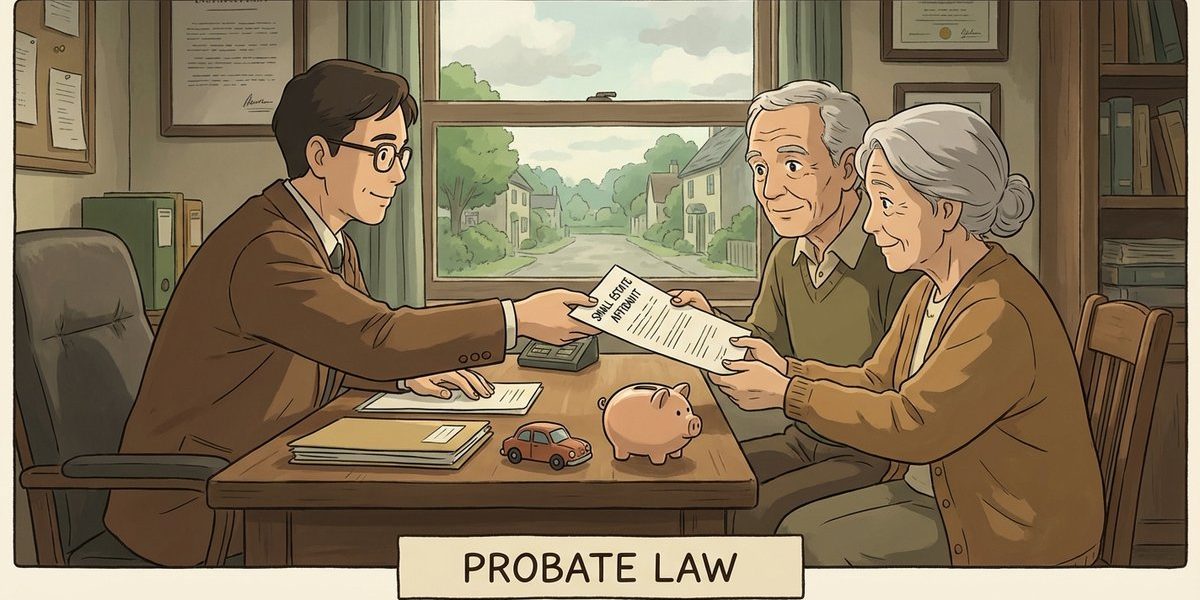
Do I need to open full probate if the only assets are household items, a vehicle, and a bank account that already lists a family member? – North Carolina
Short Answer
Not always. In North Carolina, full probate (a full estate administration with a court-appointed personal representative) is often unnecessary when the remaining property is mostly “nonprobate” (like a payable-on-death or survivorship bank account) and the rest fits a small-estate option. However, when a landlord or another third party refuses to release property without court-recognized authority, the family often needs at least a small-estate filing or another clerk-approved procedure to prove authority and gain access.
Understanding the Problem
In North Carolina, can a family avoid opening a full probate estate when the decedent left only household items, a vehicle, and a bank account that already lists a family member, but a third party (such as an apartment complex) will not release the decedent’s belongings without court-recognized authority?
Apply the Law
North Carolina generally requires estate administration when a decedent owned property in the decedent’s sole name that must be collected, secured, or transferred. But many assets pass outside probate (for example, certain beneficiary-designated or survivorship accounts), and North Carolina also provides alternatives to full administration for smaller estates. The main forum for these decisions is the Clerk of Superior Court in the county where venue is proper for the estate. A key timing issue is that if a will exists and needs to control title, it generally must be offered for probate within a limited period to be effective against certain third parties.
Key Requirements
- Identify what is “probate” property versus “nonprobate” property: A bank account that is payable-on-death or has survivorship features often passes directly to the named person, while property titled only in the decedent’s name often requires a court process to transfer.
- Confirm whether a small-estate alternative fits: North Carolina allows “collection of personal property by affidavit” for qualifying small estates, which can provide court-recognized authority without a full administration in many cases.
- Determine what proof a third party will accept: Landlords, banks, and the DMV often require specific documents (for example, a certified small-estate affidavit or DMV affidavit) before releasing property or changing title.
What the Statutes Say
- N.C. Gen. Stat. § 31-39 (Probate necessary to pass title; timing limits) – Explains that a will generally must be duly probated to be effective to pass title, and it sets a time limit that can matter when third-party rights are involved.
- N.C. Gen. Stat. § 30-19 (Property awarded to surviving spouse and children) – Places the Clerk of Superior Court in the role of determining certain personal property awards to a surviving spouse and eligible children, which can sometimes be used as part of a simplified approach.
- N.C. Gen. Stat. § 36F-8 (Disclosure of digital assets) – Shows that custodians may require proof of authority such as letters or a certified small-estate affidavit before releasing certain information or assets.
Analysis
Apply the Rule to the Facts: The life insurance already paid to beneficiaries is typically not part of probate administration. The bank account that “already lists” a family member may be nonprobate if it is payable-on-death or has survivorship features, but some joint-account situations still create practical problems if the bank will not close or distribute the account without court authority. The household items and the vehicle may require a court-recognized process if they are titled or treated as owned solely by the decedent and a third party (the apartment complex) refuses access without paperwork from the Clerk of Superior Court.
Process & Timing
- Who files: Typically an heir or other person entitled to the property under North Carolina law. Where: The Clerk of Superior Court for the county where venue is proper for the estate. What: Often a small-estate filing (commonly called “collection of personal property by affidavit”) if the estate qualifies, or another clerk-approved alternative if it does not. When: As soon as practical once the death certificate is available and an inventory of assets and titles can be confirmed.
- Use the filed/certified paperwork to obtain access and transfers: A certified small-estate affidavit (or other clerk-issued authority) is often what landlords and other third parties want to see before releasing property. For the vehicle, North Carolina may allow a DMV affidavit process to assign title in certain small-estate situations when no personal representative has qualified or is expected to qualify and the clerk considers full administration unnecessary.
- Close out remaining items and document distribution: Once the apartment property is retrieved and the vehicle/bank issues are resolved, the family typically completes the limited steps required by the chosen small-estate procedure. If new assets are discovered that push the estate above the small-estate limits, the matter may need to convert to a full administration.
Exceptions & Pitfalls
- “Bank account lists a family member” does not always end the inquiry: Payable-on-death and survivorship accounts often pass outside probate, but some joint-account setups still lead banks to demand court authority, especially if the account cannot be closed cleanly or there is uncertainty about ownership.
- Third parties can force a court filing even when the estate is small: A landlord, storage facility, or financial institution may refuse to release property without a certified court document. In practice, that often means a small-estate affidavit or another clerk-approved alternative, even when full probate feels unnecessary.
- Vehicle title uncertainty: If the vehicle is titled only in the decedent’s name, the DMV often requires specific paperwork. North Carolina may allow a DMV affidavit process in certain small-estate situations, but it depends on facts such as whether a personal representative has qualified (or is expected to) and whether the will is on file with the clerk.
- Old will naming a former spouse: Even when the family agrees on distribution, the will’s status can affect what the clerk requires and what third parties will accept. Filing the will (and, when needed, probating it) can prevent later title problems.
Conclusion
In North Carolina, full probate is often avoidable when the remaining assets are mostly nonprobate (like certain beneficiary or survivorship bank accounts) and the rest fits a small-estate option. But when property is in the decedent’s sole name or a landlord refuses access without court authority, a small-estate filing with the Clerk of Superior Court is often the simplest way to get recognized authority. If a will must be effective against third parties, it should be offered for probate within the applicable time limit.
Talk to a Probate Attorney
If a family needs access to an apartment, transfer a vehicle, or deal with a bank that will not release funds without court paperwork, a North Carolina probate attorney can help identify whether a small-estate option fits or whether a full administration is required. Call us today at (919) 341-7055.
Disclaimer: This article provides general information about North Carolina law based on the single question stated above. It is not legal advice for your specific situation and does not create an attorney-client relationship. Laws, procedures, and local practice can change and may vary by county. If you have a deadline, act promptly and speak with a licensed North Carolina attorney.

