
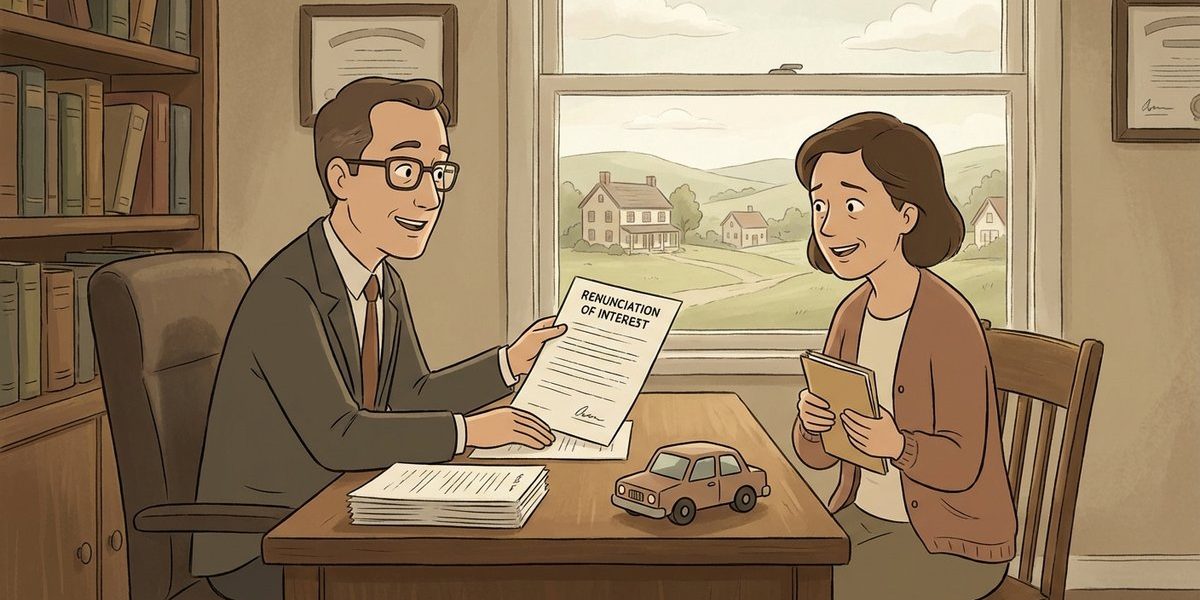
Do I have to take possession of my parent’s car or can I disclaim it if I can’t find it or don’t want it? – North Carolina
Short Answer
In North Carolina, an heir generally does not have to physically take possession of a decedent’s car just because it is part of the estate. If the sole heir does not want the vehicle (or cannot locate it), North Carolina law allows a written renunciation (often called a disclaimer) of the inheritance interest, as long as the renunciation is properly signed and filed with the Clerk of Superior Court in the correct county and is not barred by certain prior actions. Even if the car is disclaimed, probate may still be needed to appoint an administrator to collect estate funds like wrongful death insurance proceeds.
Understanding the Problem
Under North Carolina probate law, can the sole heir open an estate to collect insurance proceeds while refusing to accept a decedent’s vehicle that cannot be located or is not wanted? Does North Carolina allow a written renunciation of an inherited property interest in a specific item (a car) rather than the entire inheritance, and what filing step makes that renunciation effective in the estate proceeding?
Apply the Law
North Carolina allows a person who inherits through intestacy (an heir) to renounce (disclaim) the right to succeed to property, in whole or in part, by signing an acknowledged written instrument that identifies the decedent, describes what is being renounced, and clearly states the renunciation. For timing, a renunciation intended to qualify as a tax “qualified disclaimer” generally must be filed within the federal time window (commonly nine months), and the renunciation becomes effective when filed with the Clerk of Superior Court in the county where the estate is (or could be) administered. A renunciation can be blocked if the person already transferred the property, waived the right to renounce in writing, or the property was sold in a judicial sale before the renunciation.
Key Requirements
- Written, signed, and acknowledged renunciation: The renunciation must be in writing, signed, and notarized/acknowledged, and it must identify the decedent and describe the property interest being refused (for example, “all interest in the decedent’s motor vehicle”).
- Proper filing (and delivery) in the estate context: The renunciation is made effective by filing it with the Clerk of Superior Court in the county where the estate proceeding is (or could be) opened. In an intestate estate or a will-based gift (not a trust), a copy must also be delivered to the personal representative, or if none is serving, filed as an estate matter with the court that can appoint one.
- Not barred by prior acts: The right to renounce can be barred by certain prior actions, such as already assigning/transferring the property, signing a written waiver of the right to renounce, or a judicial sale occurring before the renunciation.
What the Statutes Say
- N.C. Gen. Stat. § 31B-1 (Right to renounce succession) – Allows an heir to renounce, in whole or in part, a right of succession to property by a signed, acknowledged written instrument describing what is renounced.
- N.C. Gen. Stat. § 31B-2 (Filing and registering of renunciations) – Sets filing timing rules tied to federal disclaimer timing and explains where to file; provides that a renunciation is effective when filed with the clerk of court in the proper county.
- N.C. Gen. Stat. § 31B-2.1 (Delivery of instrument of renunciation) – Requires delivering a copy to the personal representative (or filing as an estate matter if no personal representative is serving) for intestacy or will interests, and addresses the effect of failing to deliver.
Analysis
Apply the Rule to the Facts: The facts describe a sole heir who needs to open a North Carolina estate to be appointed administrator and collect wrongful death insurance proceeds payable to the estate, but who does not want and cannot locate the decedent’s vehicle. North Carolina law generally allows an heir to renounce a specific inherited property interest (including a partial renunciation), so a properly drafted, notarized renunciation describing the vehicle interest can refuse that inheritance without stopping the heir from serving as administrator to collect estate funds. The key is filing the renunciation in the correct Clerk of Superior Court estate file (or as an estate matter if the file is not yet open) and avoiding actions that could bar the renunciation (such as transferring the car title or otherwise disposing of it first).
Process & Timing
- Who files: the heir who is renouncing the vehicle interest (often the same person seeking appointment as administrator). Where: the Clerk of Superior Court (Estates) in the North Carolina county where the estate is (or could be) administered. What: a signed and acknowledged (notarized) “Renunciation/Disclaimer” instrument that identifies the decedent and describes the vehicle interest being renounced. When: for a renunciation intended to qualify under federal timing rules, it should be filed within the applicable federal period (commonly nine months from the completed transfer for those tax purposes); procedures and timing can be sensitive, so prompt filing matters.
- Deliver copies as required: if a personal representative is serving, deliver a copy to that personal representative; if no personal representative is serving yet, file it as an estate matter with the court that can appoint one. This step helps avoid later disputes about notice and administration.
- Continue probate for the insurance proceeds: even if the vehicle is renounced, the estate may still need an administrator appointed to receive and manage estate funds (such as insurance proceeds payable to the estate) and to complete the required estate accounting and closing steps with the Clerk.
Exceptions & Pitfalls
- Acts that can bar renunciation: transferring the vehicle, signing a written waiver of the right to renounce, or a judicial sale of the property before filing can prevent a valid renunciation under North Carolina rules.
- Confusing “disclaiming” with “ignoring”: simply not looking for the car does not create a legal renunciation. A valid renunciation requires a written, signed, acknowledged document and proper filing with the Clerk.
- Partial renunciation and tax consequences: North Carolina allows partial renunciations, but “qualified disclaimer” rules can be stricter. This is a common area where timing and wording matter, so coordination with a tax attorney or CPA may be needed if tax treatment is a concern.
Conclusion
North Carolina law generally allows an heir to refuse an inherited vehicle by signing and filing a written, notarized renunciation that clearly describes the car interest being disclaimed, and the heir does not have to take physical possession of the car just because it is part of the estate. The renunciation becomes effective when filed with the Clerk of Superior Court in the proper county, and it can be barred by certain prior actions like transferring the property first. The next step is to file the renunciation with the Clerk as an estate matter (or in the open estate file) within the applicable federal disclaimer time window (commonly nine months) if tax-qualified treatment matters.
Talk to a Probate Attorney
If you’re dealing with opening an estate to collect insurance proceeds while trying to refuse a missing or unwanted vehicle, our firm has experienced attorneys who can help explain the probate steps, prepare a proper renunciation, and keep the estate on track with the Clerk of Superior Court. Call us today at (919) 341-7055.
Disclaimer: This article provides general information about North Carolina law based on the single question stated above. It is not legal advice for your specific situation and does not create an attorney-client relationship. Laws, procedures, and local practice can change and may vary by county. If you have a deadline, act promptly and speak with a licensed North Carolina attorney.

